
- Home
- Insights
- Behavioral diagnosis
- Pay attention to these 5 steps for organizational
Pay attention to these 5 steps for organizational

Robert Meza
Pay attention to these 5 steps for organizational behavior change..
These steps should be taken to complement your approaches to change, which many times show you the map, but not how to navigate it.
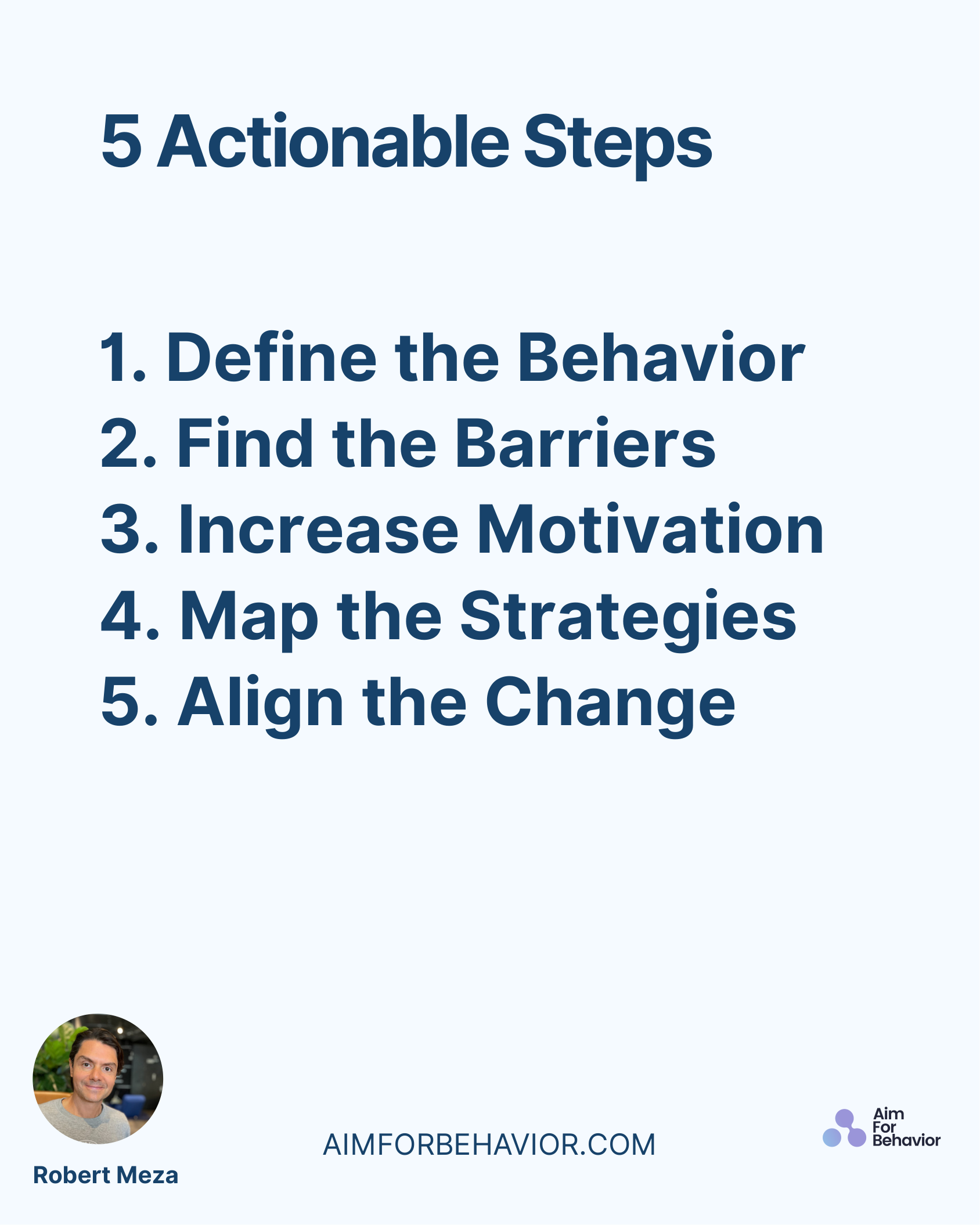
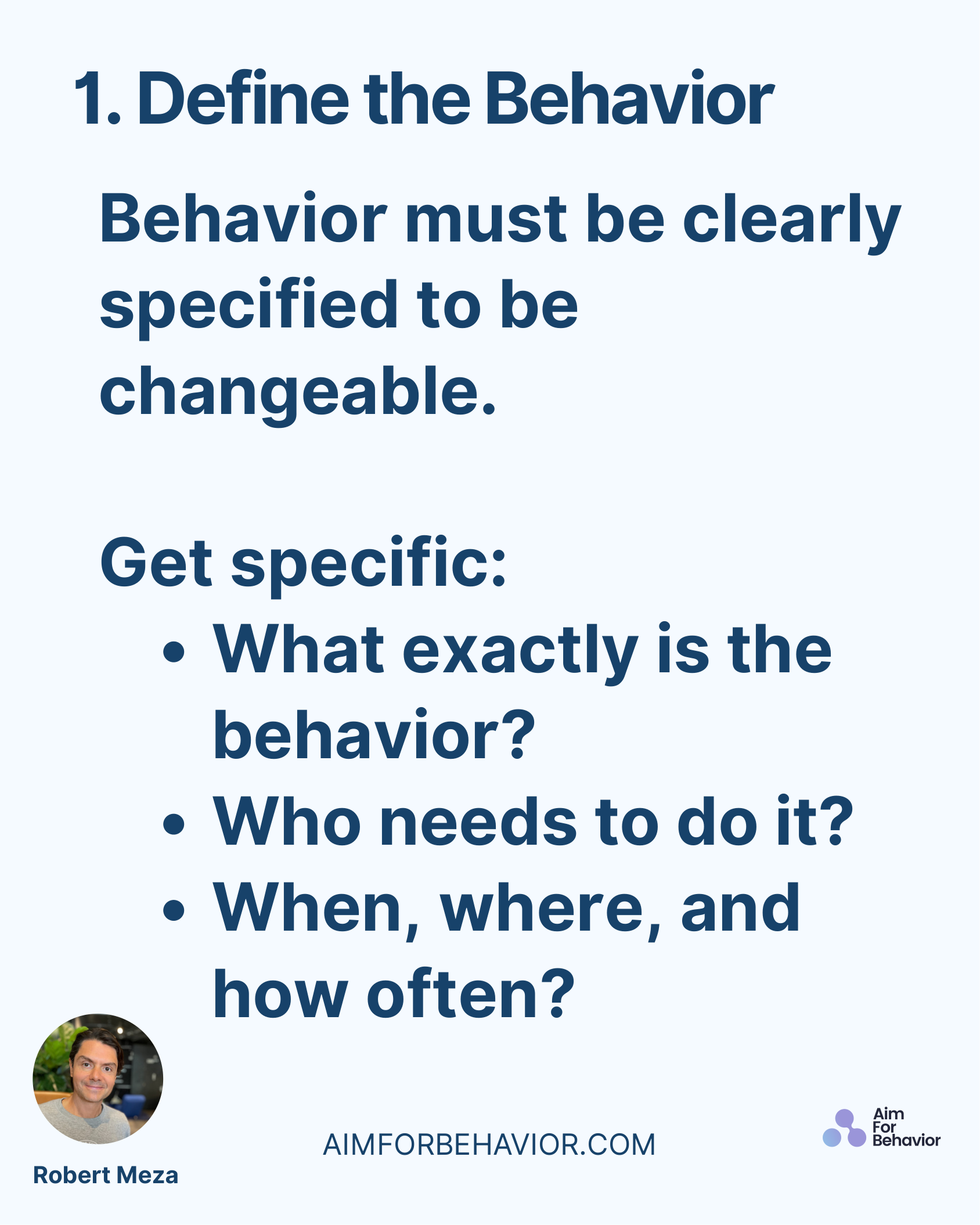
- Define the behavior precisely... This is not adopt the new system... it has to be something observable, like frontline managers enter client notes within 24 hours of a meeting.
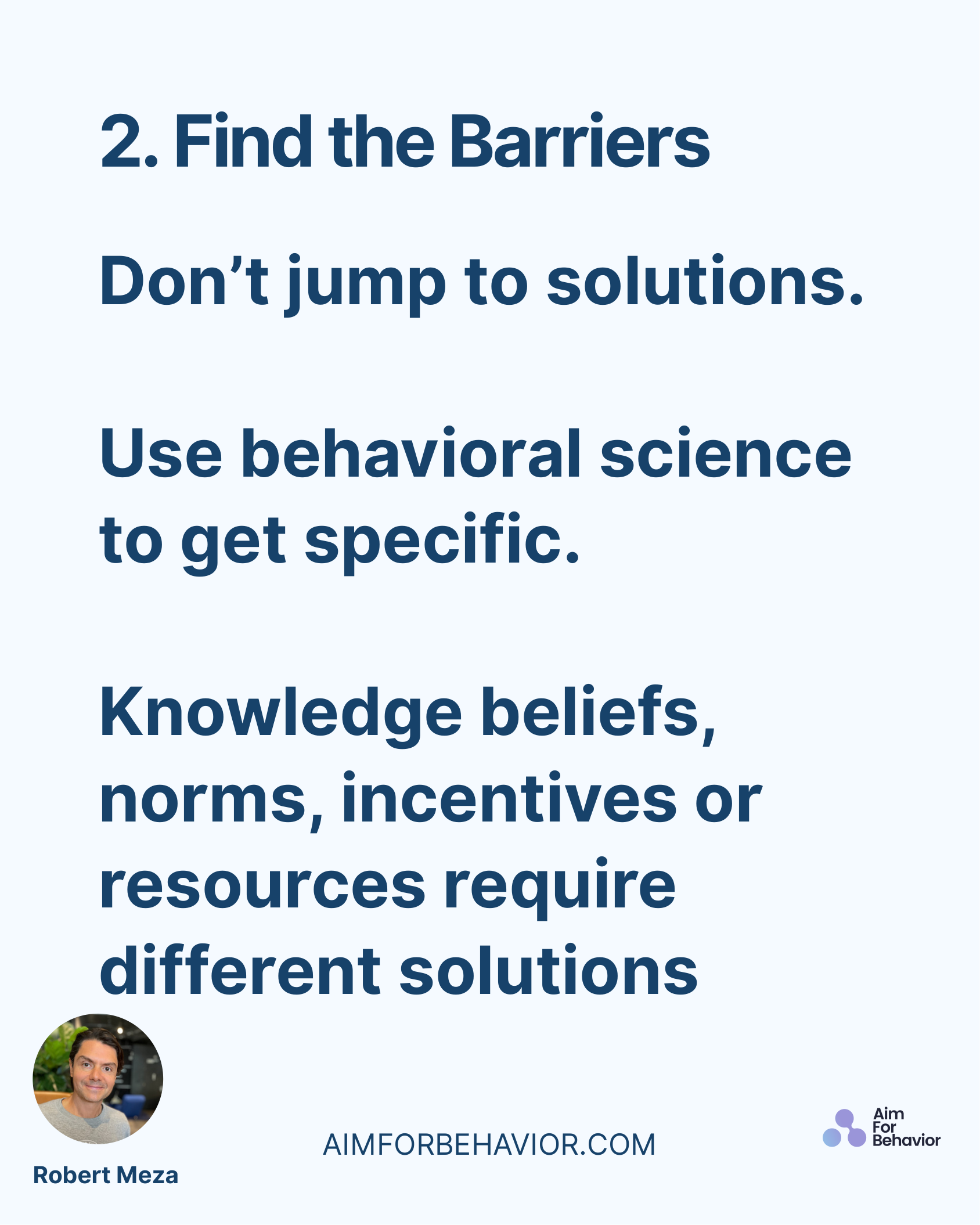
- Diagnose the barriers before jumping to solutions.. do you have a knowledge gap? a skills gap ? are social norms working against you? most teams skip this entirely and go straight to training, which only works if the barrier is knowledge... the truth is that often it isn't.
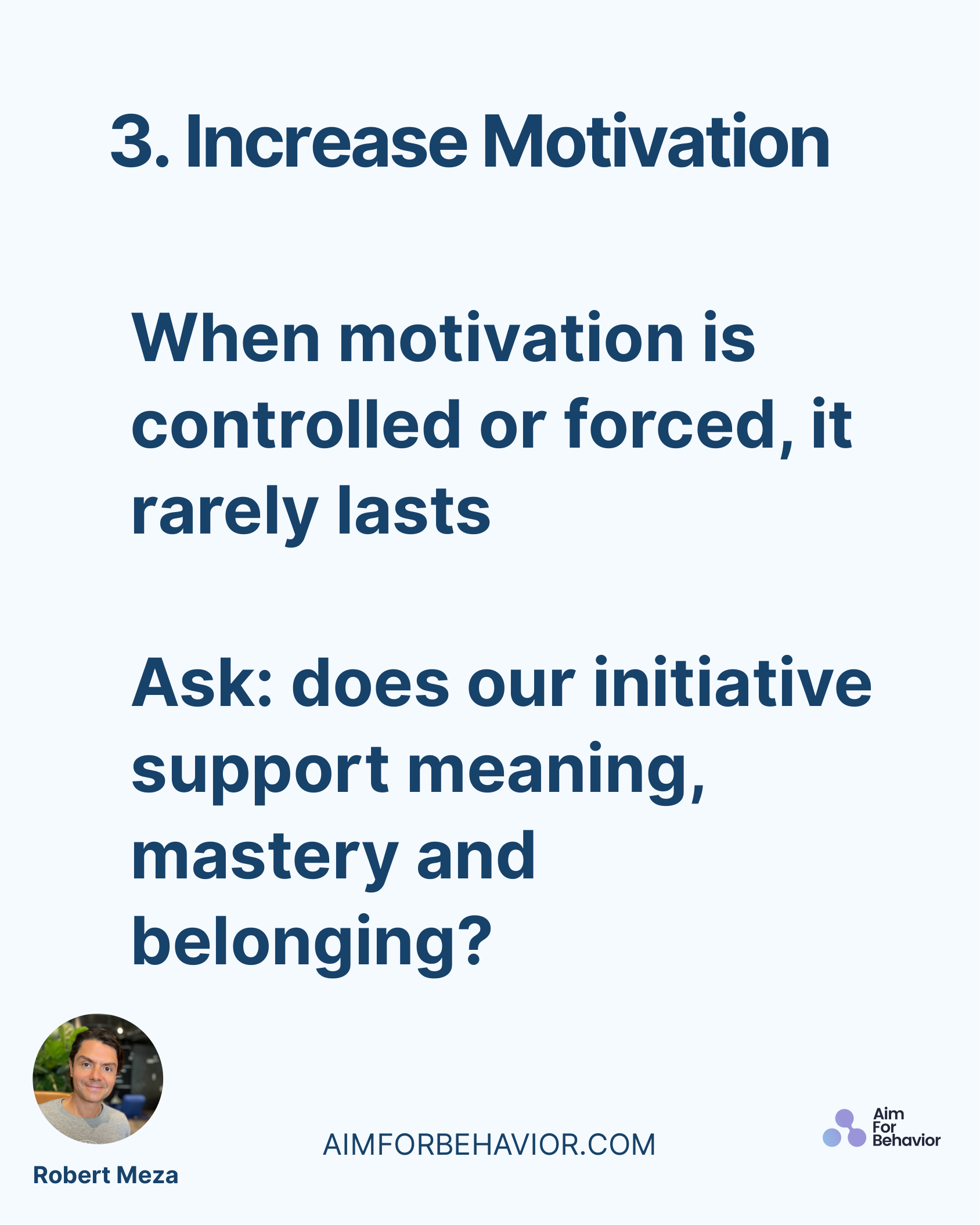
- Check the quality of motivation... i've seen teams roll out well-designed workflows that nobody used, because the only reason people had to use them was leadership said so...that's not a problem you solve with a town hall.
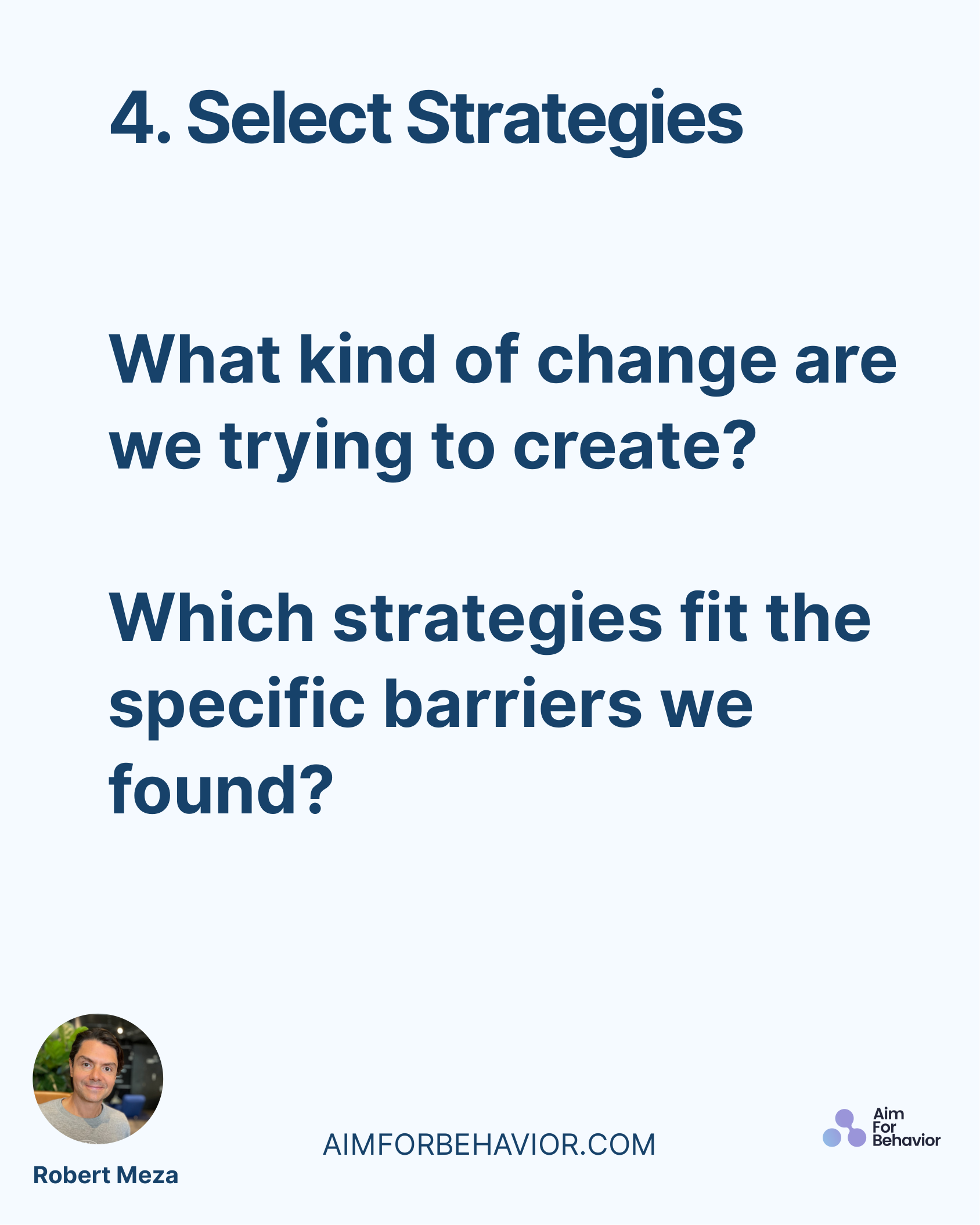
- Select strategies that actually fit the barriers you found.. again, a skills gap needs practice and feedback, but a cognitive load problem needs simplification.. remember not every problem needs a training program, and treating them all the same is how you waste six months.
- Align the surrounding system - if the design, incentives and policies are pulling in a different direction than the behavior you want, it won't change...you can't ask people to collaborate and then rank them against each other.
Most of this isn't complicated or new... but it gets skipped because teams move straight from we have a problem to here's the solution without the diagnostic work in between.
What steps do you think we could add to these?
Keep reading
All posts on behavioral diagnosisBehavioral diagnosisPost
Most change programs design one intervention and hope
Behavioral diagnosisCarousel
Most change programs skip the diagnostic step entirely
Behavioral diagnosisPost
Most change programs start with the solution, why
Behavioral science fundamentalsPost