Most change programs skip the diagnostic step entirely
Most change programs skip the diagnostic step entirely Someone identifies a problem..
Most change programs skip the diagnostic step entirely
Someone identifies a problem.. adoption is low, compliance is off, teams aren't collaborating.. and the response is to go straight to a solution, but when it doesn't work, nobody can explain why because nobody understood what was driving the behavior in the first place.
A solid behavioral analysis changes that, it gives you something stable and actionable.. a map of what's actually making the current behavior easy and the new behavior hard, not a one-time insight, but a foundation you can keep coming back to as you prioritize, sequence, and design interventions.
This should build on what you already know, because most organizations have data, research, employee feedback, stakeholder interviews.. the diagnostic doesn't replace those, instead it structures them so you can actually use them in this context.
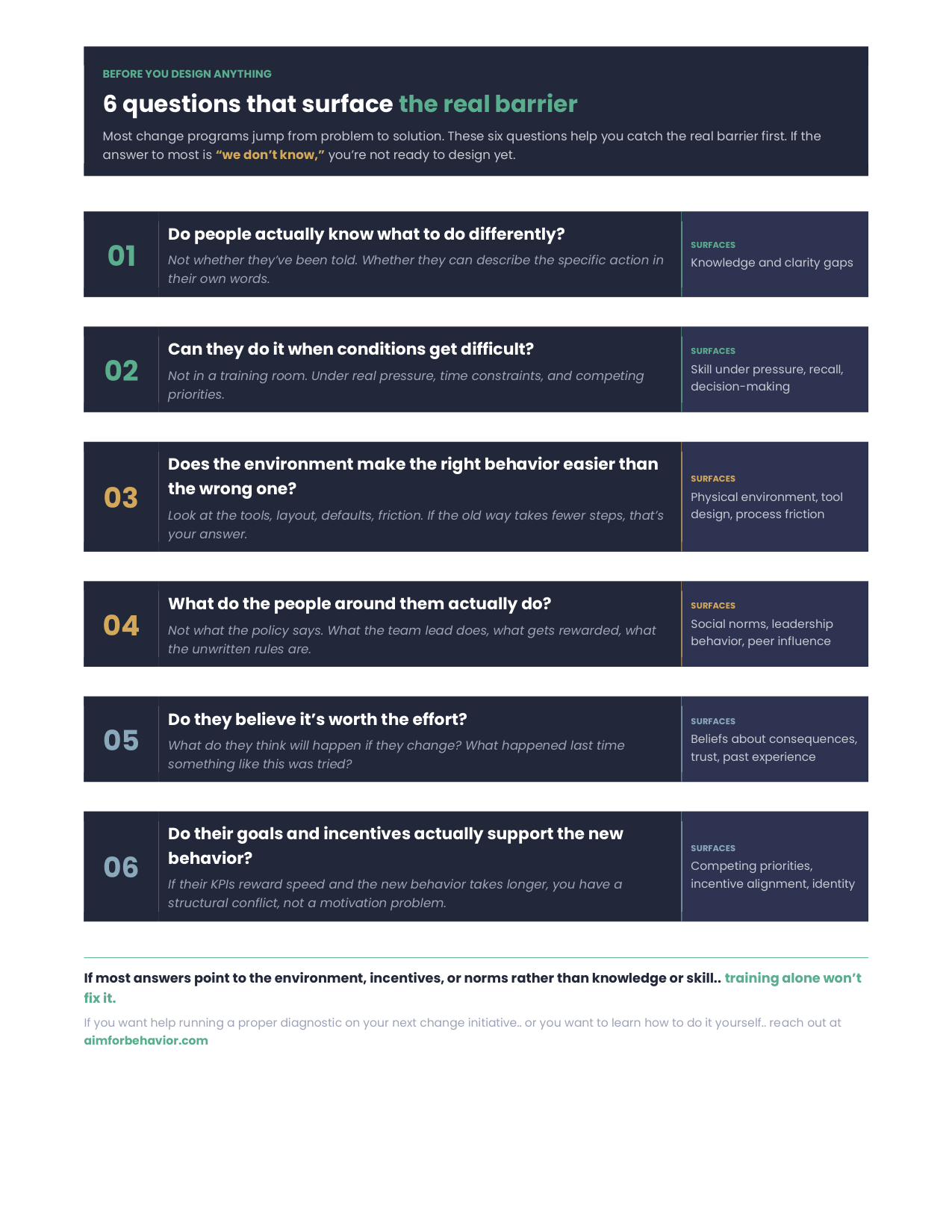
The way we do this for clients is by looking at specific categories of influence.. things like whether people have the knowledge and skill to do what you're asking, whether the environment supports it, whether there's social pressure for or against it, whether the incentives line up, whether people believe the change is worth the effort, whether they can even remember to do the new thing when things get difficult.
These aren't abstract categories.. they're practical questions you can answer through conversations, observations, and the data you already have, and once you've mapped them, you stop guessing at solutions and start designing for the barriers that are actually there.
It takes practice to do this well, but it's learnable.. and that's the part I want people to understand.
This isn't something reserved for researchers or specialists, change practitioners, L&D teams, project leads.. anyone working on behavior in organizations can learn to do this and apply it. (p.s you are all working on behavior, even if you think you aren't)
This is the foundation of how we work with clients and what we teach in our programmes, because without it, you're designing solutions for problems you haven't properly defined.. and that's where most change investment gets wasted.
What does your current diagnostic process look like before you design a change intervention?
adoption is low, compliance is off, teams aren't collaborating..
Sources named in this post
- SHIFT Barrier Codes..Aim For Behavior