Hero slide: Do you build your journey with great storytelling

Do you build your journey with great storytelling and storyboards?
This morning we presented a behavioral journey to a client and we used storyboards to help ground the concepts.
This is a great way to help visualize and help stakeholders understand complex subjects like behavior from a storytelling and human perspective approach.

Though I can’t show the work from the client, I can show how Airbnb also uses these storyboards to build a blueprint that helps them align and manage the experience.

If you want to help tell the right story with #behavioralscience make sure you also mix methods and bring also #servicedesign principles into the process.

What do you think? Do you mix methods to achieve better outcomes?

If you are interested in working with me do reach out 😀

And don’t forget to follow me, for free frameworks and tips on Behavioral Science and Customer/ Employee experience.

Image credit

Brian Chesky (thanks for putting it out there, so others also see the value in this approach)

Before I get into the
lessons, let me give you a
little background.
aimforbehavior.com
Robert Meza 🧠
Slide 2
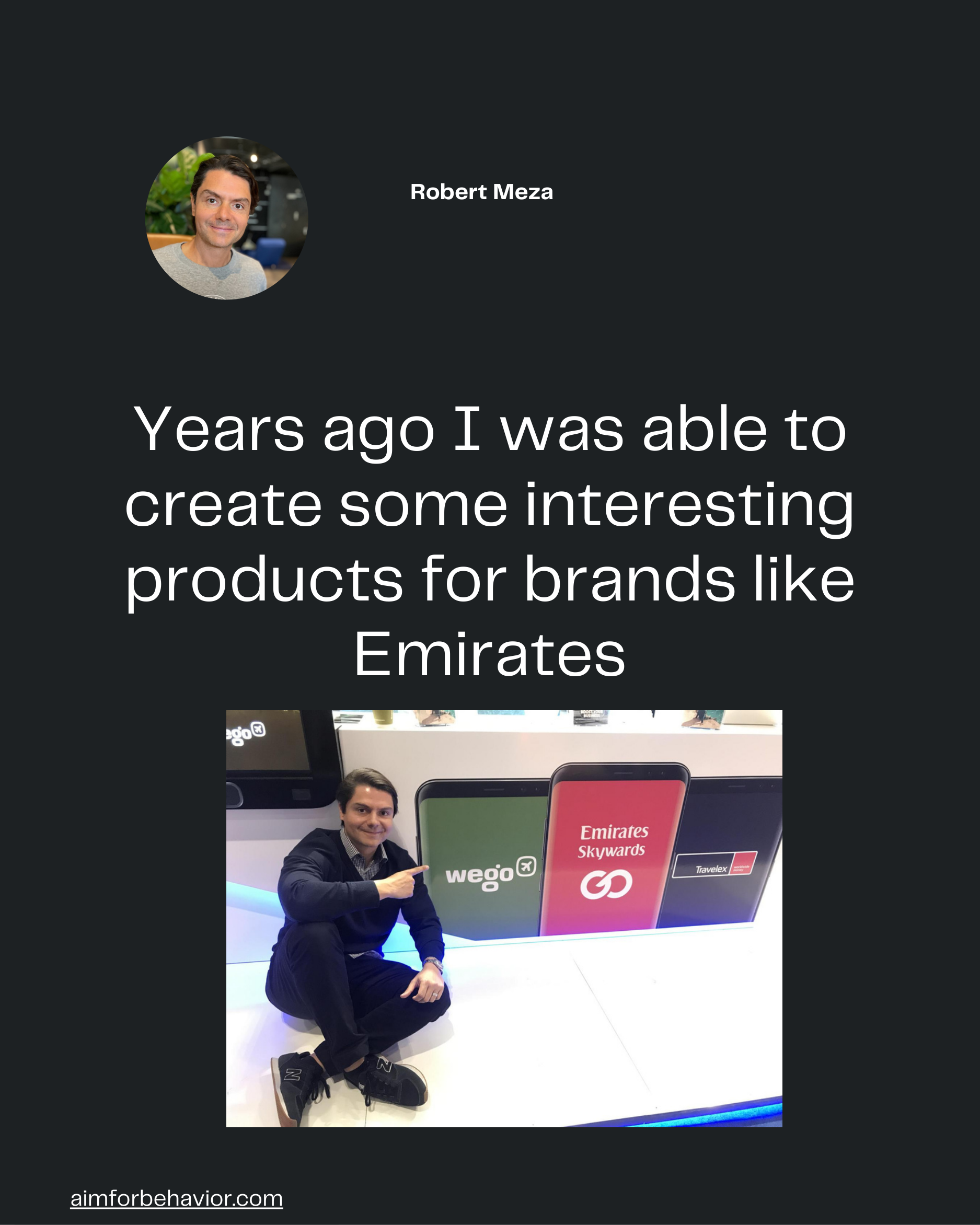
Years ago I was able to
create some interesting
products for brands like
Emirates
aimforbehavior.com
Robert Meza 🧠
Slide 3
what I reflect on today is
how little we actually
focused on behavior and
psychology back then

aimforbehavior.com
Rober
Slide 4
We used things like
Empathy Maps, Journey
Maps, and Jobs to be Done,
but never with the actual
focus on getting our
cust
Slide 5
We were all entranced with
the move quickly and
break things motto 😐

aimforbehavior.com
Robert Meza 🧠
Slide 6
It got me thinking about
how much better these
products could have been
if we had applied a
behavioral lens and
insights
Slide 7
So what should you do if
you are building a new
product?

aimforbehavior.com
Robert Meza 🧠
Slide 8
Robert Meza 🧠
1) Think about and write
out the most important
actions you want your
customers to take in your
product (m
Slide 9
Robert Meza
2) Think about the context
- where will they use your
product, how often, with
whom

aimforbehavior.com
Slide 10
Robert Meza
3) Identify what can enable or
hinder the actions: Understanding
your customer's frustrations,
challenges, a
Slide 11
Robert Meza
4) Make your product easy
to use, taking into account
the user's cognitive load
and attention, and memory

a
Slide 12
Robert Meza

5) The design of the
product should be based
on your customer's unmet
needs and not the
designer's or your
Slide 13
Robert Meza
6) Help your customers
progress in the product
and get better (don't make
it too difficult at first, or you
Slide 14
Robert Meza
7) Give your customers
choices to do the job how
they need to do it - not
how you think they should
do it

a
Slide 15
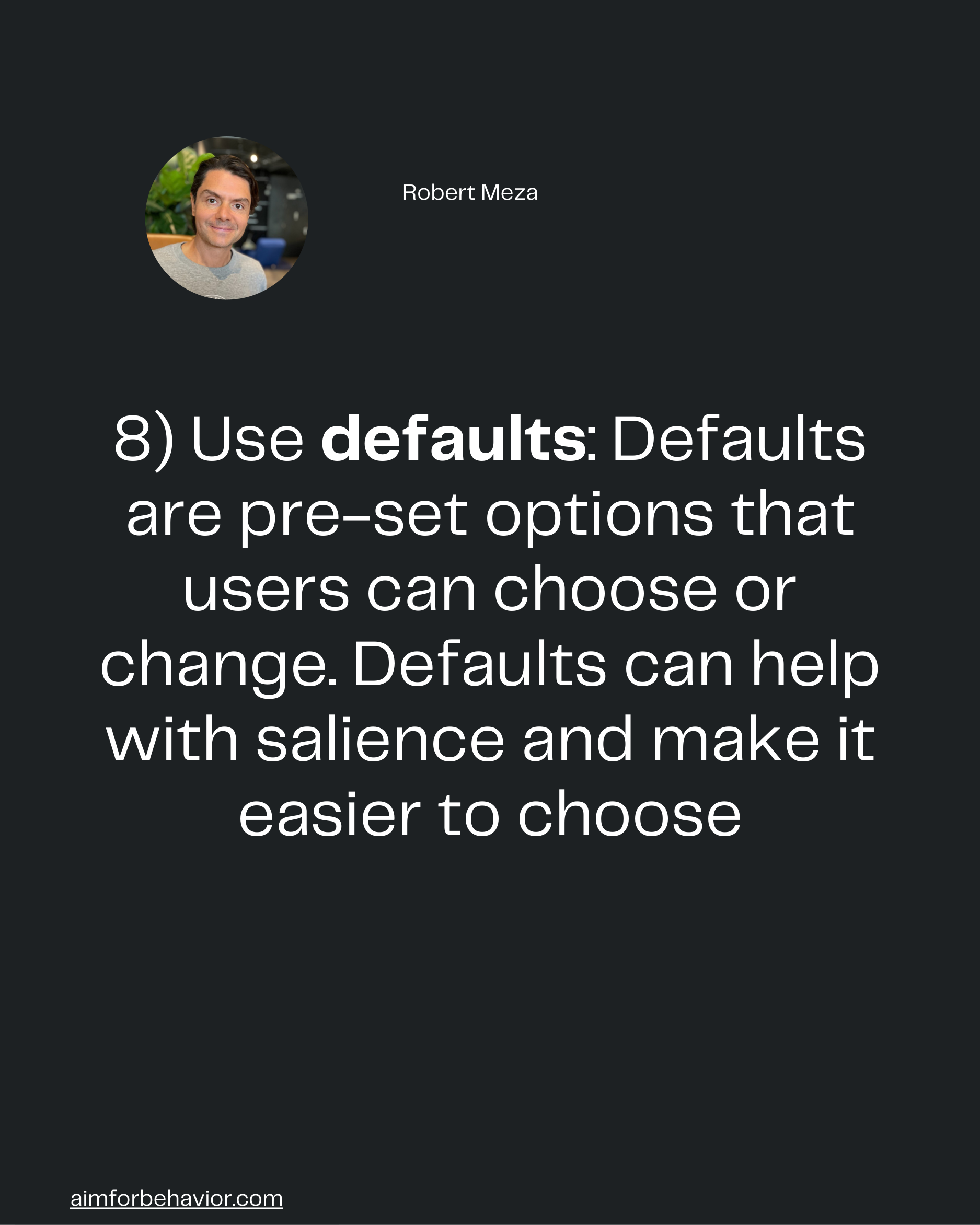
Robert Meza
8) Use defaults: Defaults
are pre-set options that
users can choose or
change. Defaults can help
with salien
Slide 16
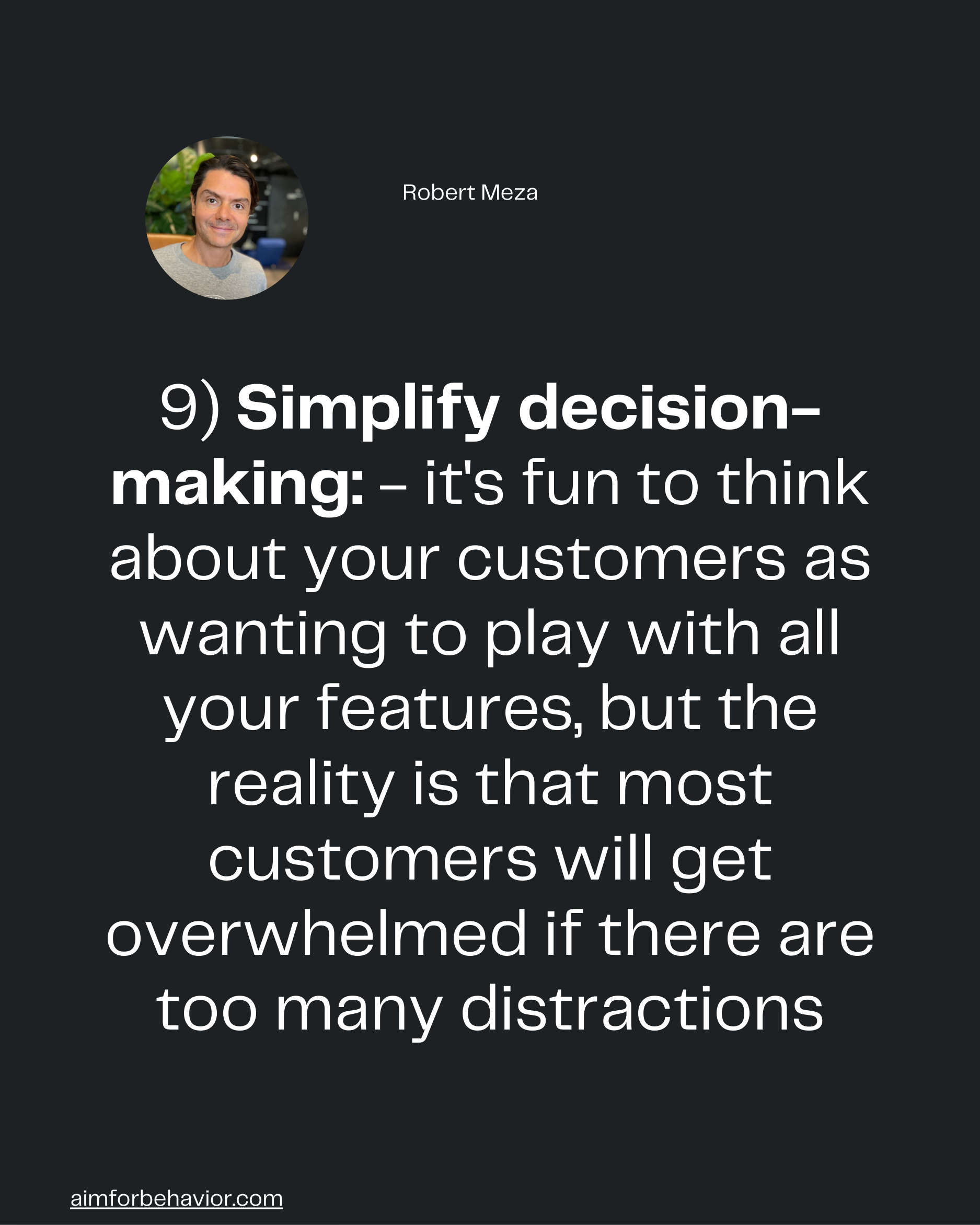
Robert Meza
9) Simplify decision-
making: - it's fun to think
about your customers as
wanting to play with all
your feat
Slide 17
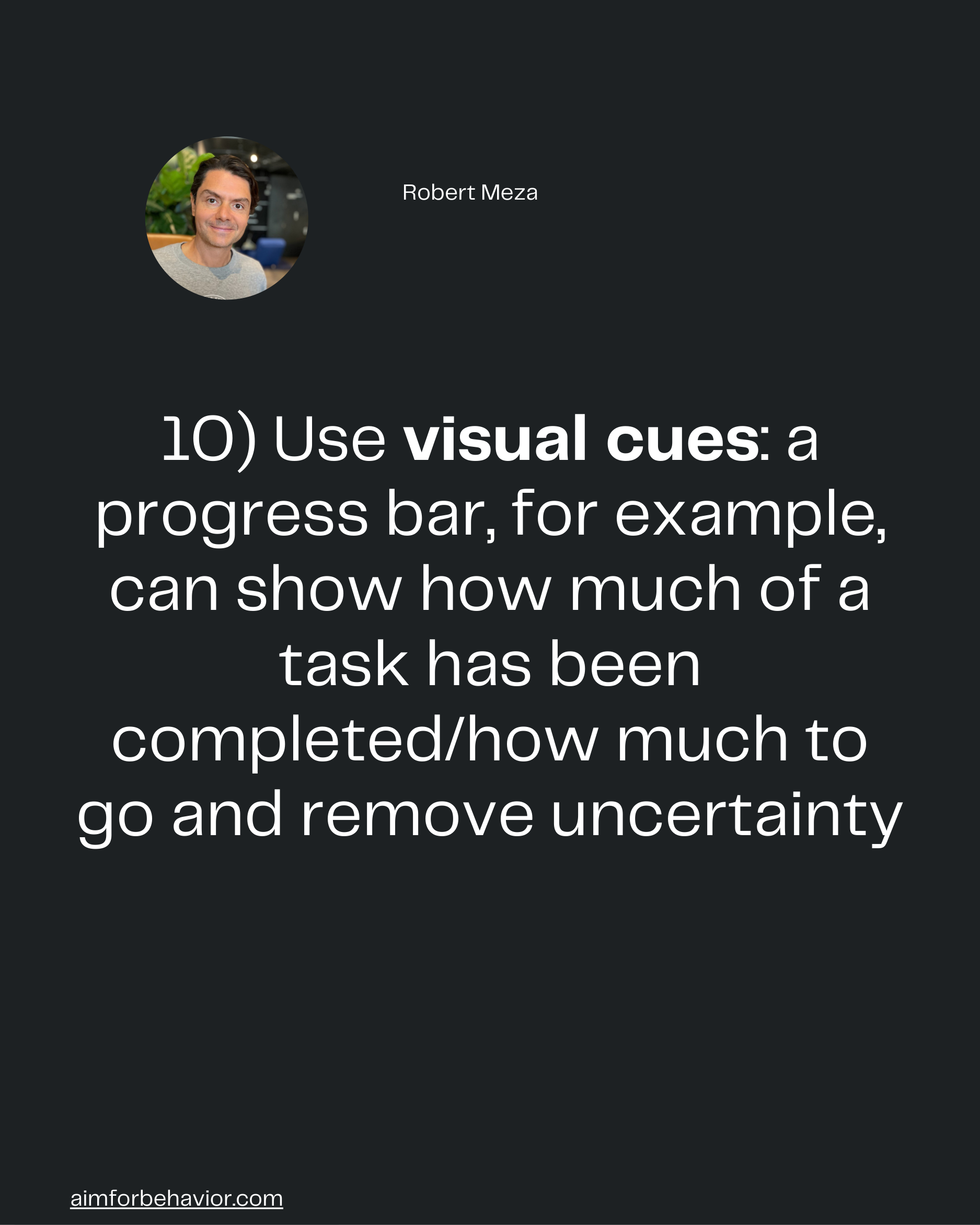
Robert Meza
10) Use visual cues: a
progress bar, for example,
can show how much of a
task has been
completed/how much to
Slide 18
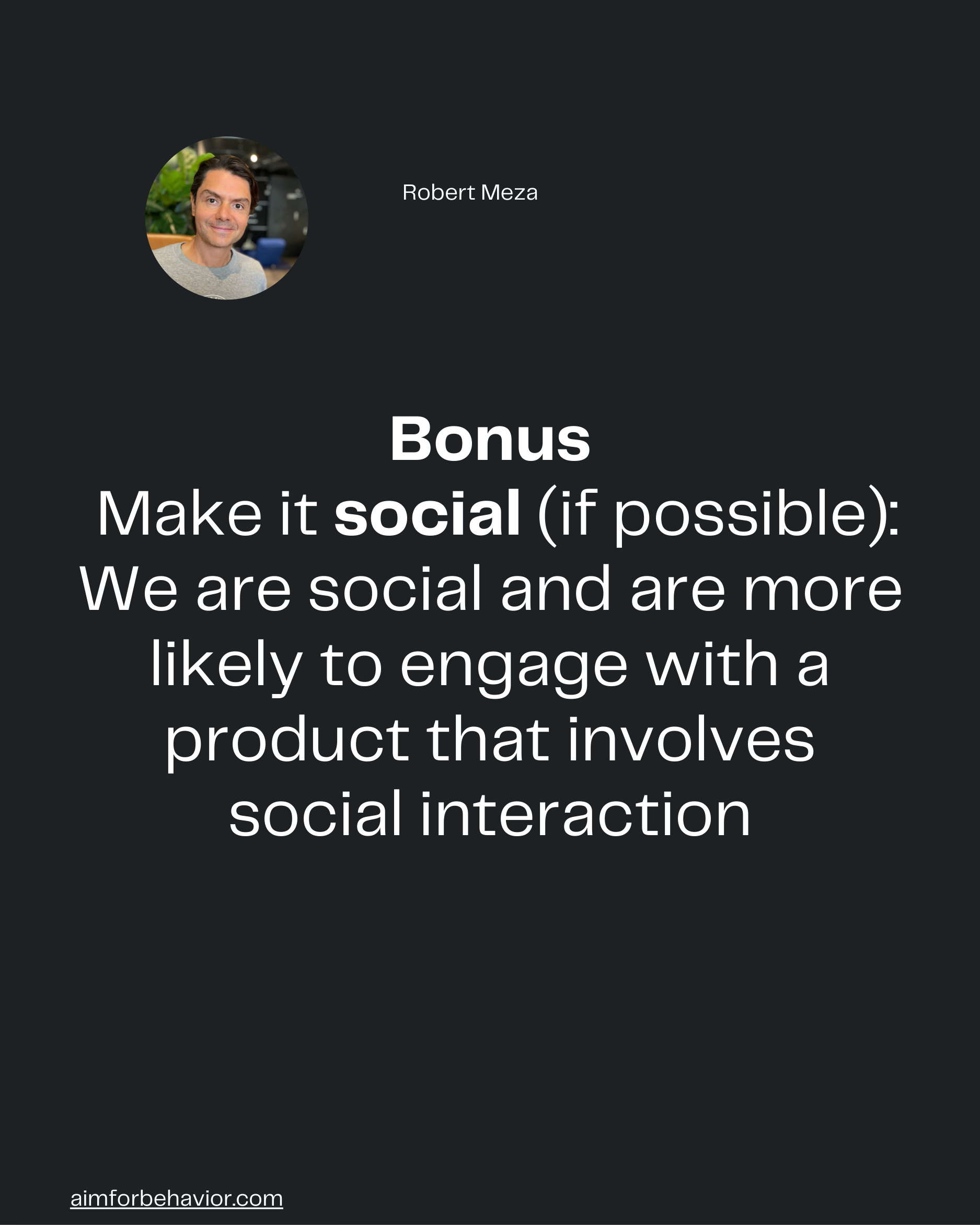
Robert Meza
Bonus
 Make it social (if possible):
We are social and are more
likely to engage with a
product that involve
Slide 19
Robert Meza
Now go out there and build
some great value-
producing products!

aimforbehavior.com
Slide 20
Robert Meza
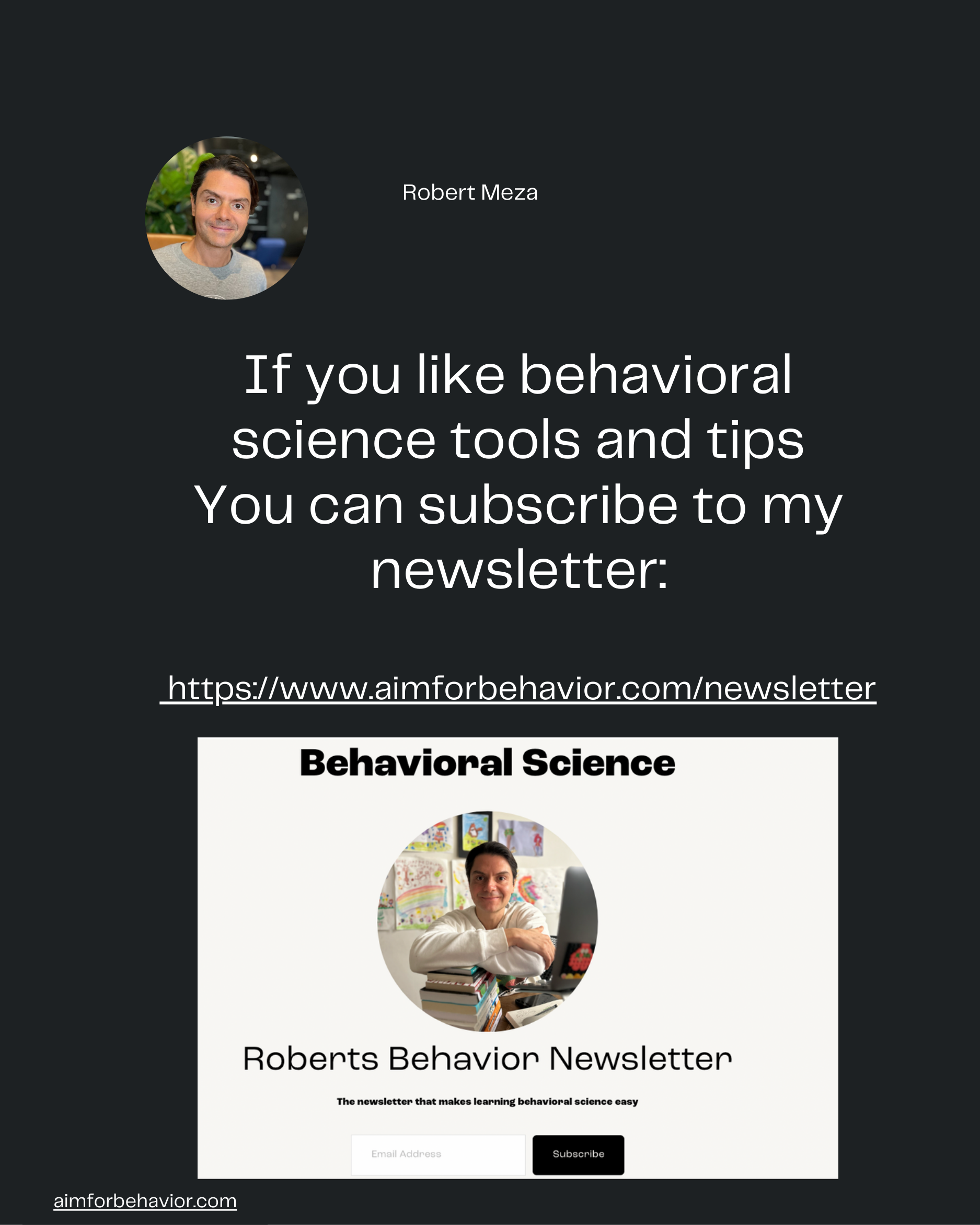
If you like behavioral
science tools and tips
You can subscribe to my
newsletter:

 https://www.aimforbehavi
Slide 21
This morning we presented a behavioral journey to a client and we used storyboards to help ground the concepts.