
This is a great toolkit created by the
This is a great toolkit created by the Auckland Council It includes cards that can be used for ideation of interventions (remember this is the last step in your work, not the first) It starts with
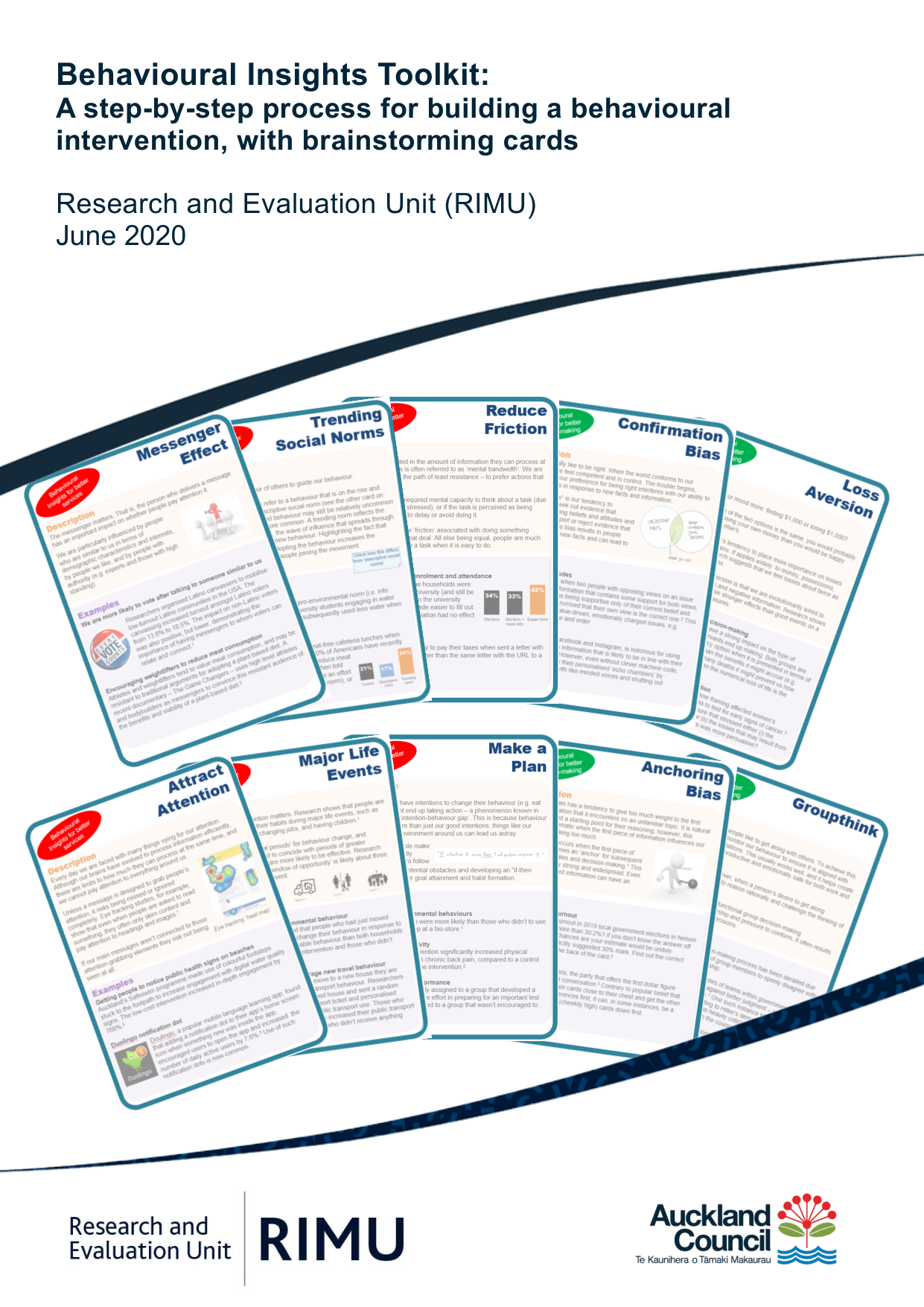
This is a great toolkit created by the Auckland Council
It includes cards that can be used for ideation of interventions (remember this is the last step in your work, not the first)
It starts with a nice one page canvas that helps you go step by step on what is needed to get to your intervention
-Goal -Current Behavior -Desired Behavior -Behavior Principles -Ideas -Testing
The cards themselves, made for creating better services include:
-Start Small and Build Momentum -Reduce Choice Overload -Commitment -Scarcity
Each card comes with:
-A description -An example -How to use -Related Principles
I think these are great for inspiration.
One thing I would like to see more when card are made is how they connect to the barriers addressed (or enablers)
This is probably why I like using the Behavior Change Wheel - with my clients on projects - as I can go and connect the barriers to the interventions and behavior change techniques.
This allows me to have a bit more certainty in my hypothesis, and gives me an extra layer of reflection before the final concepts are put out to test.
Let me know your thoughts on the cards
The cards were made by
Jesse Allpress Dina Dosmukhambetova, PhD
This allows me to have a bit more certainty in my hypothesis, and gives me an extra layer of reflection before the final concepts are put out to test.
Sources named in this post
- SHIFT Barrier Codes..Aim For Behavior
- Jill Cane and colleagues, Theoretical Domains Framework (TDF) (2012)
- Deci, SDT at Work (Self-Determination Theory) (2000)
- Susan Michie at UCL, BCTTv1 (Behaviour Change Technique Taxonomy v1) (2013)