Hero slide: Is your change initiative treating resistance as a

Is your change initiative treating resistance as a problem to solve?
A better way is to use it as a diagnostic signal.

When employees avoid new systems, delay implementation, or show minimal effort, they’re telling you something important about the system, the context, or their unmet needs.

The real question isn’t, how do we overcome resistance?.. instead, it should be:

What does this resistance tell us about the gaps in how we are approaching our change?

I’ve identified 15 drivers that seem to keep coming up in change projects:

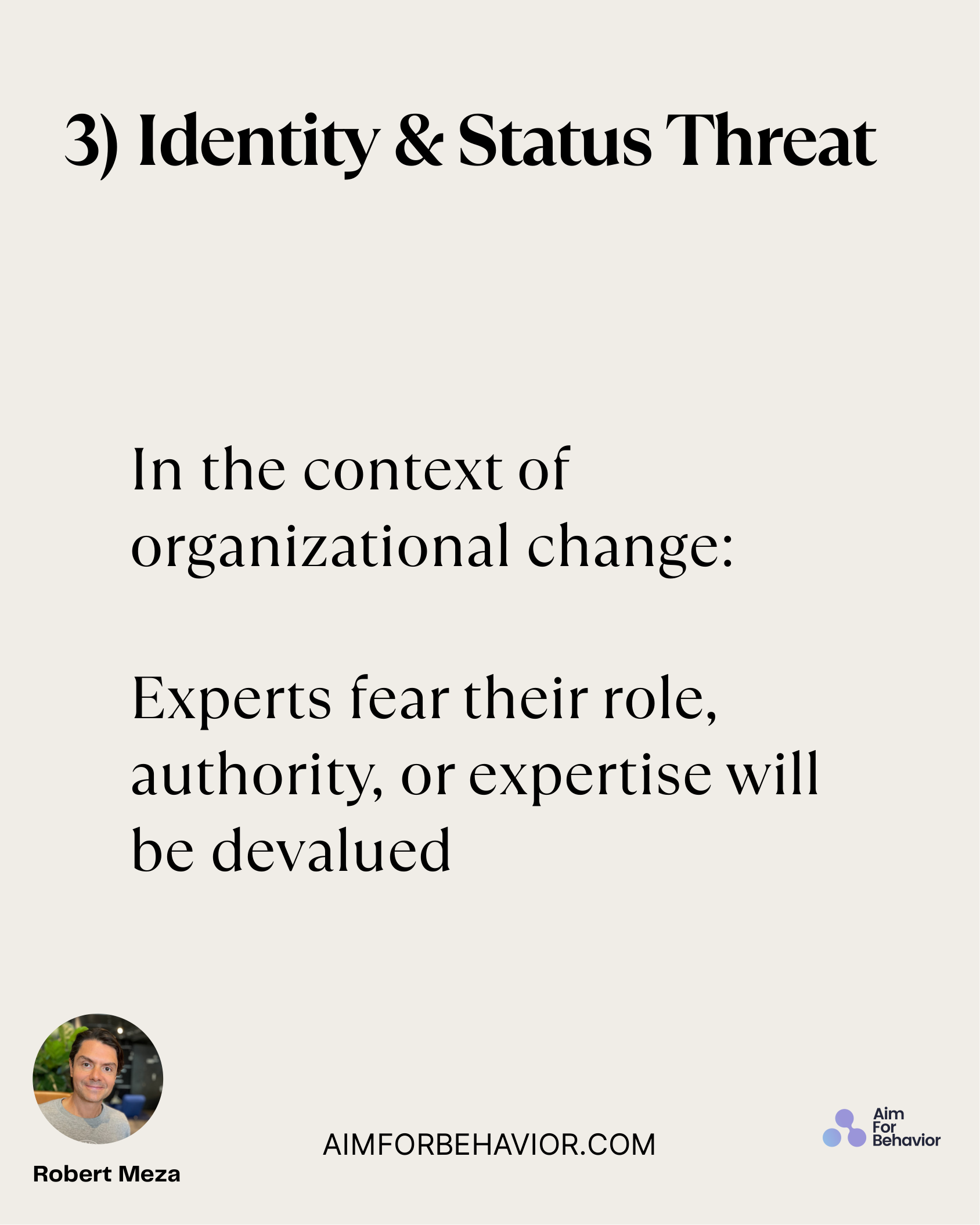
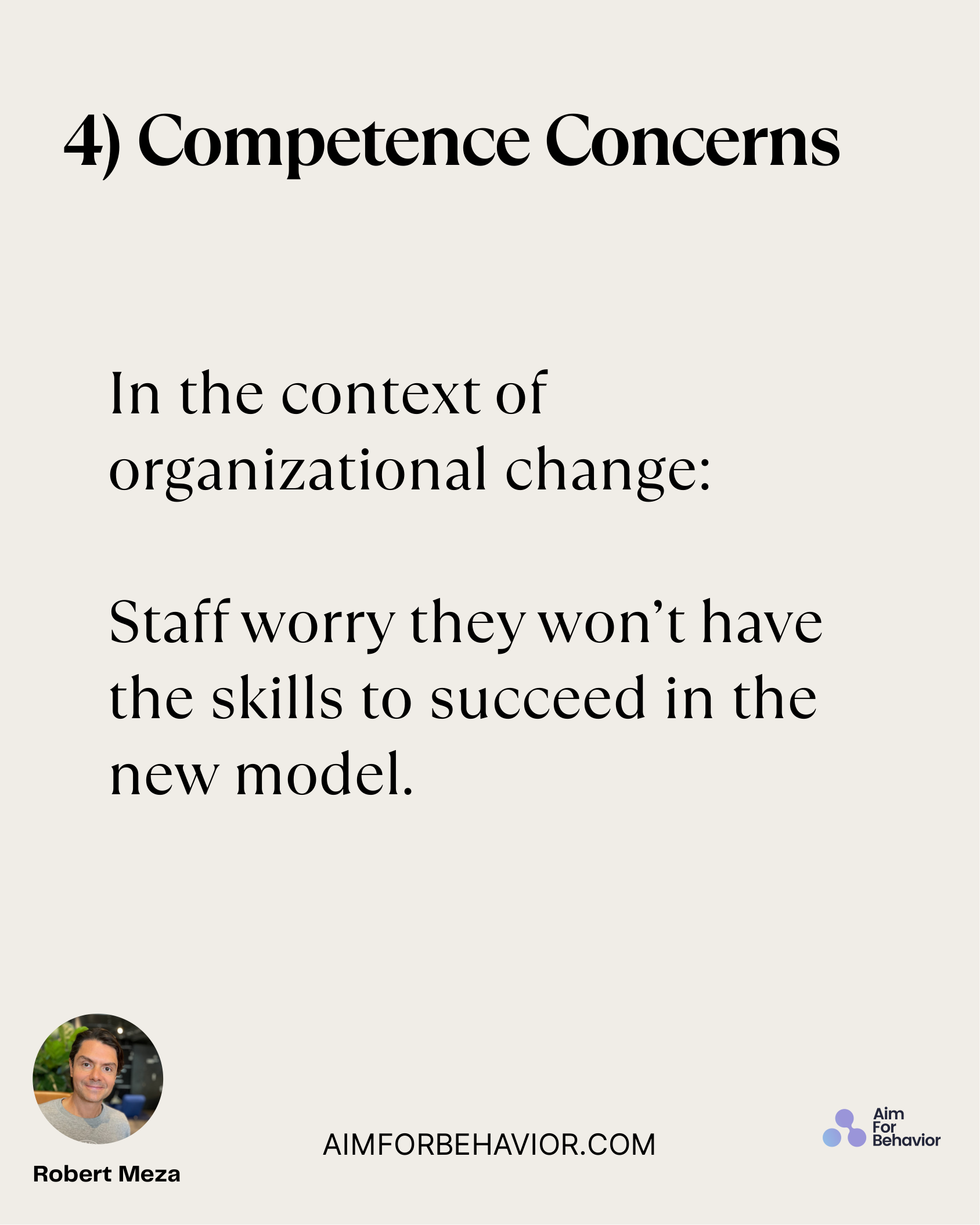
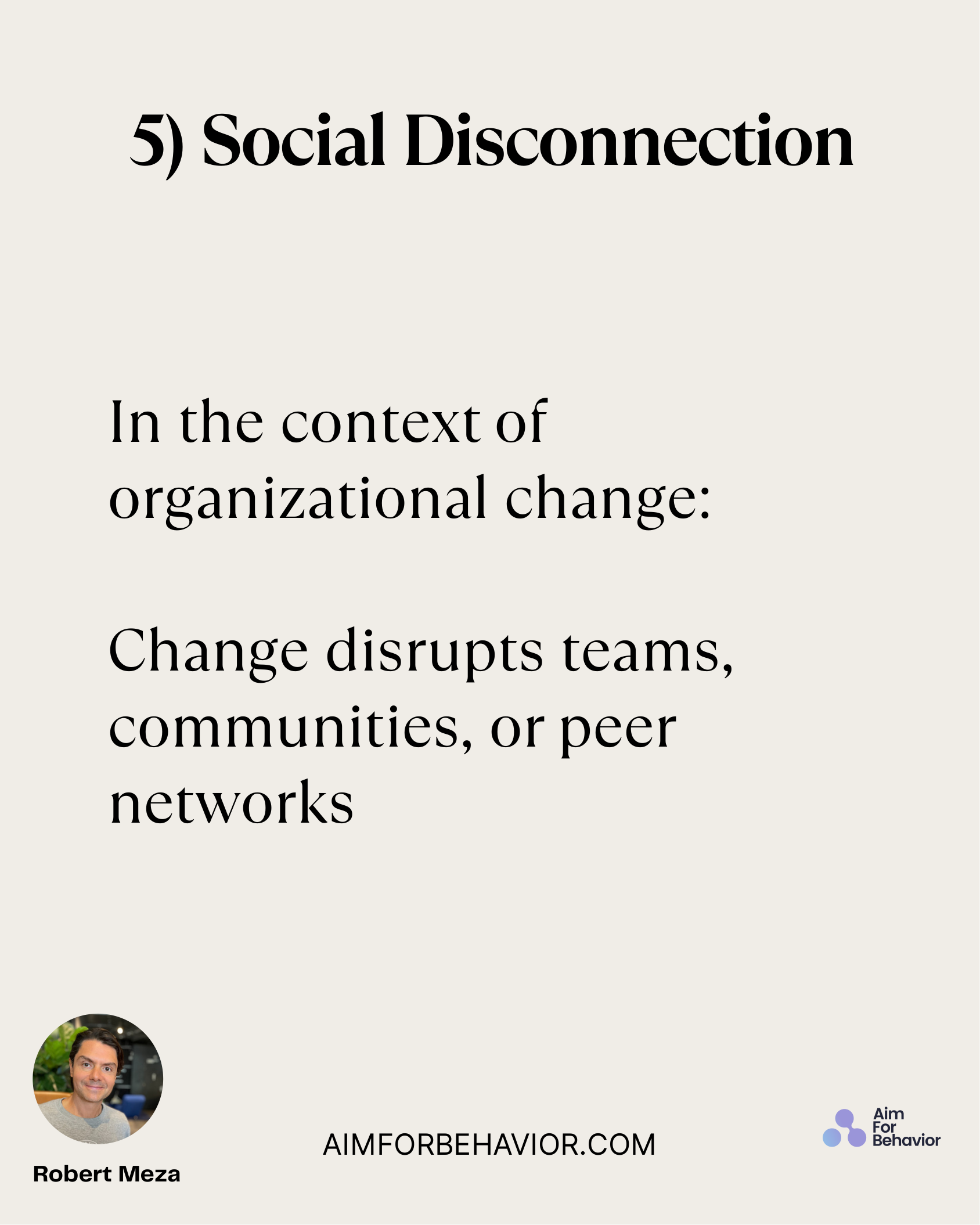
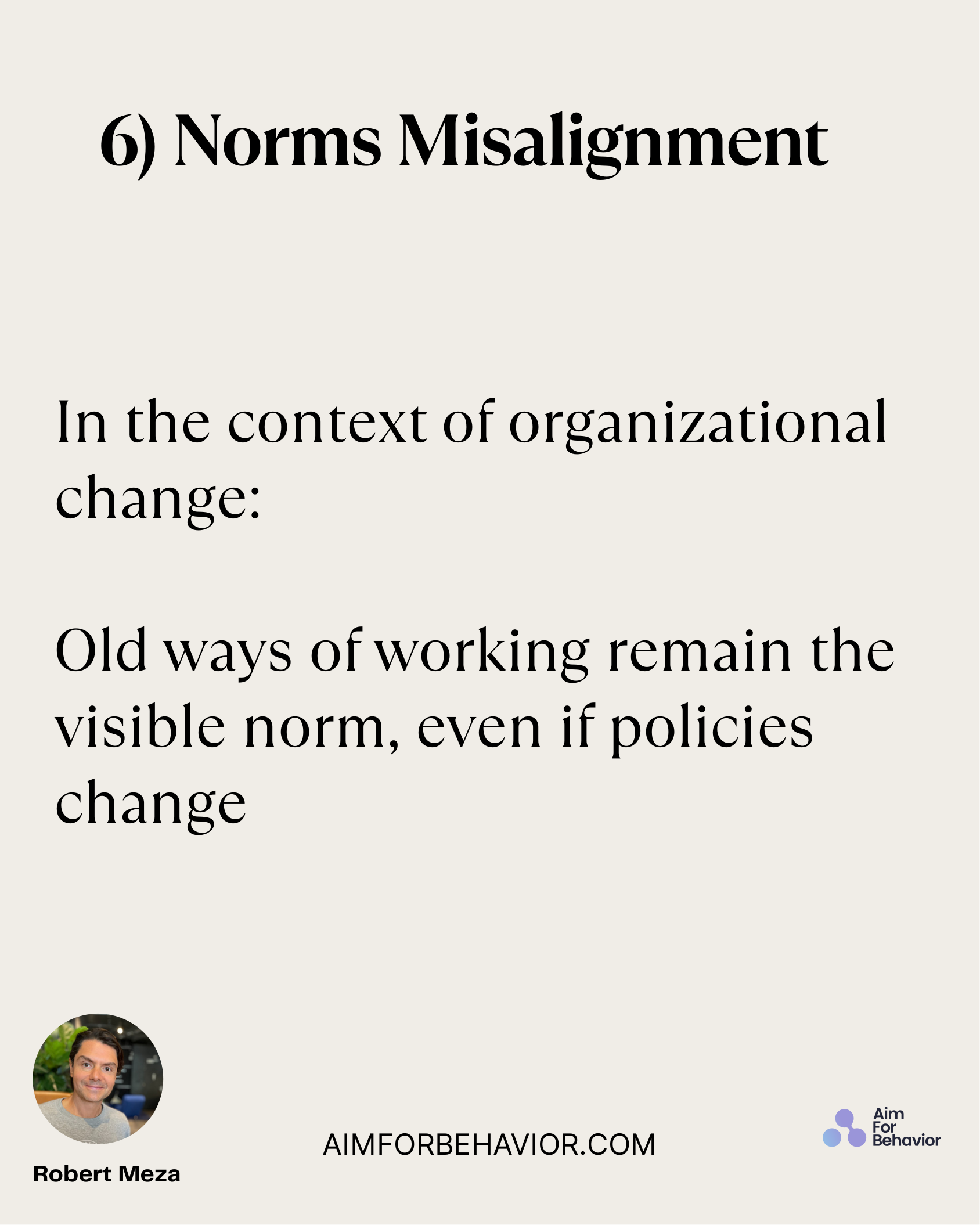
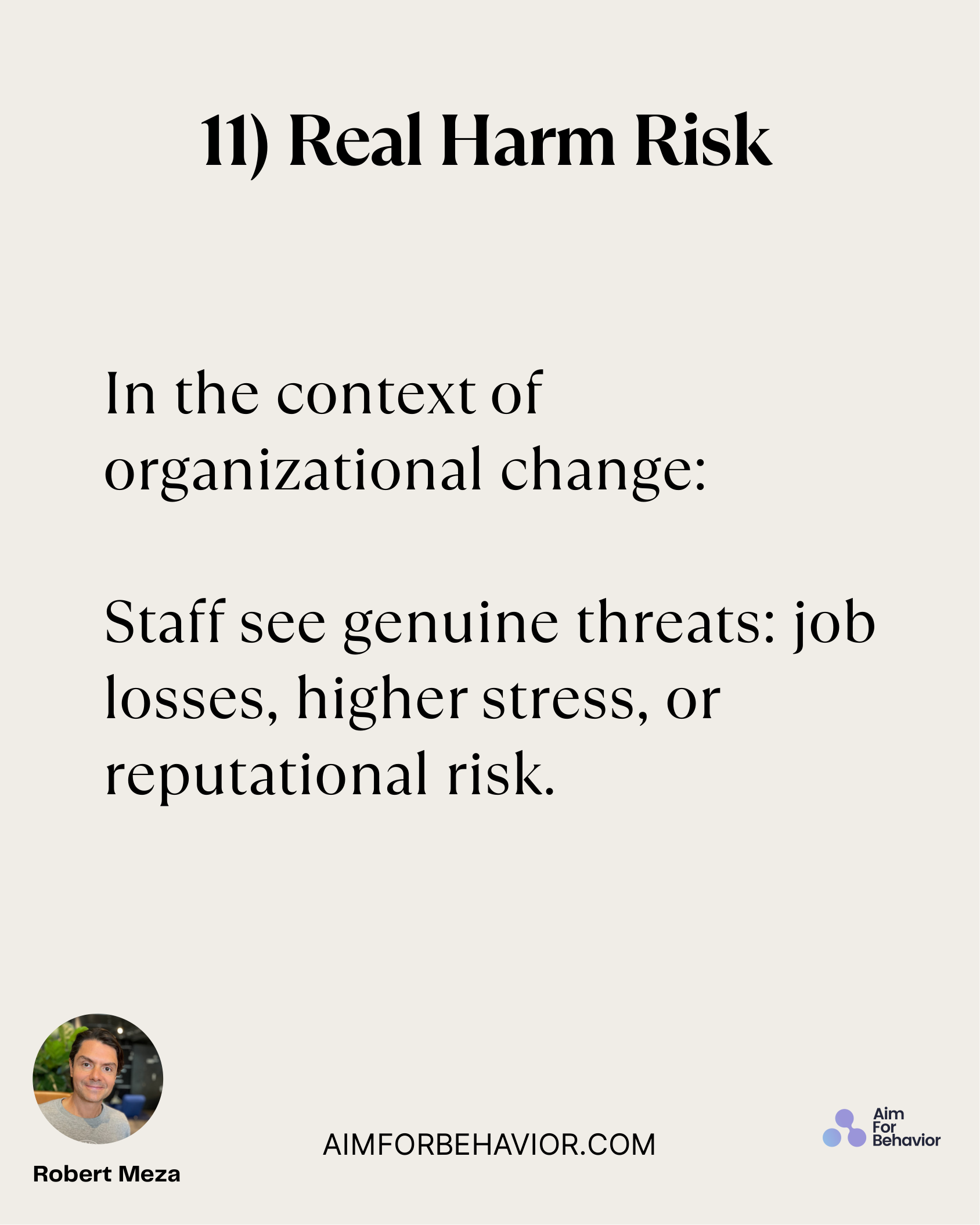
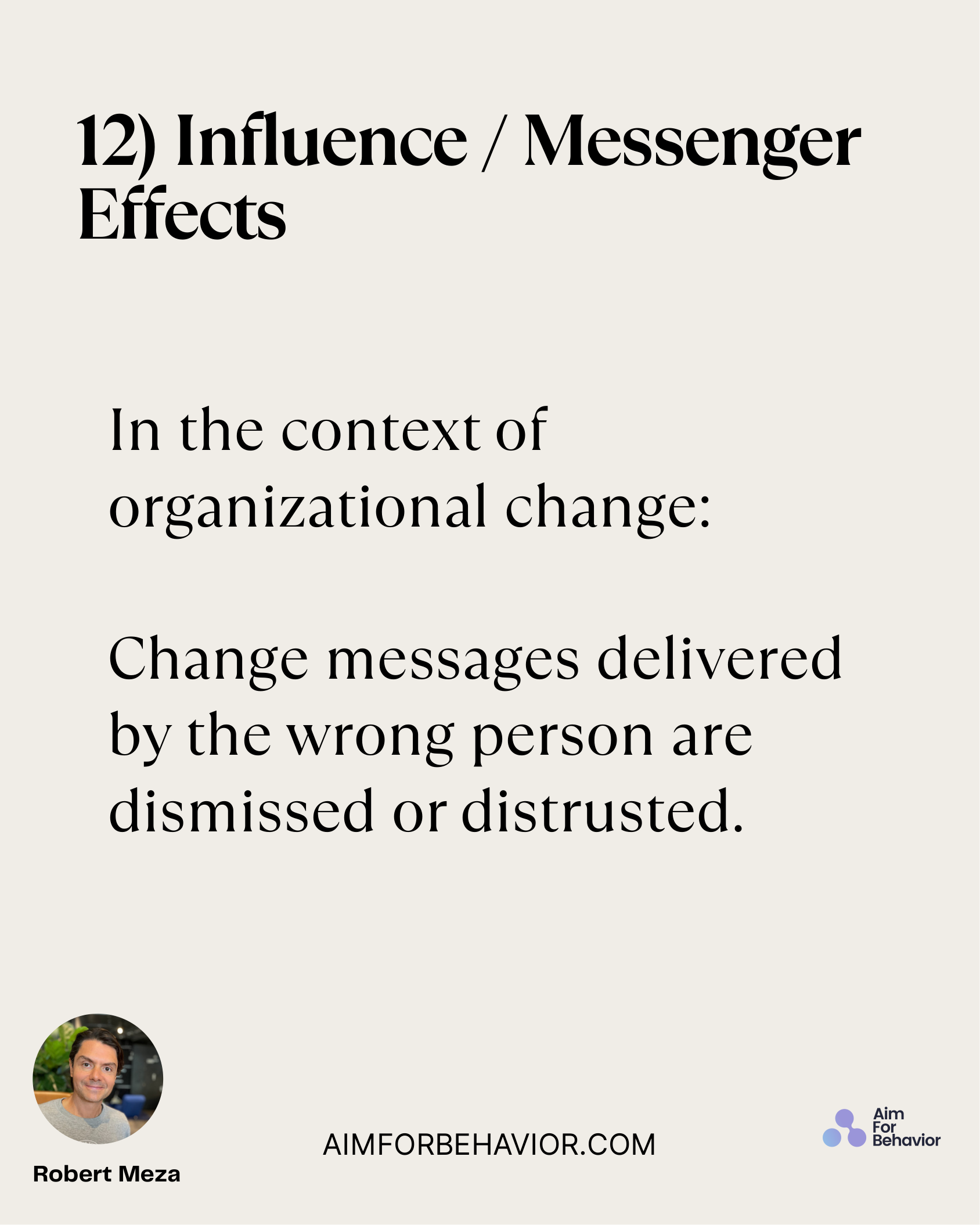
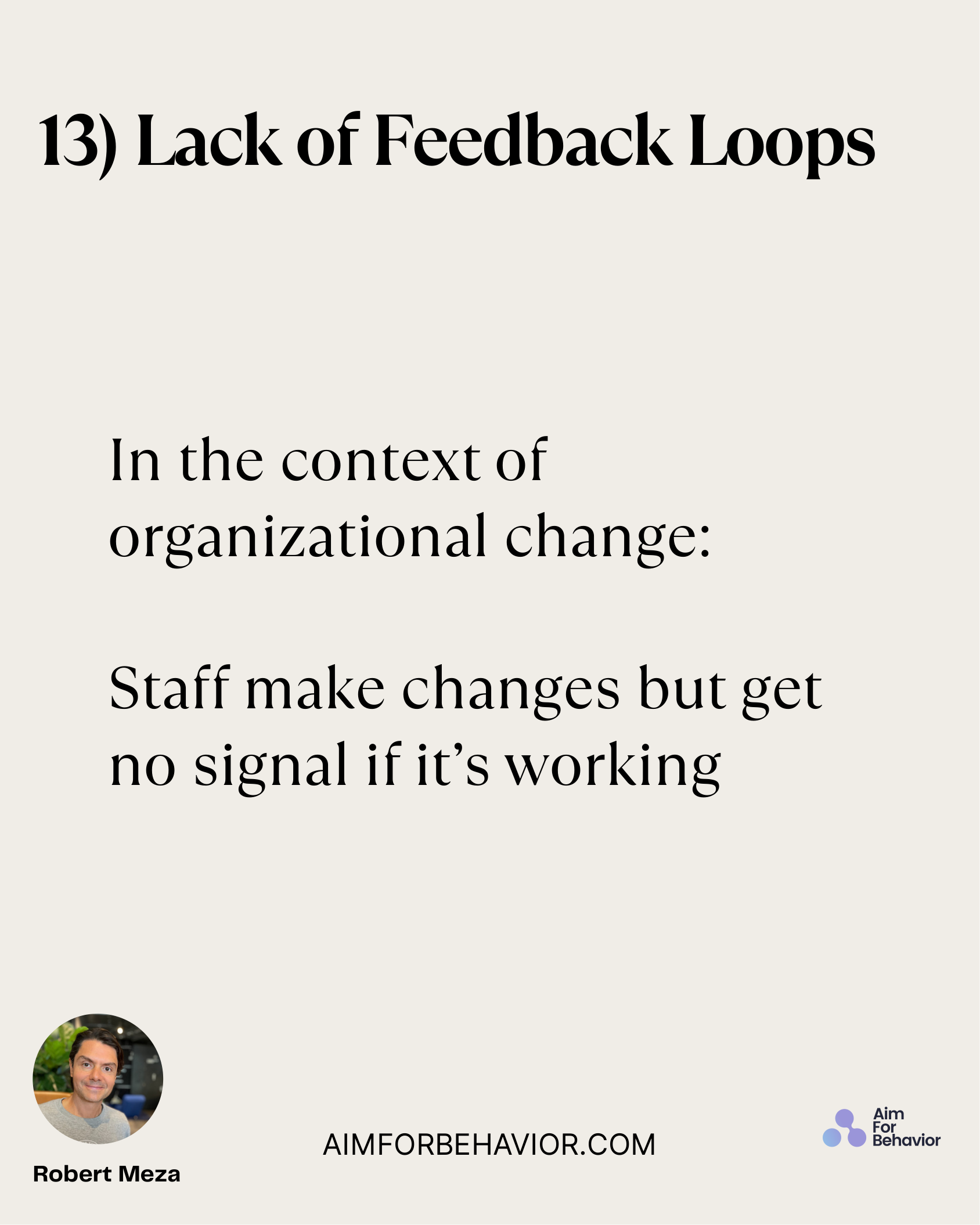
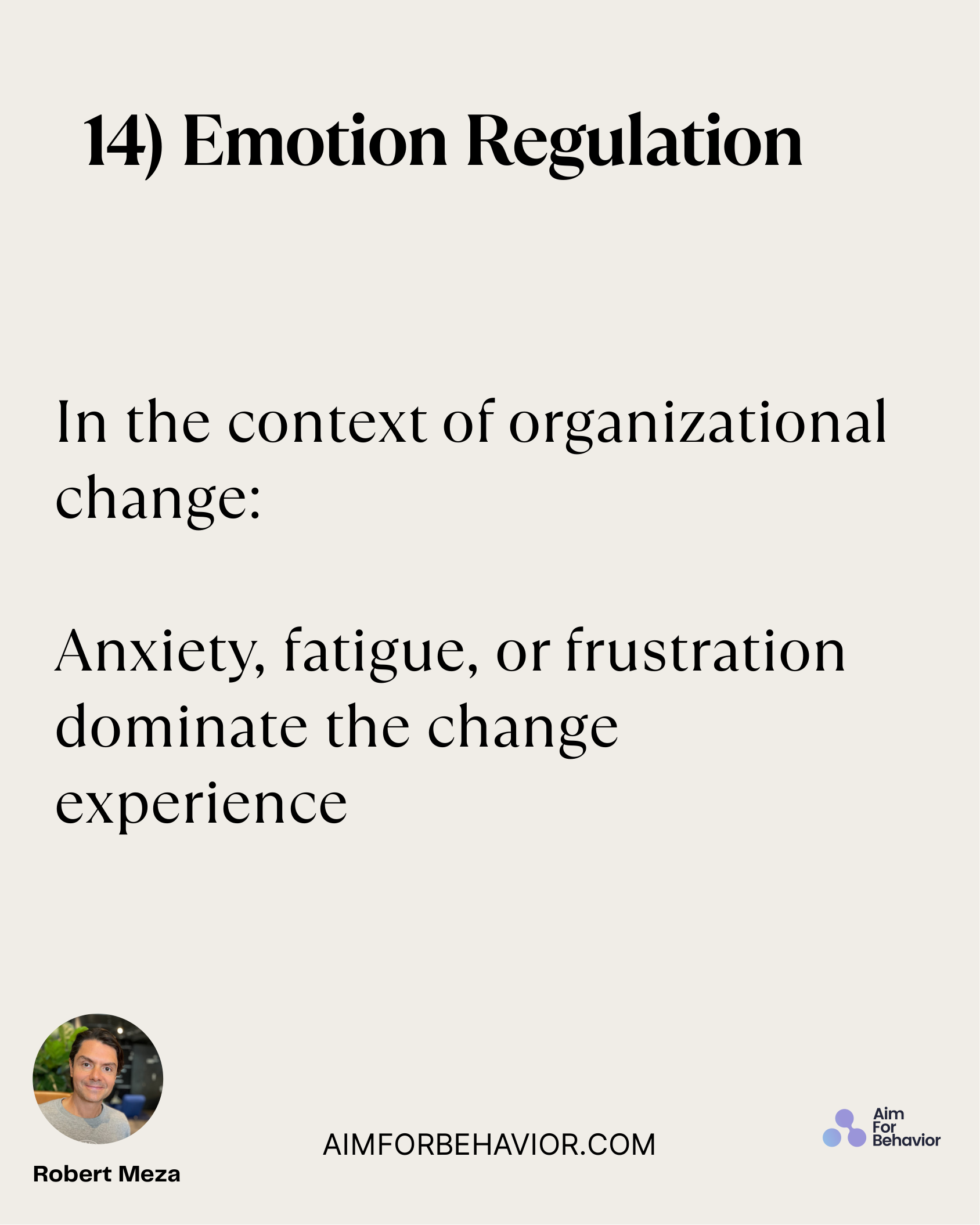
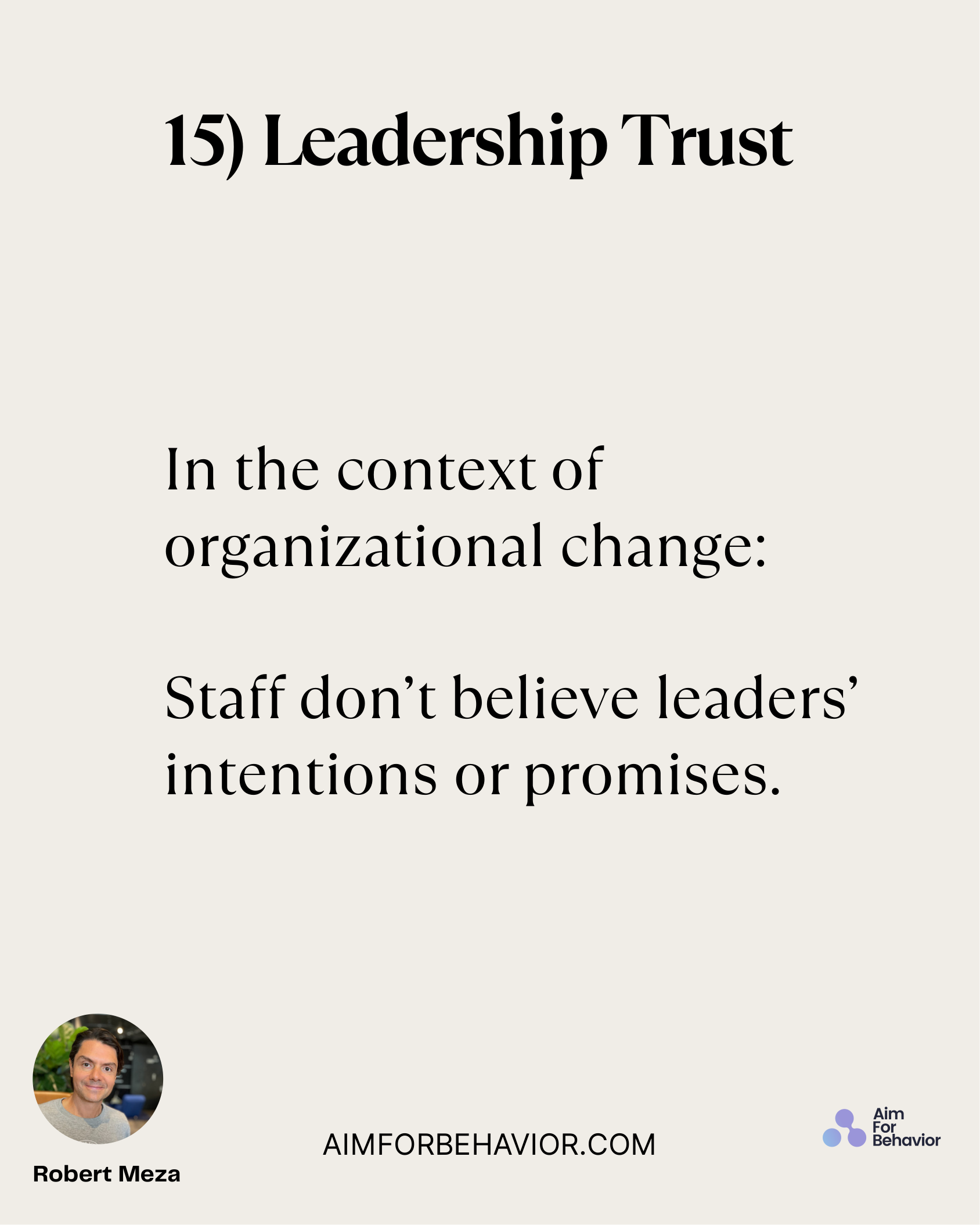
• Autonomy Threat • Uncertainty & Ambiguity • Identity & Status Threat • Competence Concerns • Social Disconnection • Norms Misalignment • Fairness • Ripple Effects • Past Grievances • Increased Workload • Real Harm Risk • Influence / Messenger Effects • Lack of Feedback Loops • Emotion Regulation • Leadership Trust

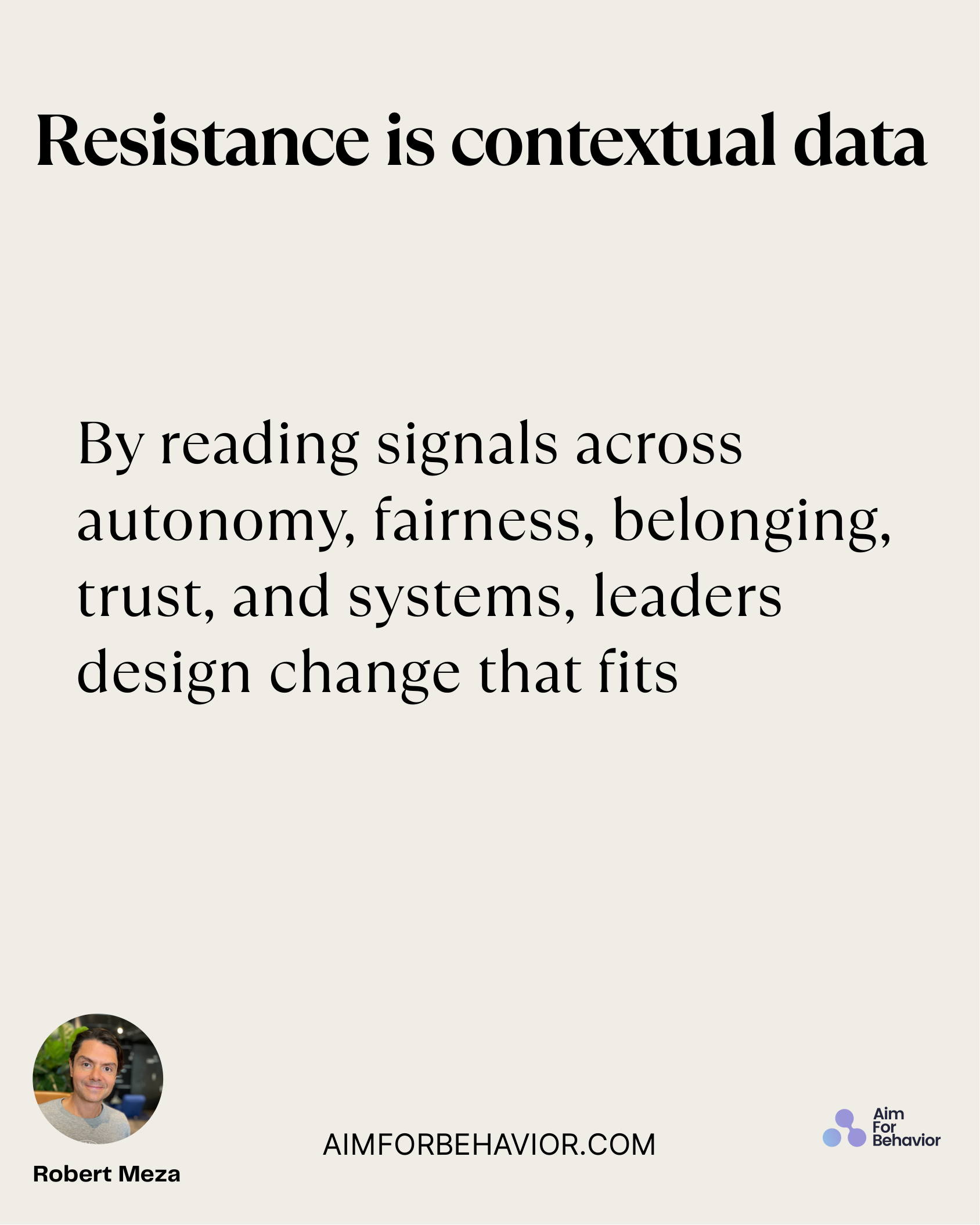
When you understand which drivers are active in your system, you can target strategies that work with human motivation instead of against it.

Resistance is never apperars randomly, it’s actually data.

The work is to systematically diagnose it, get to the root cause, and act with a solid hypothesis.

Most leadership teams recognize these patterns, yet few have a systematic way to diagnose which drivers are active in their context or how to address them, which is what I help teams do through behavioral diagnostics and targeted strategies.

Which of these drivers shows up most in your change work?

AIMFORBEHAVIOR.COM
Robert Meza 
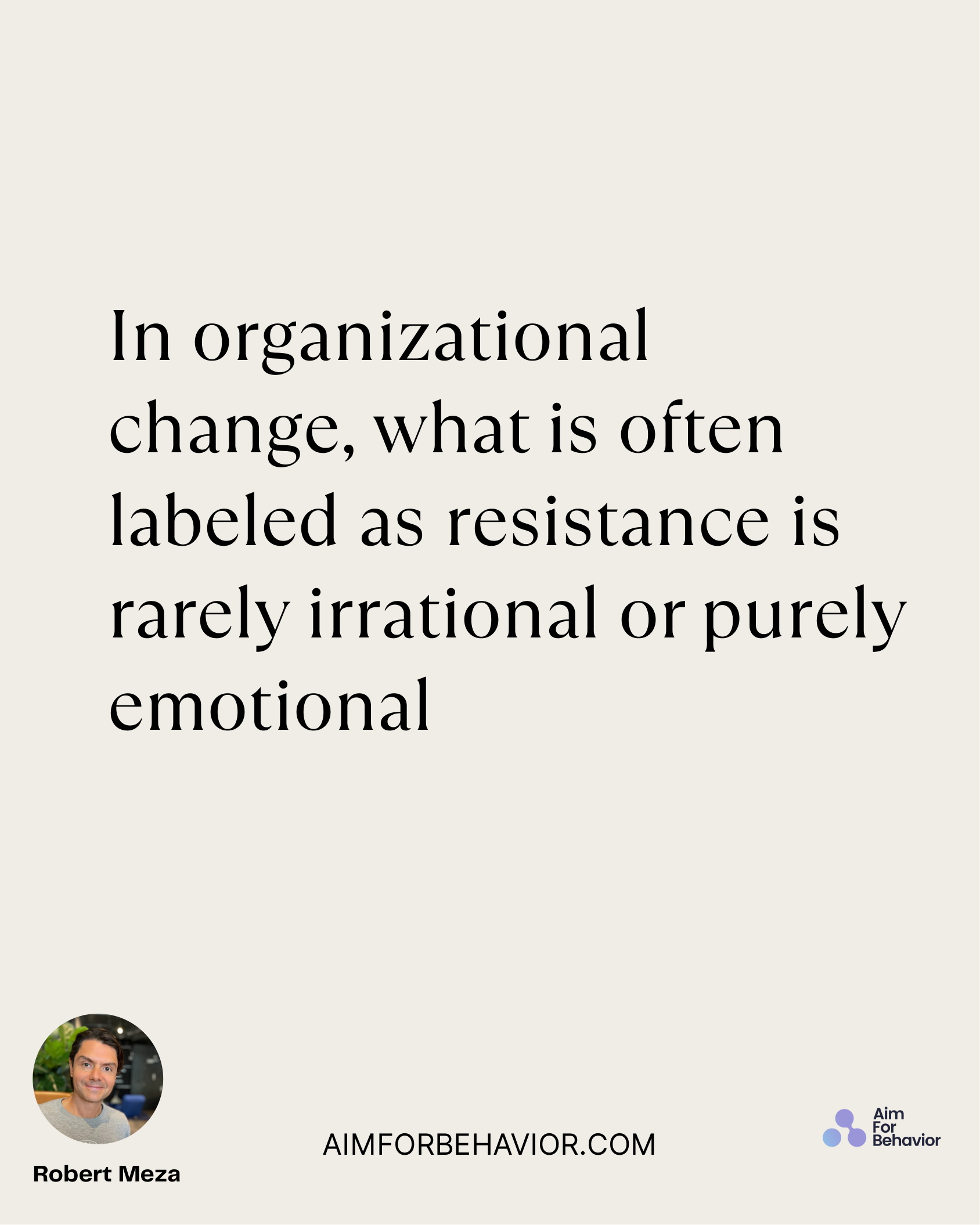
In organizational
change, what is often
labeled as resistance is
rarely irrational or pu
Slide 2
AIMFORBEHAVIOR.COM
Robert Meza 
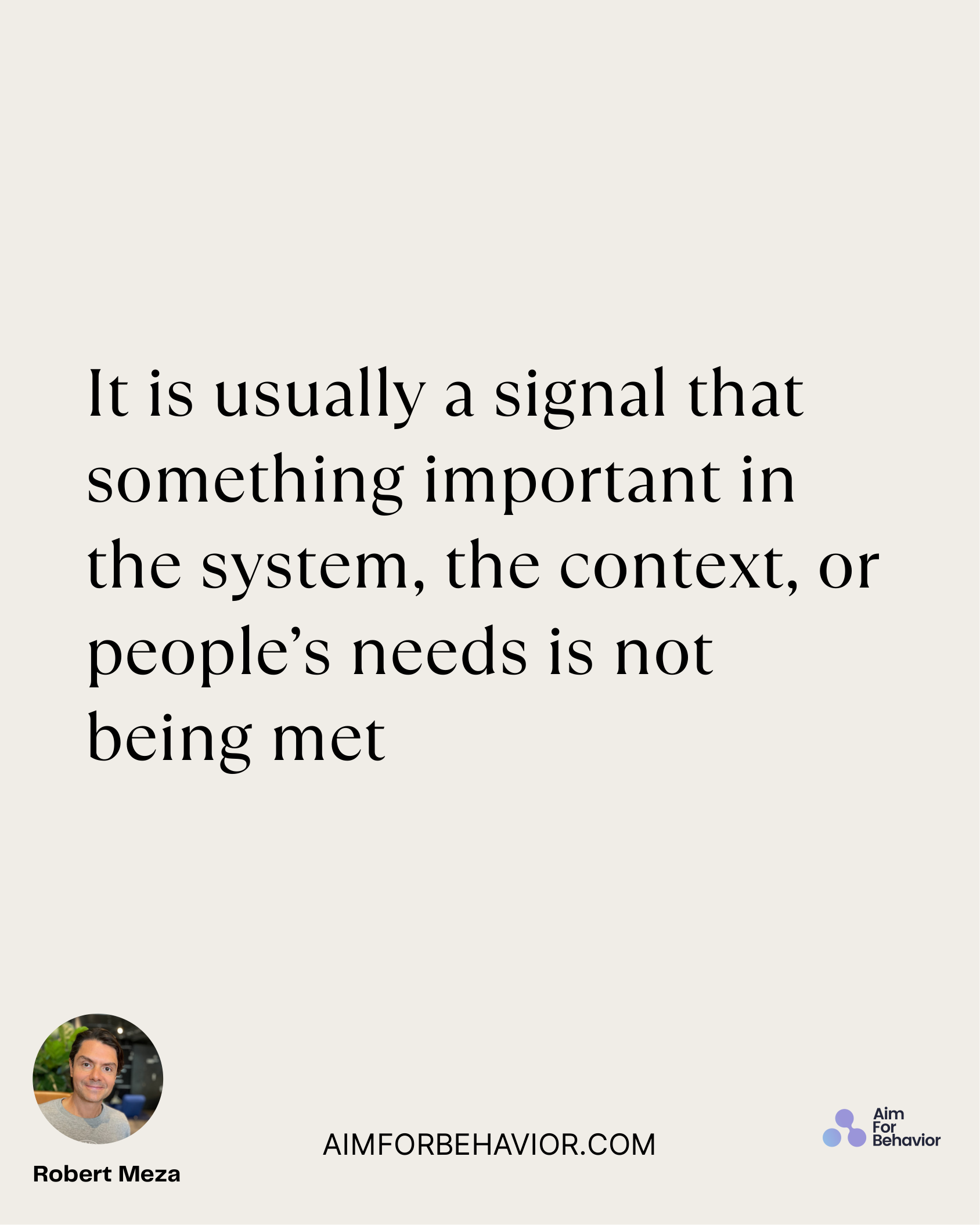
It is usually a signal that
something important in
the system, the context, or
people’s
Slide 3
AIMFORBEHAVIOR.COM
Robert Meza 
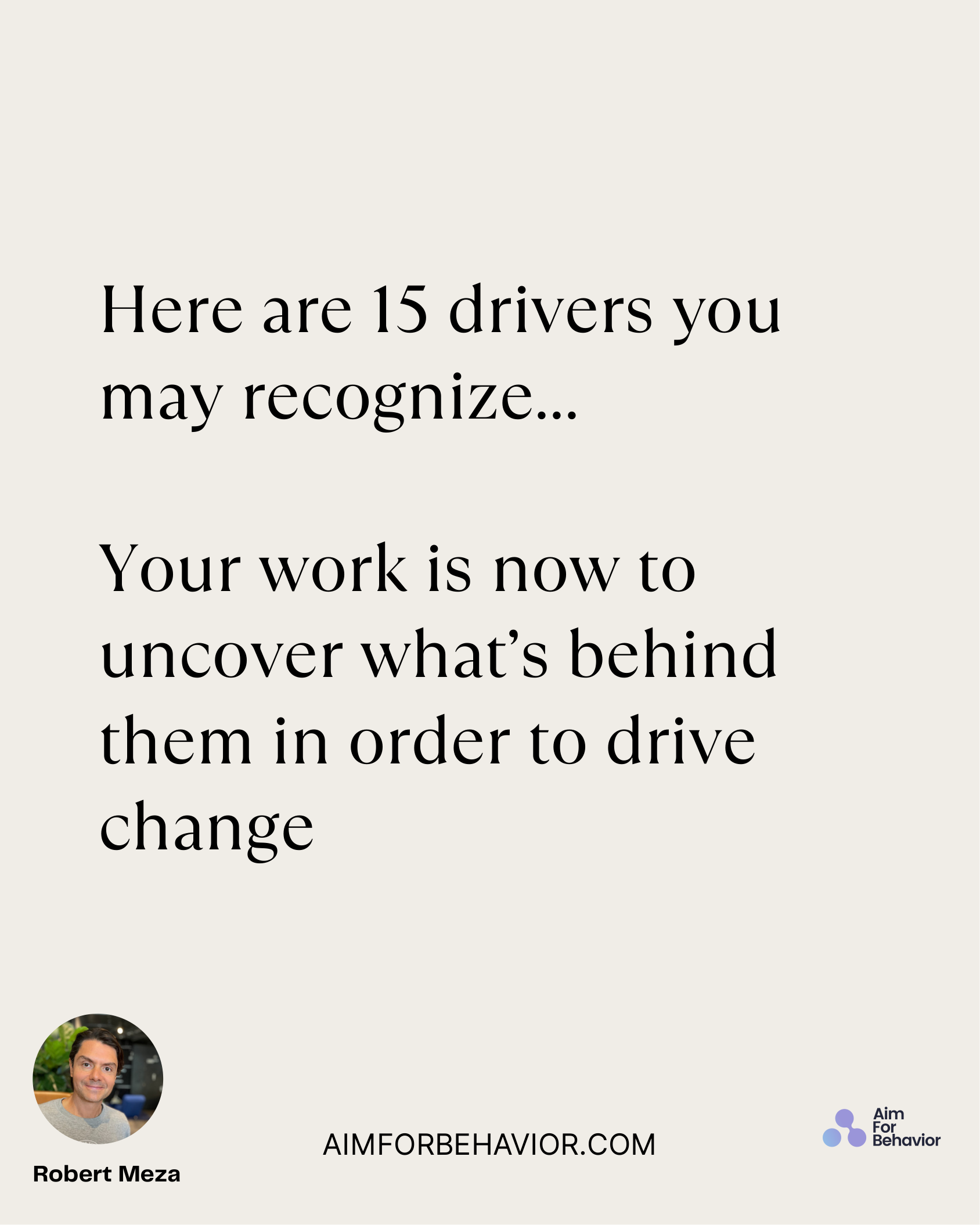
Here are 15 drivers you
may recognize...
Your work is now to
uncover what’s behind
them
Slide 4
AIMFORBEHAVIOR.COM
Robert Meza 
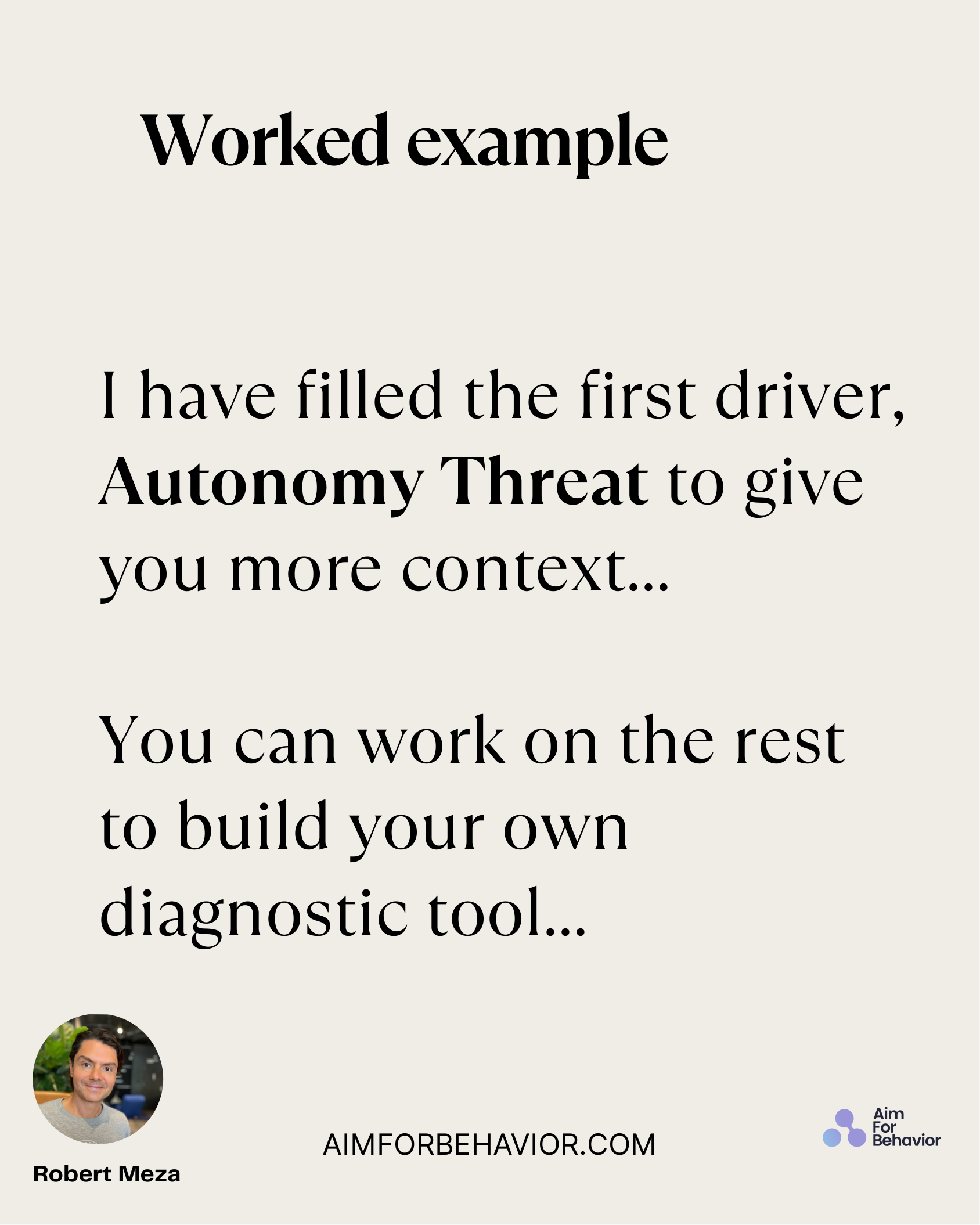
I have filled the first driver,
Autonomy Threat to give
you more context...
You can work
Slide 5
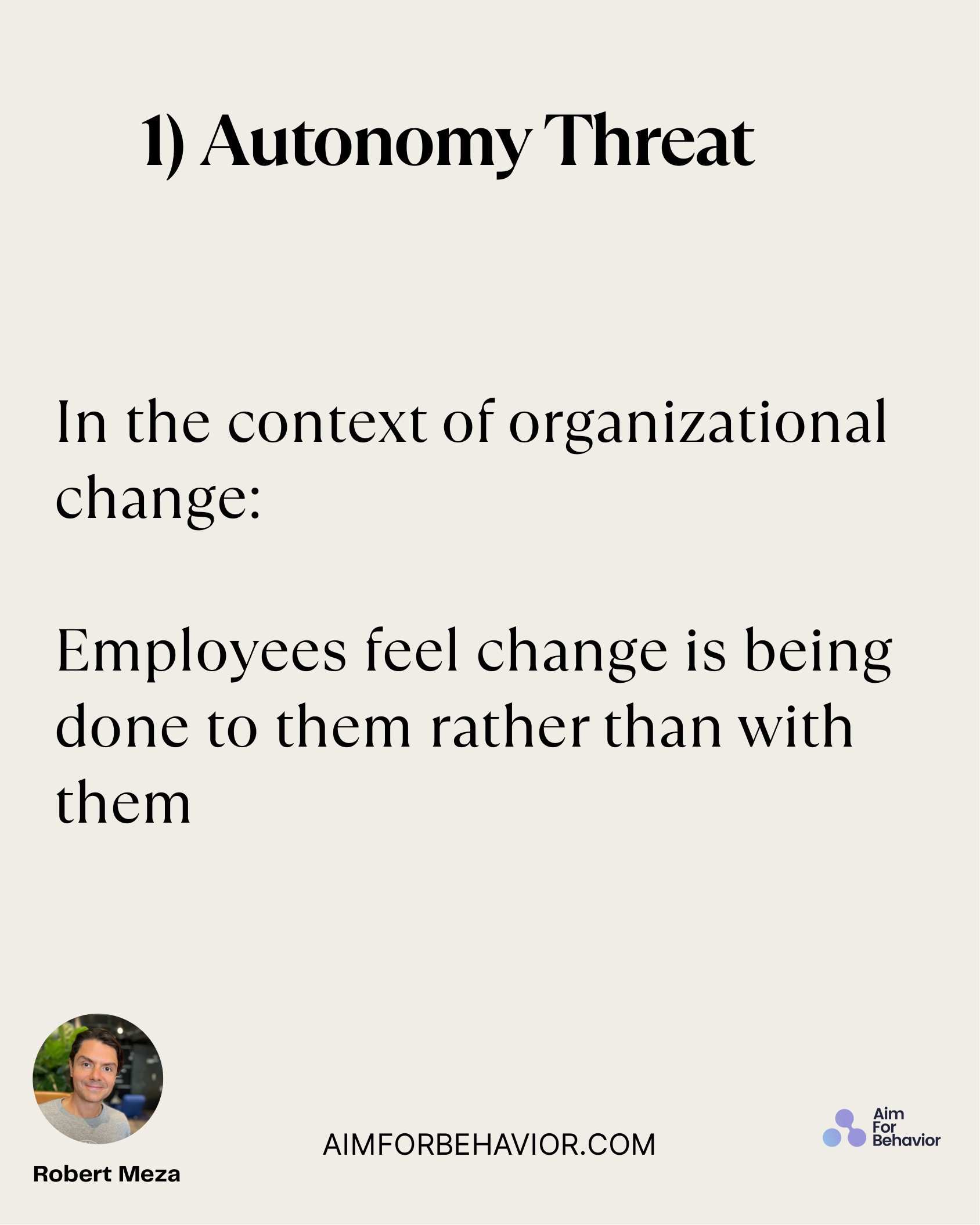
1) Autonomy Threat
AIMFORBEHAVIOR.COM
Robert Meza 
In the context of organizational
change:
Employees feel change is bei
Slide 6
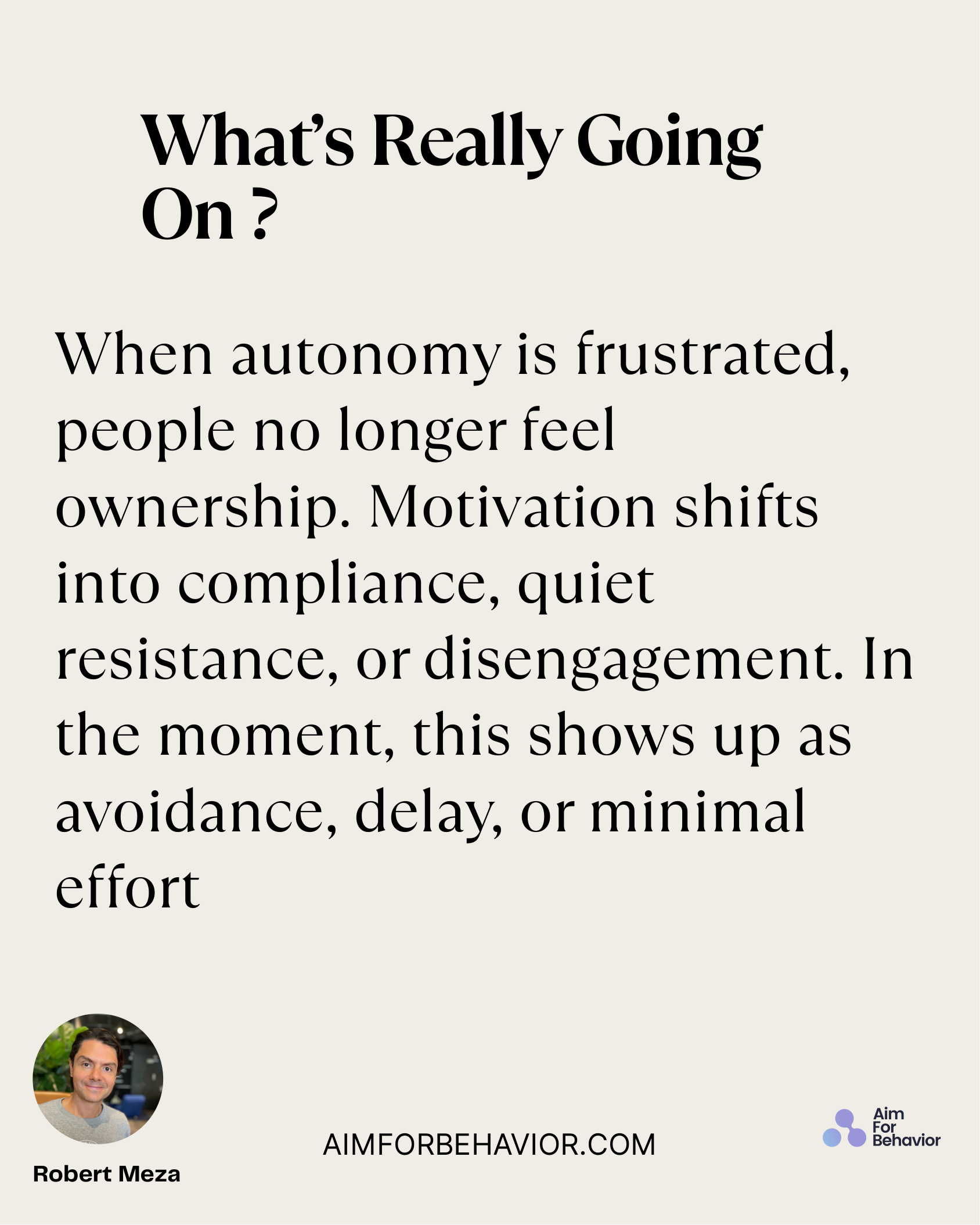
What’s Really Going
On ?
AIMFORBEHAVIOR.COM
Robert Meza 
When autonomy is frustrated,
people no longer feel
ownership. M
Slide 7
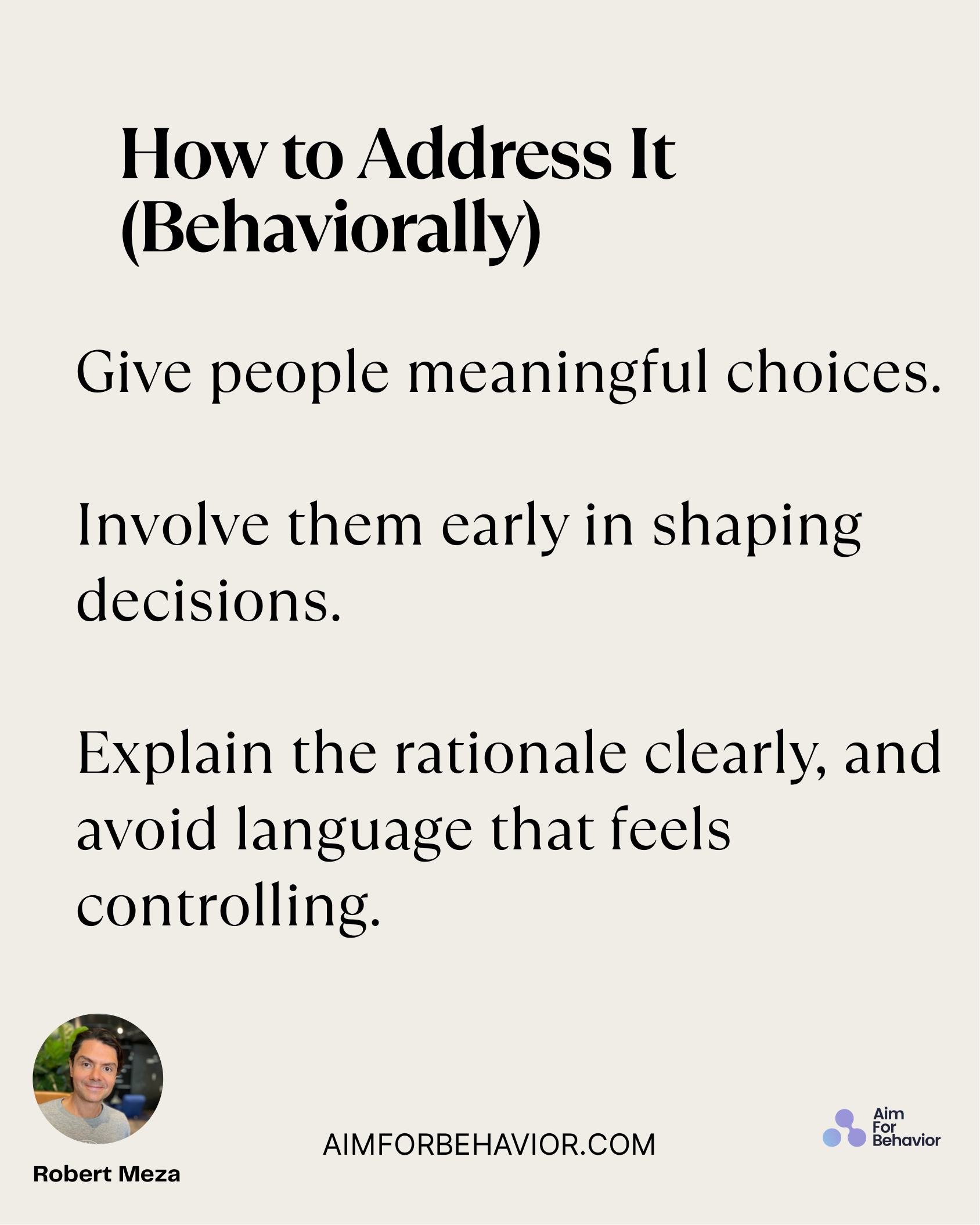
How to Address It
(Behaviorally)
AIMFORBEHAVIOR.COM
Robert Meza 
Give people meaningful choices.
 
Involve them early in
Slide 8
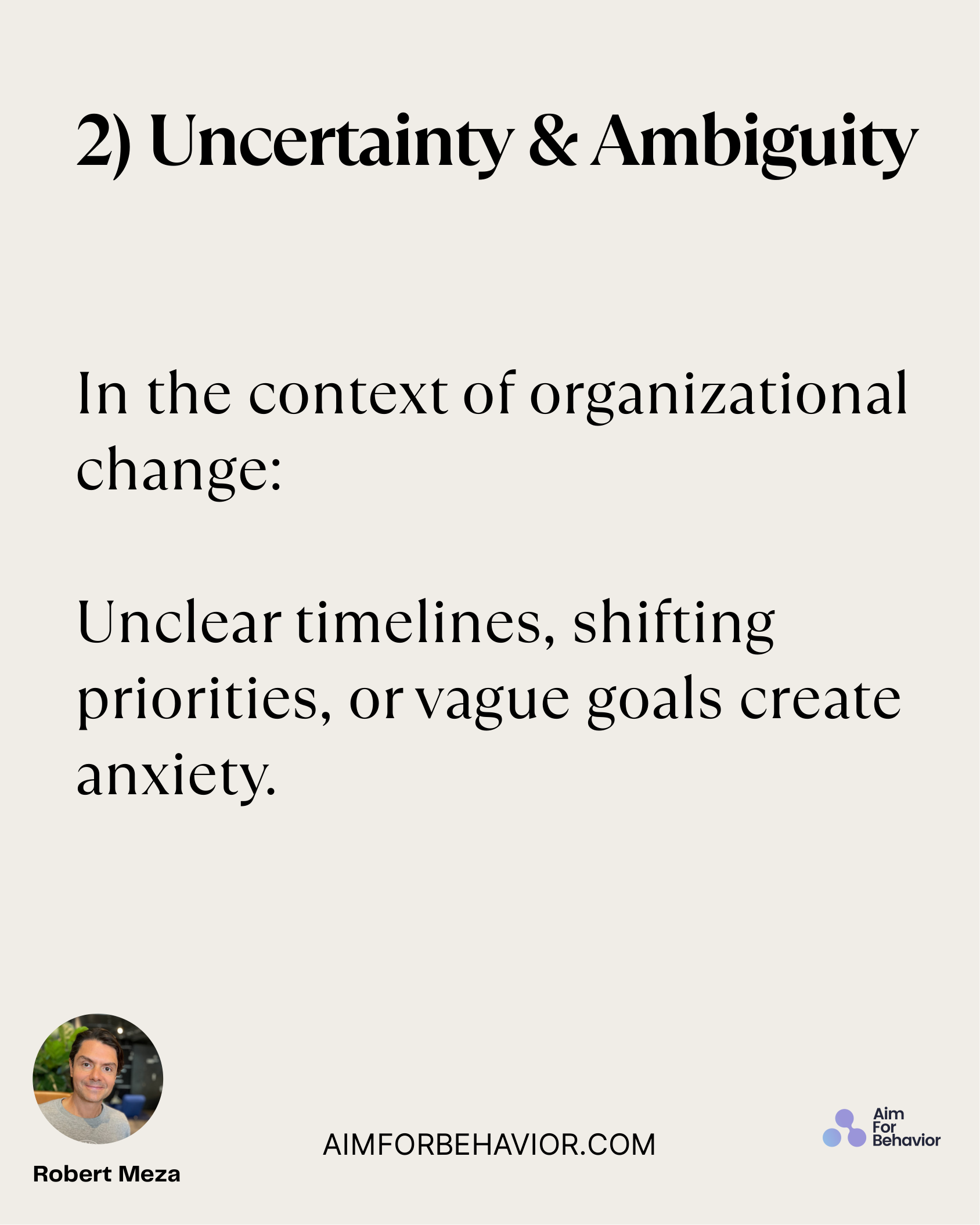
2) Uncertainty & Ambiguity
AIMFORBEHAVIOR.COM
Robert Meza 
In the context of organizational
change: 
Unclear timelines,
Slide 9
3) Identity & Status Threat
AIMFORBEHAVIOR.COM
Robert Meza 
In the context of
organizational change:
Experts fear their
Slide 10
4) Competence Concerns
AIMFORBEHAVIOR.COM
Robert Meza 
In the context of
organizational change:
Staff worry they won’t h
Slide 11
5) Social Disconnection
AIMFORBEHAVIOR.COM
Robert Meza 
In the context of
organizational change:
Change disrupts teams,
Slide 12
6) Norms Misalignment
AIMFORBEHAVIOR.COM
Robert Meza 
In the context of organizational
change:
Old ways of working remai
Slide 13
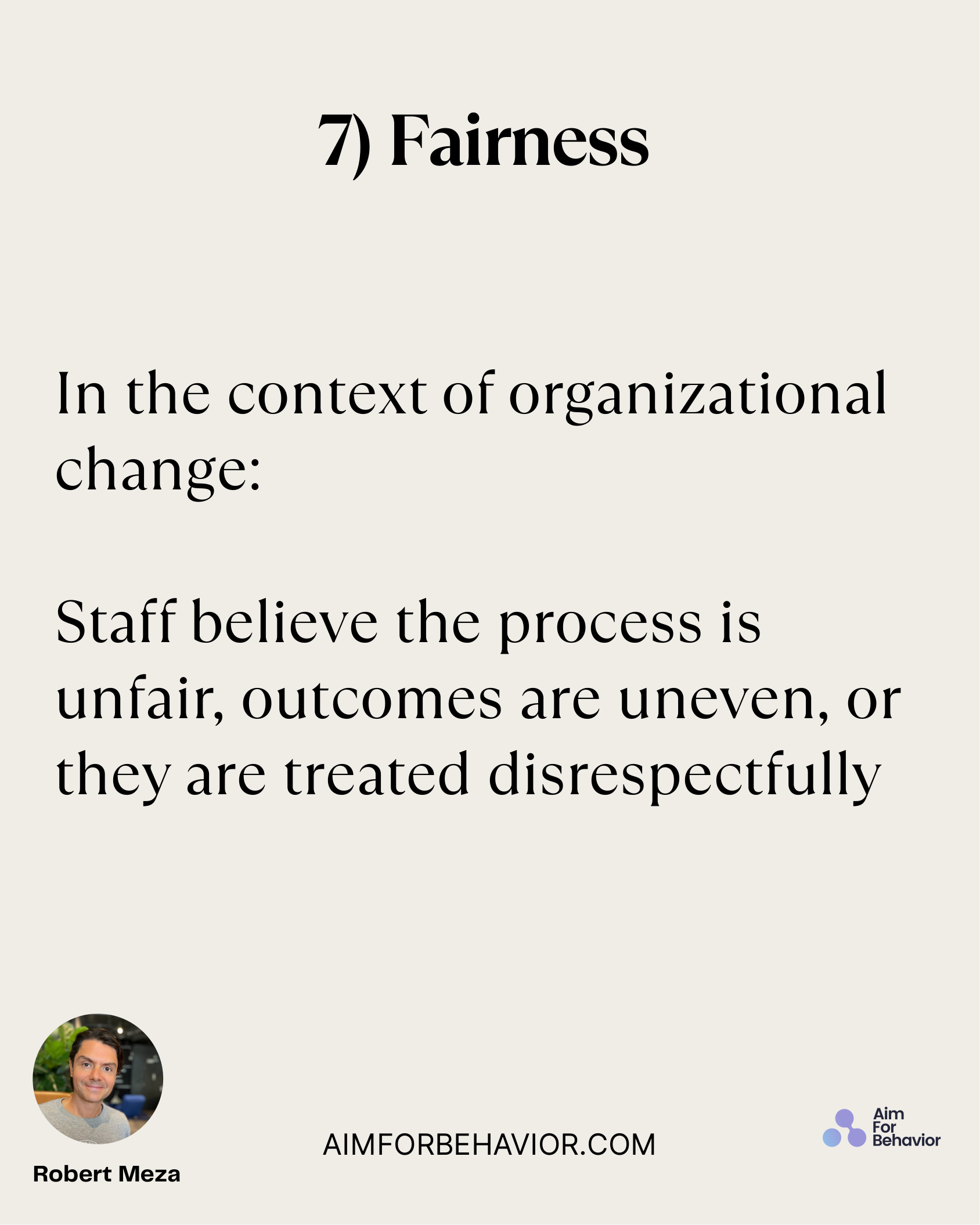
7) Fairness
AIMFORBEHAVIOR.COM
Robert Meza 
In the context of organizational
change: 
Staff believe the process is
unfai
Slide 14
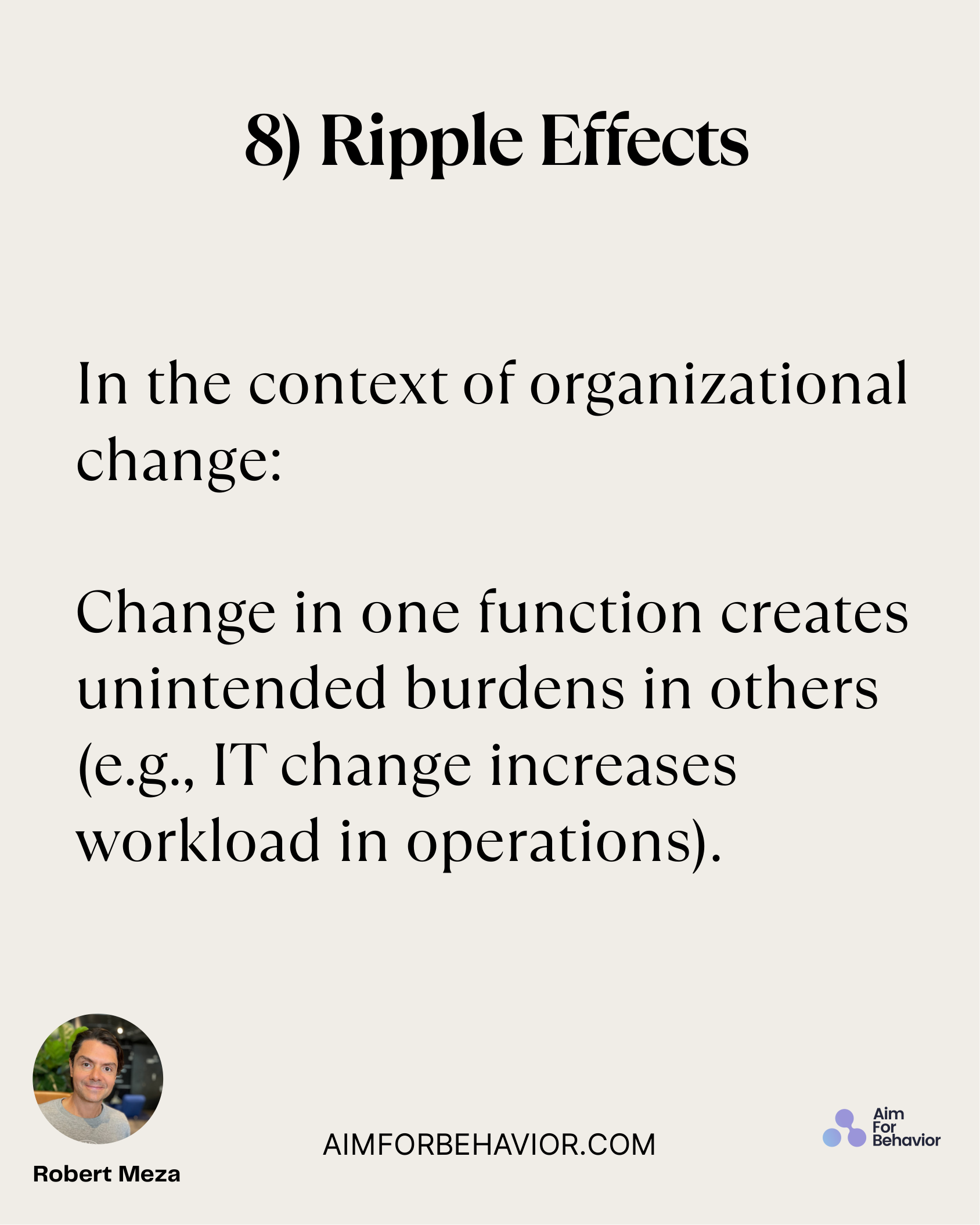
8) Ripple Effects
AIMFORBEHAVIOR.COM
Robert Meza 
In the context of organizational
change:
Change in one function create
Slide 15
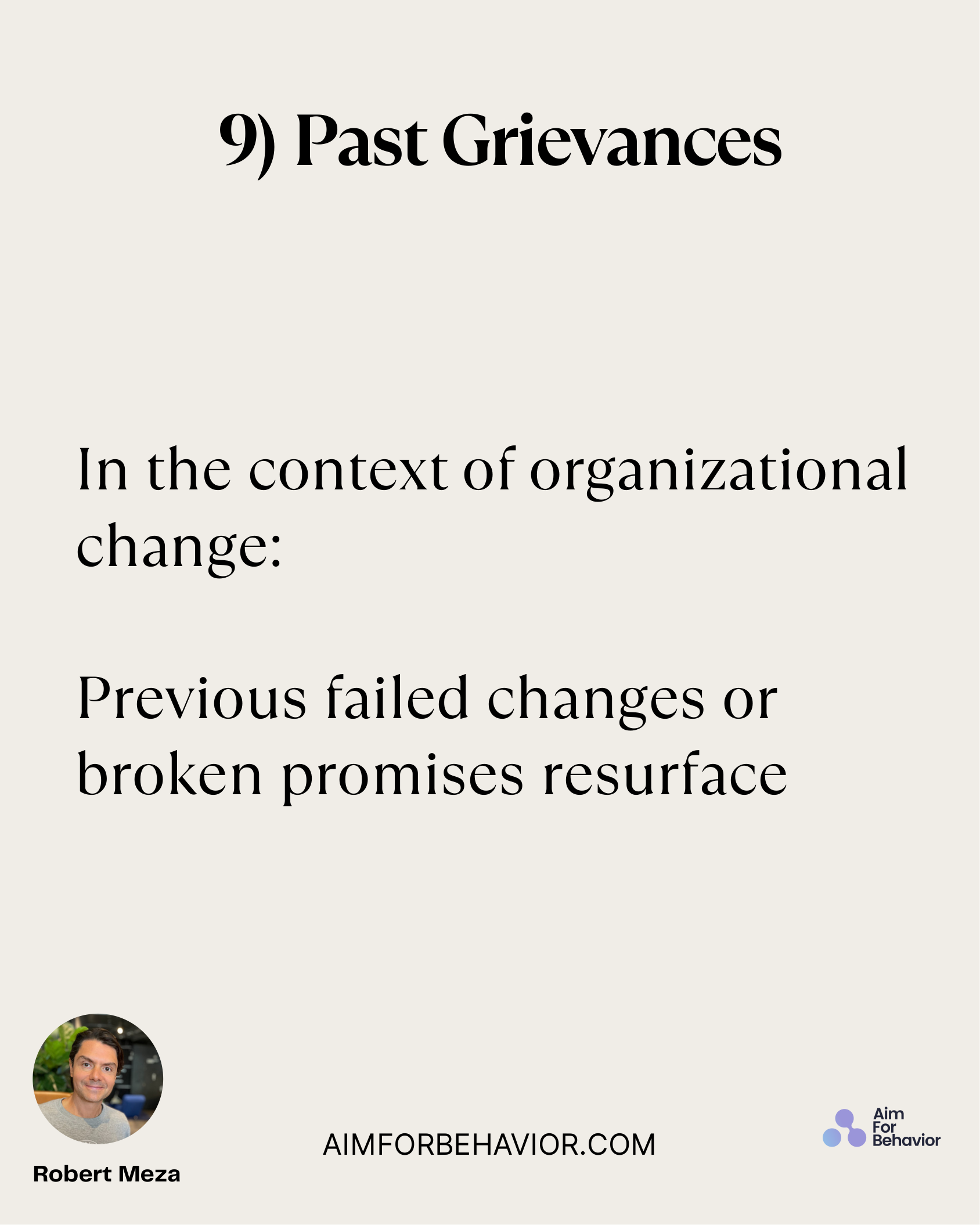
9) Past Grievances
AIMFORBEHAVIOR.COM
Robert Meza 
In the context of organizational
change:
Previous failed changes or
b
Slide 16
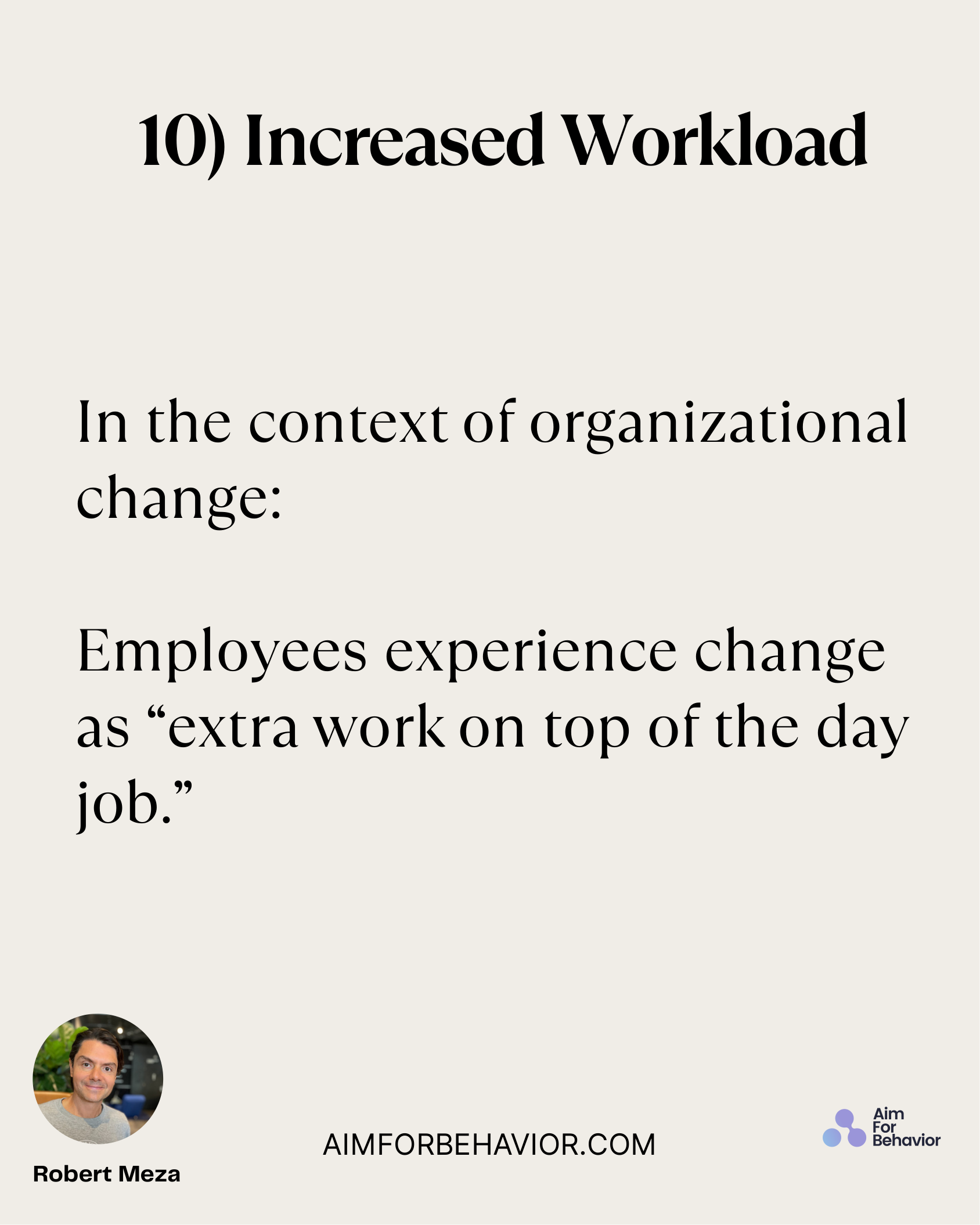
10) Increased Workload
AIMFORBEHAVIOR.COM
Robert Meza 
In the context of organizational
change:
Employees experience cha
Slide 17
11) Real Harm Risk
AIMFORBEHAVIOR.COM
Robert Meza 
In the context of
organizational change:
Staff see genuine threats: j
Slide 18
12) Influence / Messenger
Effects
AIMFORBEHAVIOR.COM
Robert Meza 
In the context of
organizational change:
Change messag
Slide 19
13) Lack of Feedback Loops
AIMFORBEHAVIOR.COM
Robert Meza 
In the context of
organizational change: 
Staff make changes
Slide 20
14) Emotion Regulation
AIMFORBEHAVIOR.COM
Robert Meza 
In the context of organizational
change:
Anxiety, fatigue, or fru
Slide 21
15) Leadership Trust
AIMFORBEHAVIOR.COM
Robert Meza 
In the context of
organizational change:
Staff don’t believe leader
Slide 22
Resistance is contextual data
AIMFORBEHAVIOR.COM
Robert Meza 
By reading signals across
autonomy, fairness, belonging,
t
Slide 23
Your 15 Drivers
AIMFORBEHAVIOR.COM
Robert Meza 
You now have the drivers at a
high level. 
You can now go deeper and
bui
Slide 24
Want to help running a
change diagniostic? 
DM me or Visit aimforbehavior.com.
Slide 25
Is your change initiative treating resistance as a problem to solve?