1. Home
  2. Insights
  3. Behavioral science fundamentals
  4. Why Nudging Isn't Behavioral Change

Why Nudging Isn't Behavioral Change

Robert Meza
1 min read

Why Nudging Isn't Behavioral Change
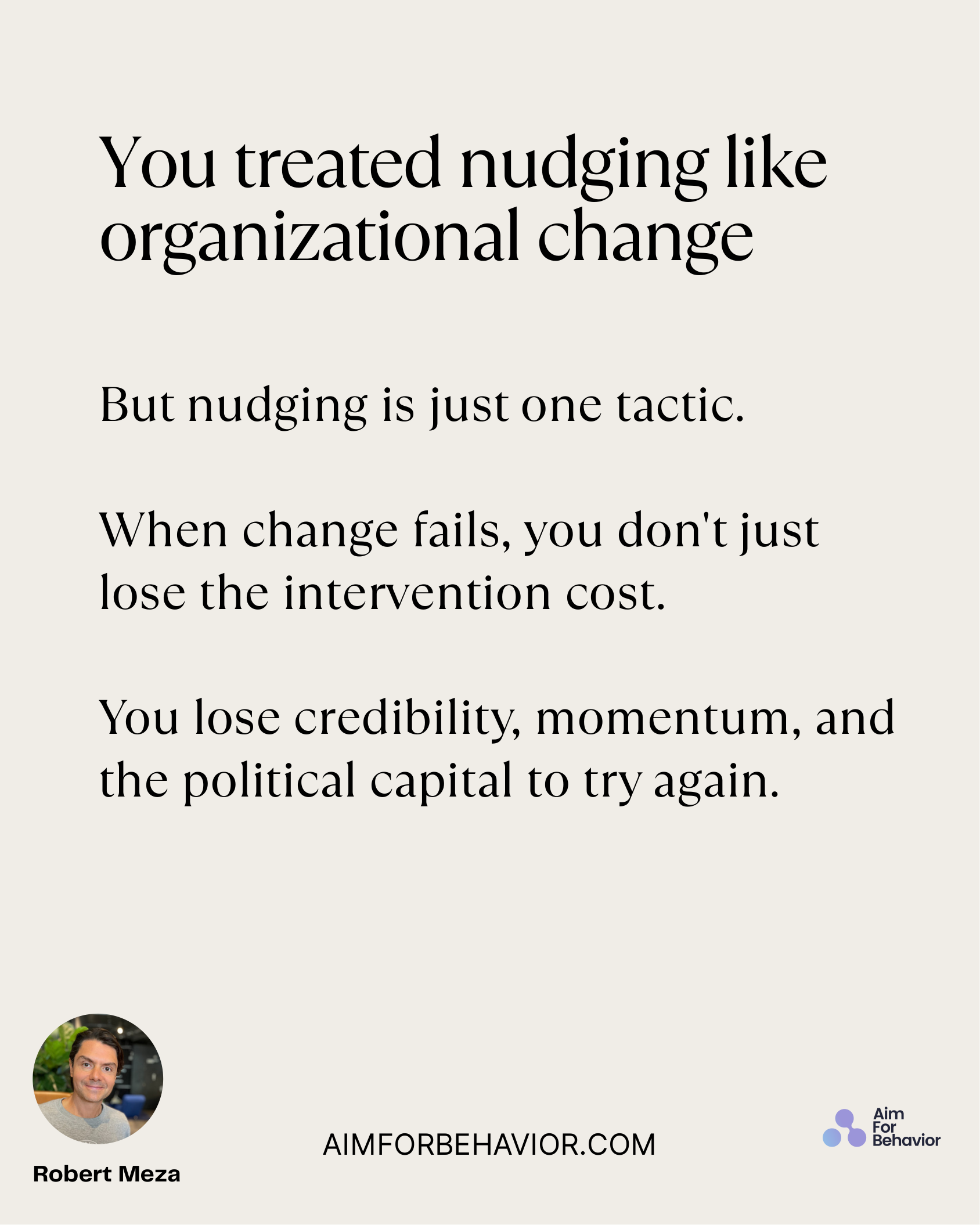
You treated nudging like organizational change AIMFORBEHAVIOR.COM Robert Meza But nudging is just one tactic. When chan
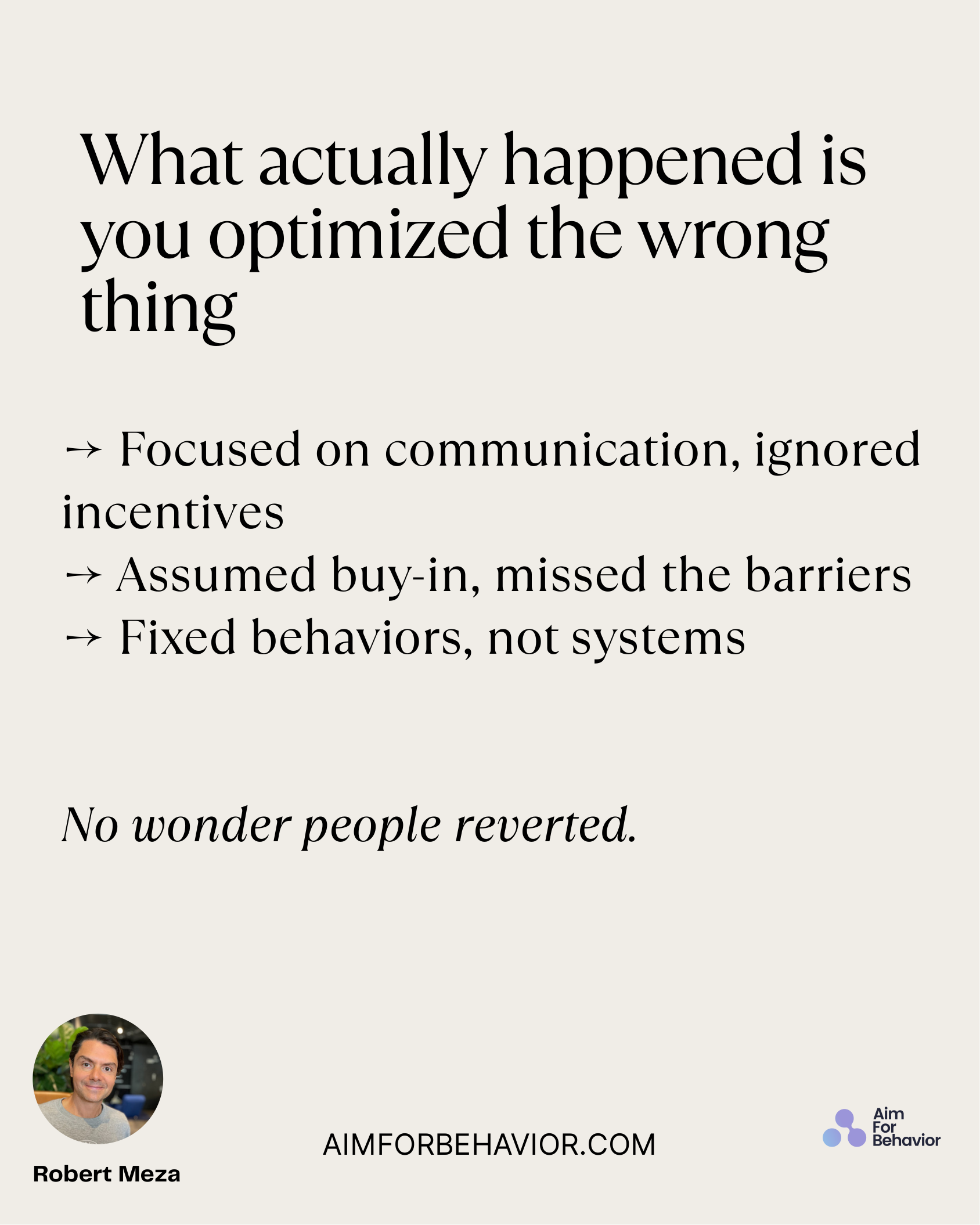
What actually happened is you optimized the wrong thing AIMFORBEHAVIOR.COM Robert Meza → Focused on communication, igno
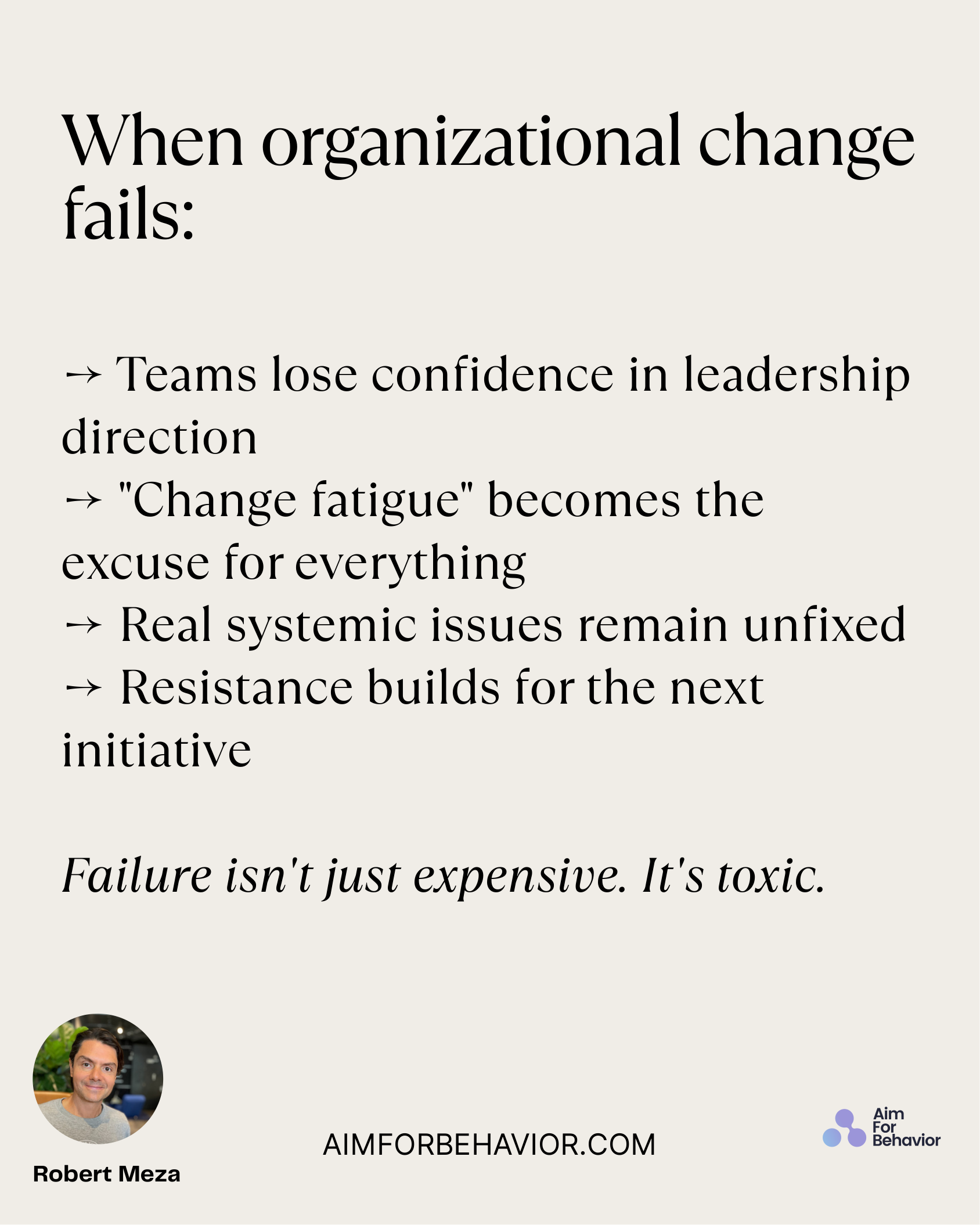
When organizational change fails: AIMFORBEHAVIOR.COM Robert Meza → Teams lose confidence in leadership direction → "Ch
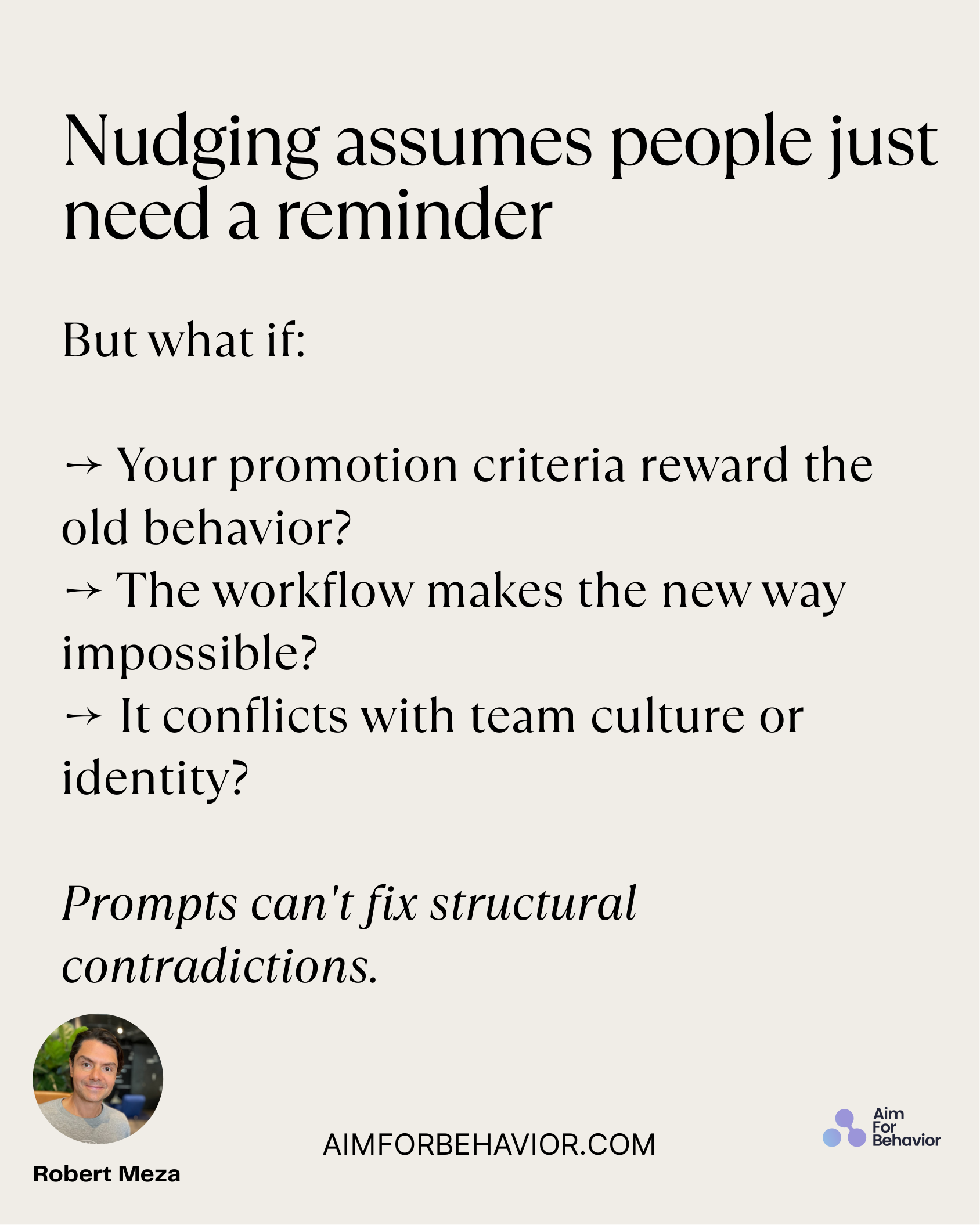
Nudging assumes people just need a reminder AIMFORBEHAVIOR.COM Robert Meza But what if: → Your promotion criteria rewa
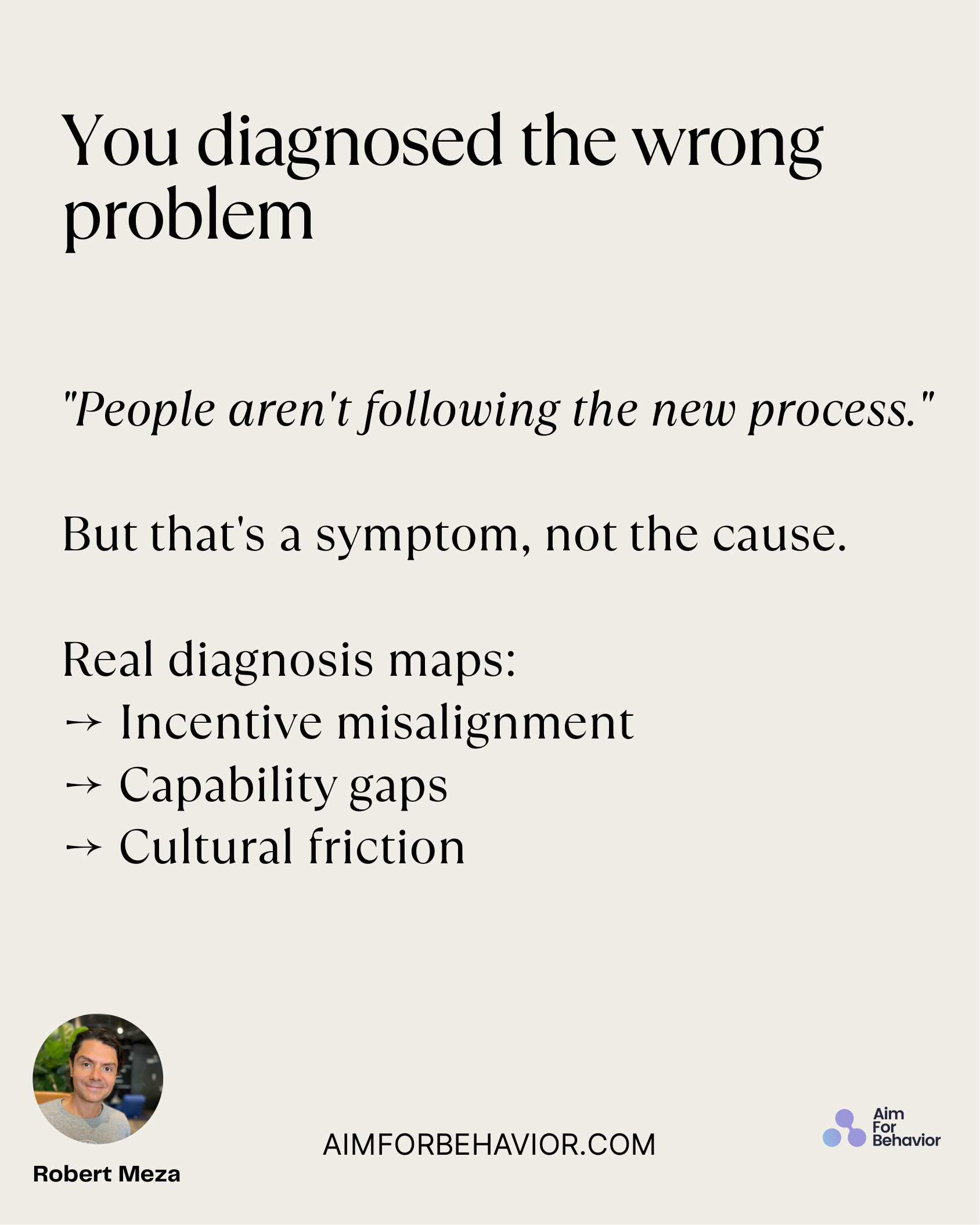
You diagnosed the wrong problem AIMFORBEHAVIOR.COM Robert Meza "People aren't following the new process." But that's a
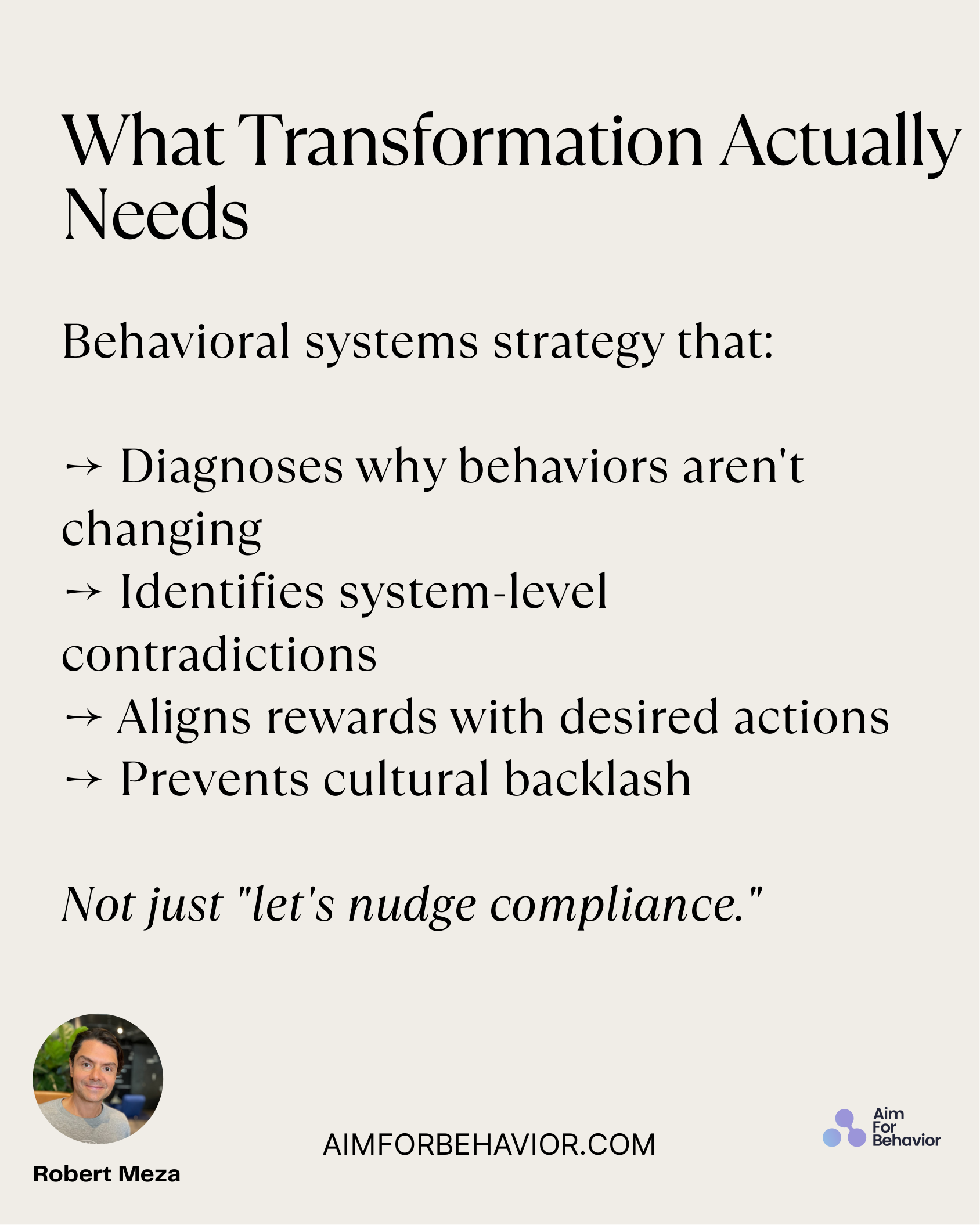
What Transformation Actually Needs AIMFORBEHAVIOR.COM Robert Meza Behavioral systems strategy that: → Diagnoses why beh
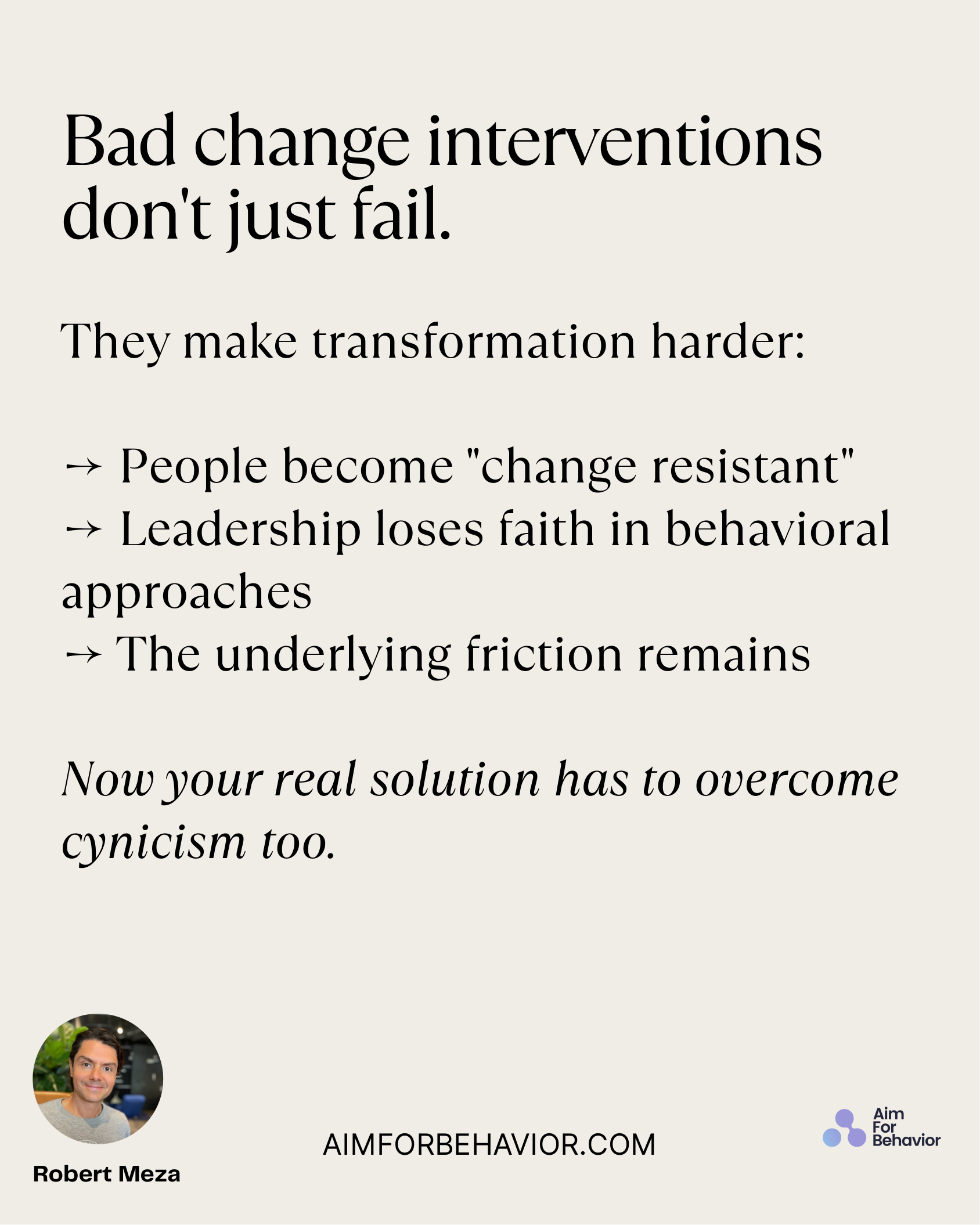
Bad change interventions don't just fail. AIMFORBEHAVIOR.COM Robert Meza They make transformation harder: → People bec
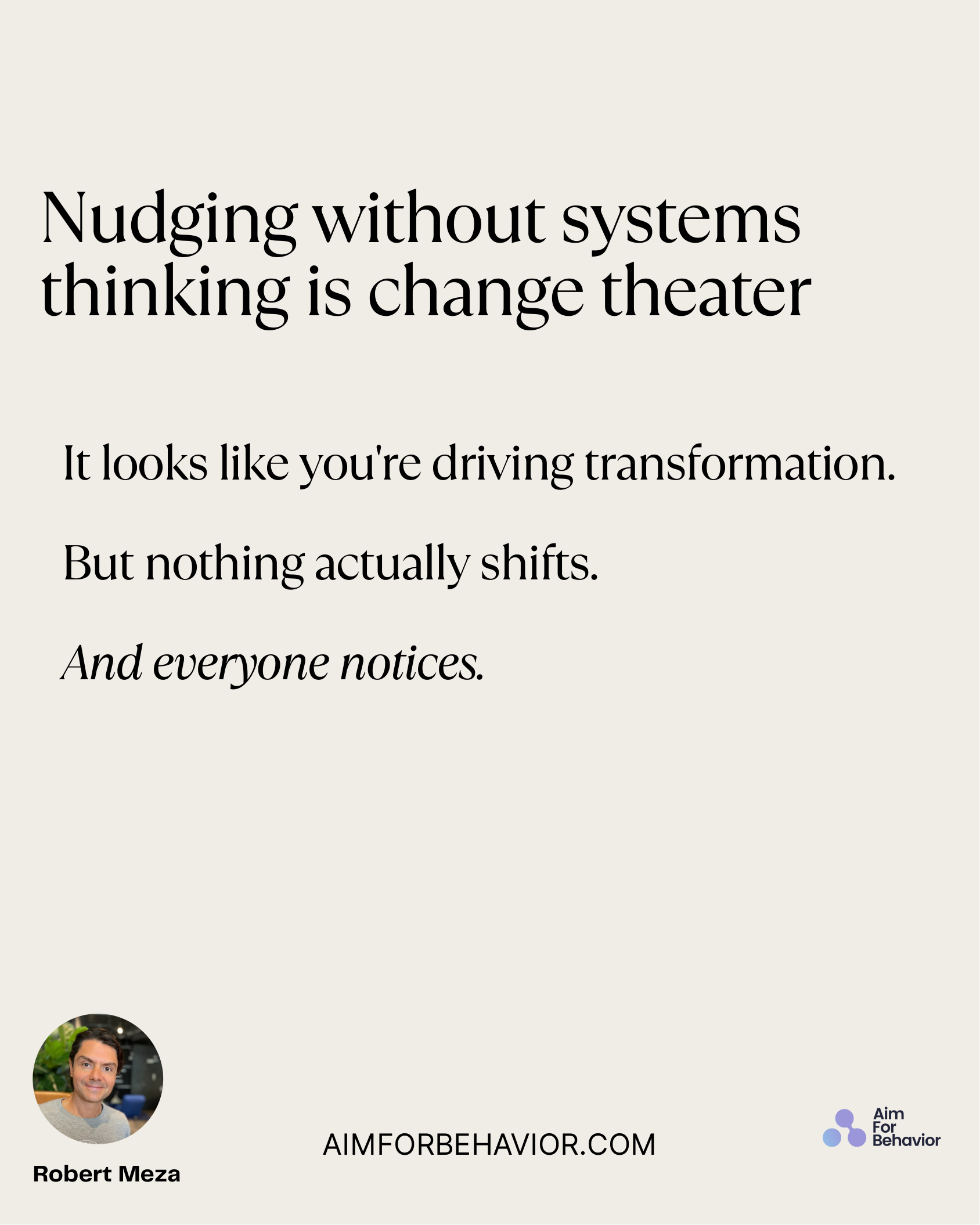
It looks like you're driving transformation. But nothing actually shifts. And everyone notices. Nudging without systems
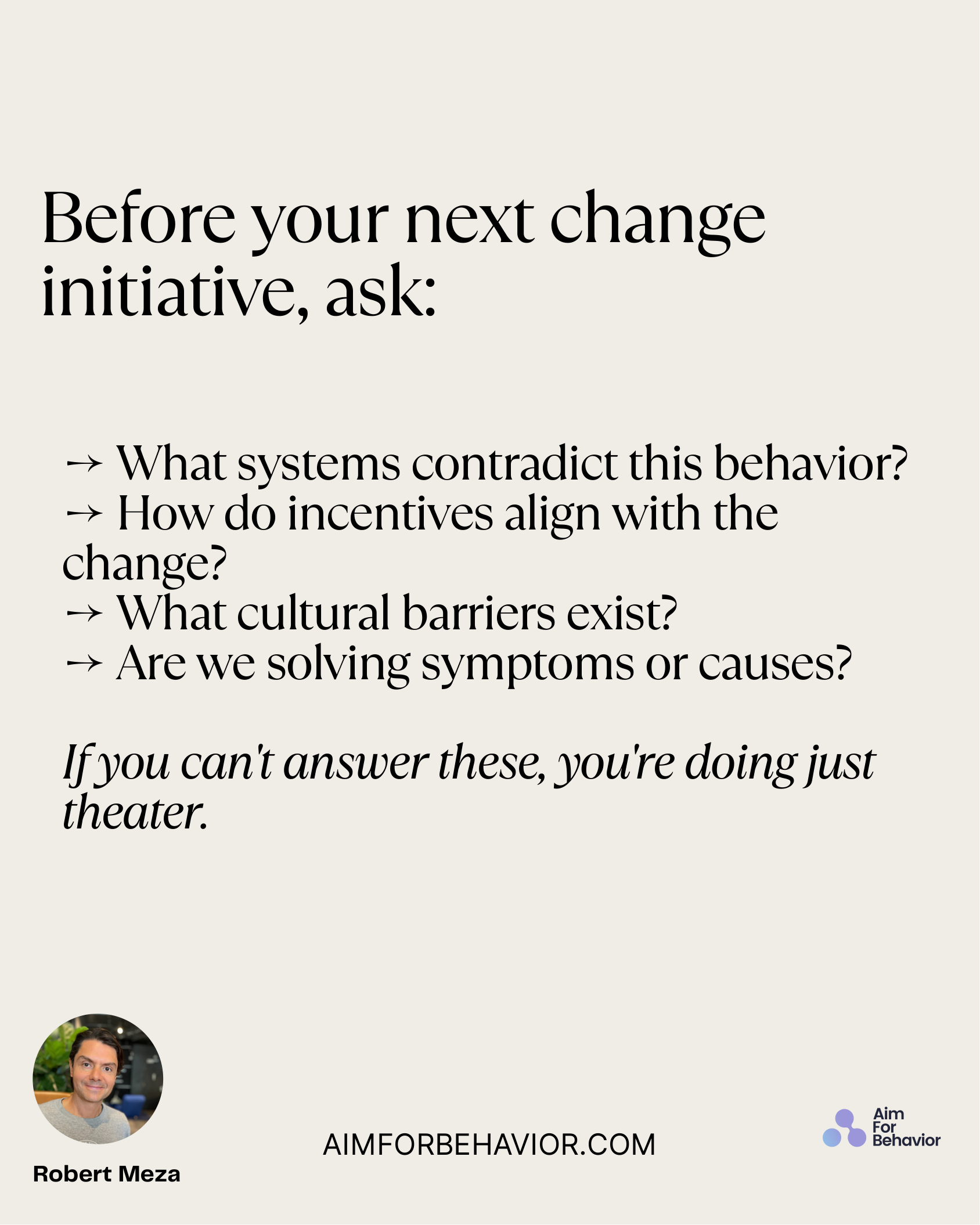
→ What systems contradict this behavior? → How do incentives align with the change? → What cultural barriers exist? →
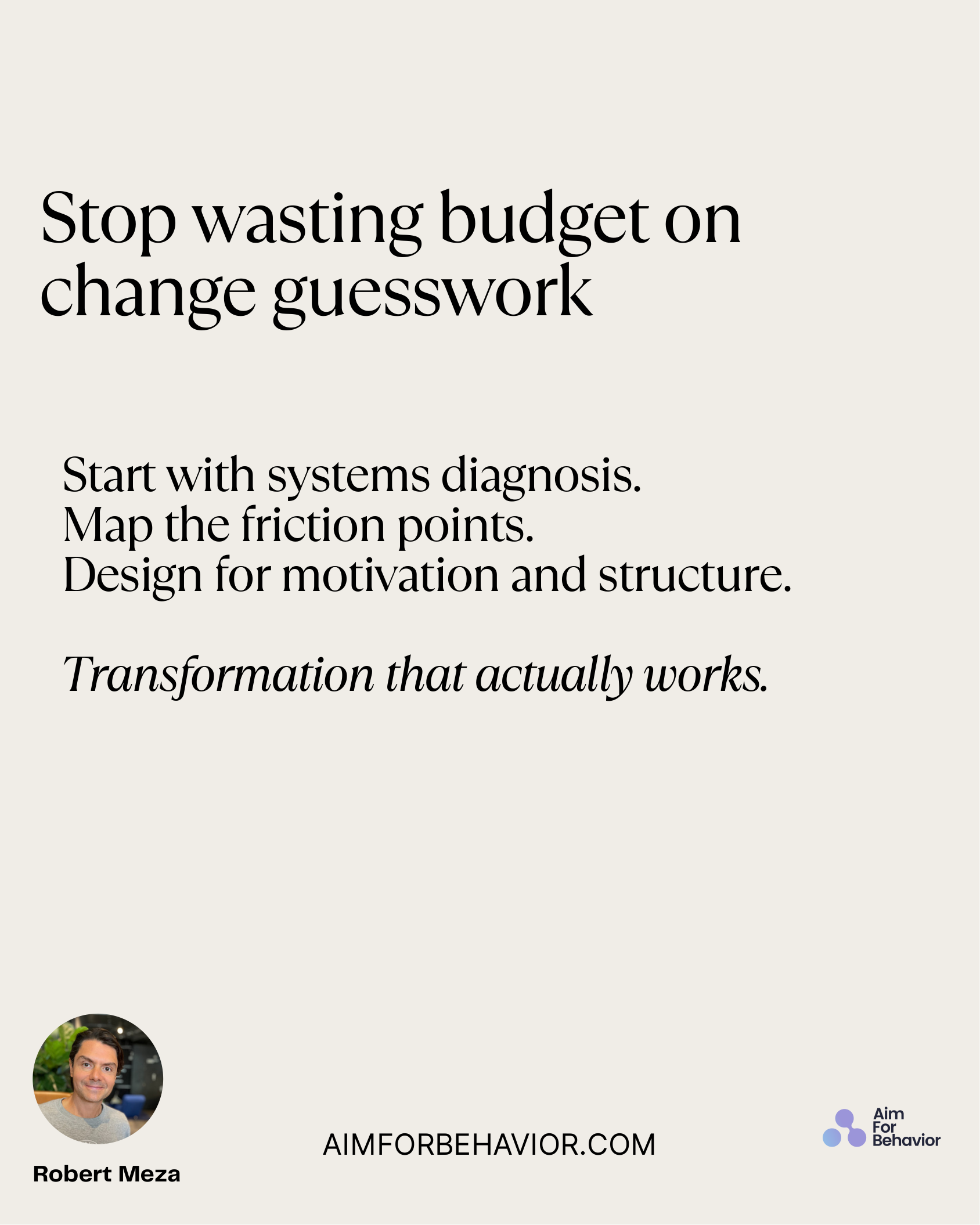
Start with systems diagnosis. Map the friction points. Design for motivation and structure. Transformation that actual
Ready to stop throwing money at symptoms? DM me or Visit aimforbehavior.com.
1 / 12

Why Nudging Isn't Behavioral Change.

The problem with nudging is that it's been packaged and sold as the answer to organizational behavior change.

It's seductive because it feels scientific, requires minimal disruption, and promises quick wins, some even call it behavioral science...

Who wouldn't want to drive massive change by simply adjusting email subject lines or moving buttons?

But nudging assumes people just need a gentle push in the right direction. It assumes the system is fundamentally aligned with the desired behavior, and the only missing piece is awareness or activation.

That assumption is wrong most of the time.

When your team reverts to old behaviors after initial adoption, they're not being stubborn or change-resistant. They're responding rationally to the system you've actually created, not the one you think you've created.

Nudging isn't worthless of course, in the right context, with the right supporting conditions, nudges can be effective components of broader behavioral strategies. But treating nudging as behavioral change is like treating a single pill as comprehensive healthcare.