
- Home
- Insights
- Why change doesn't stick
- Maybe this is the year more companies stop
Maybe this is the year more companies stop

Robert Meza
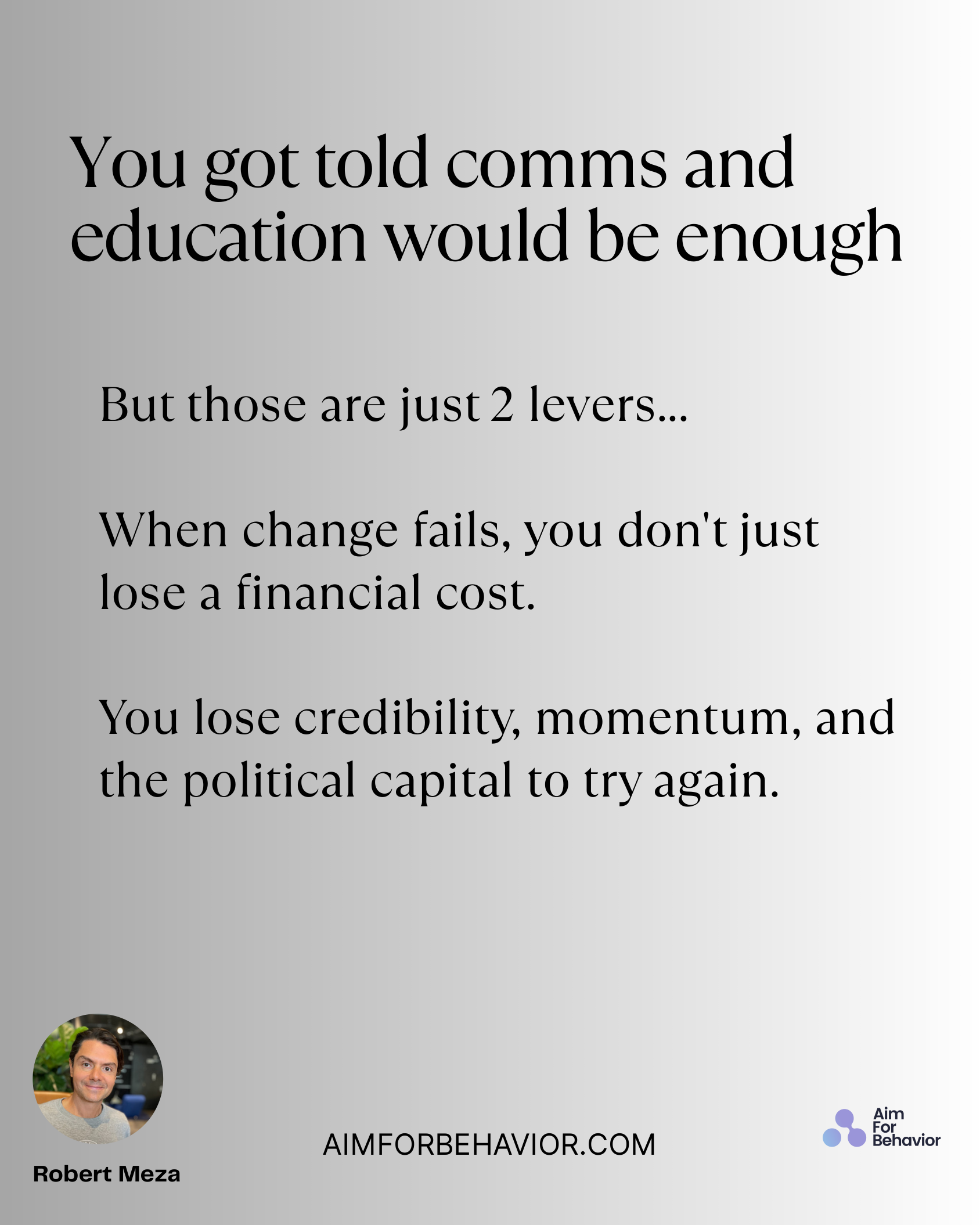
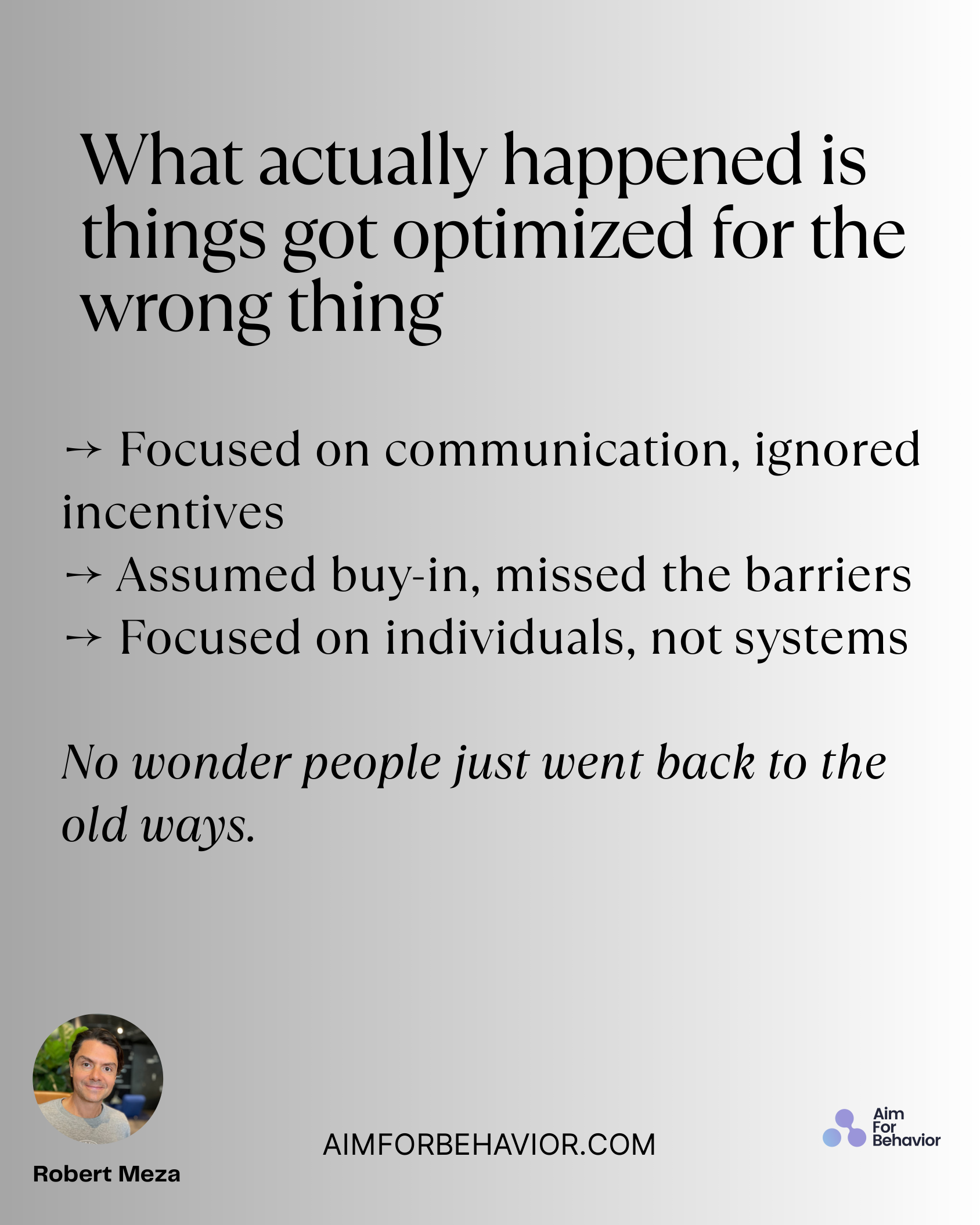
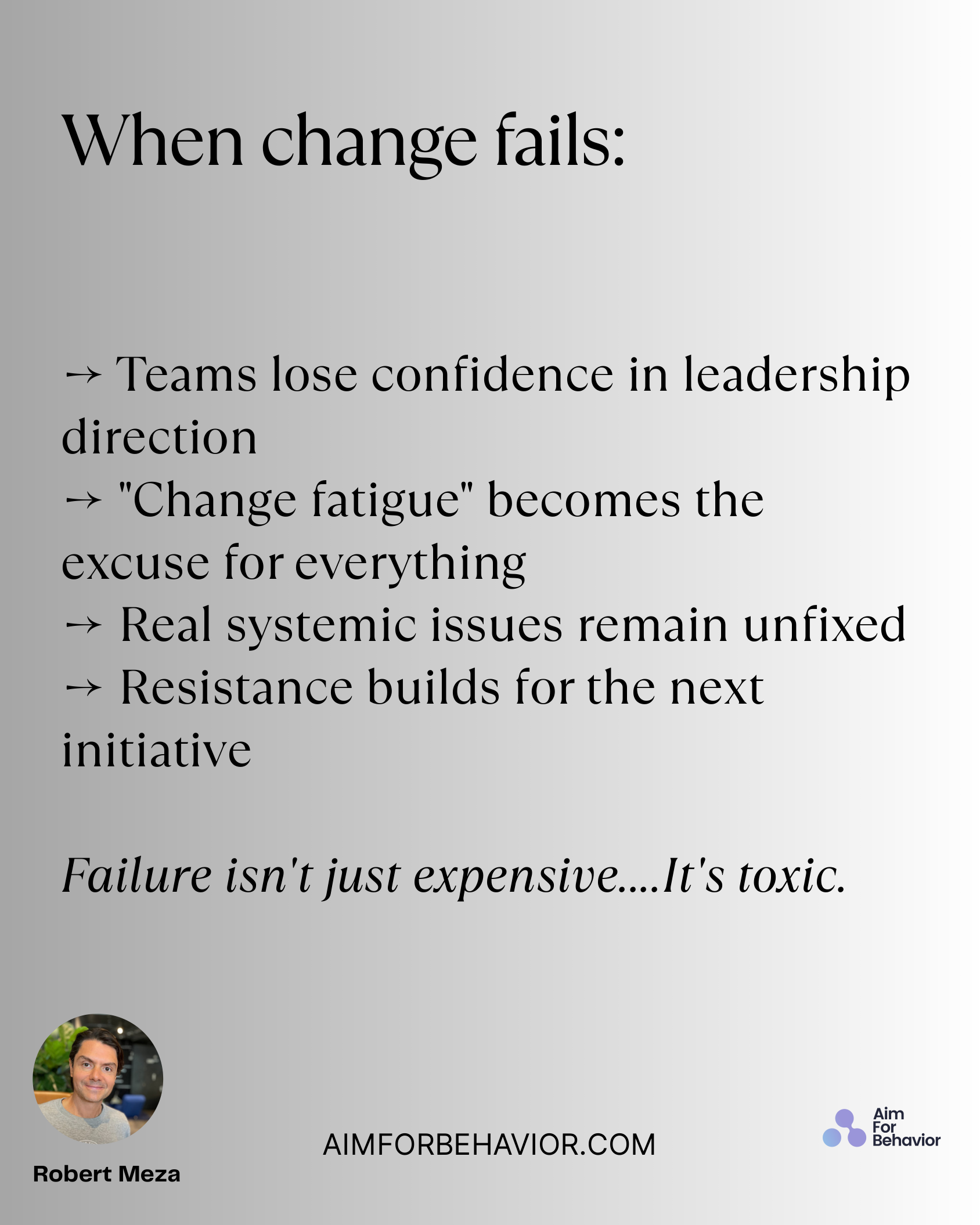
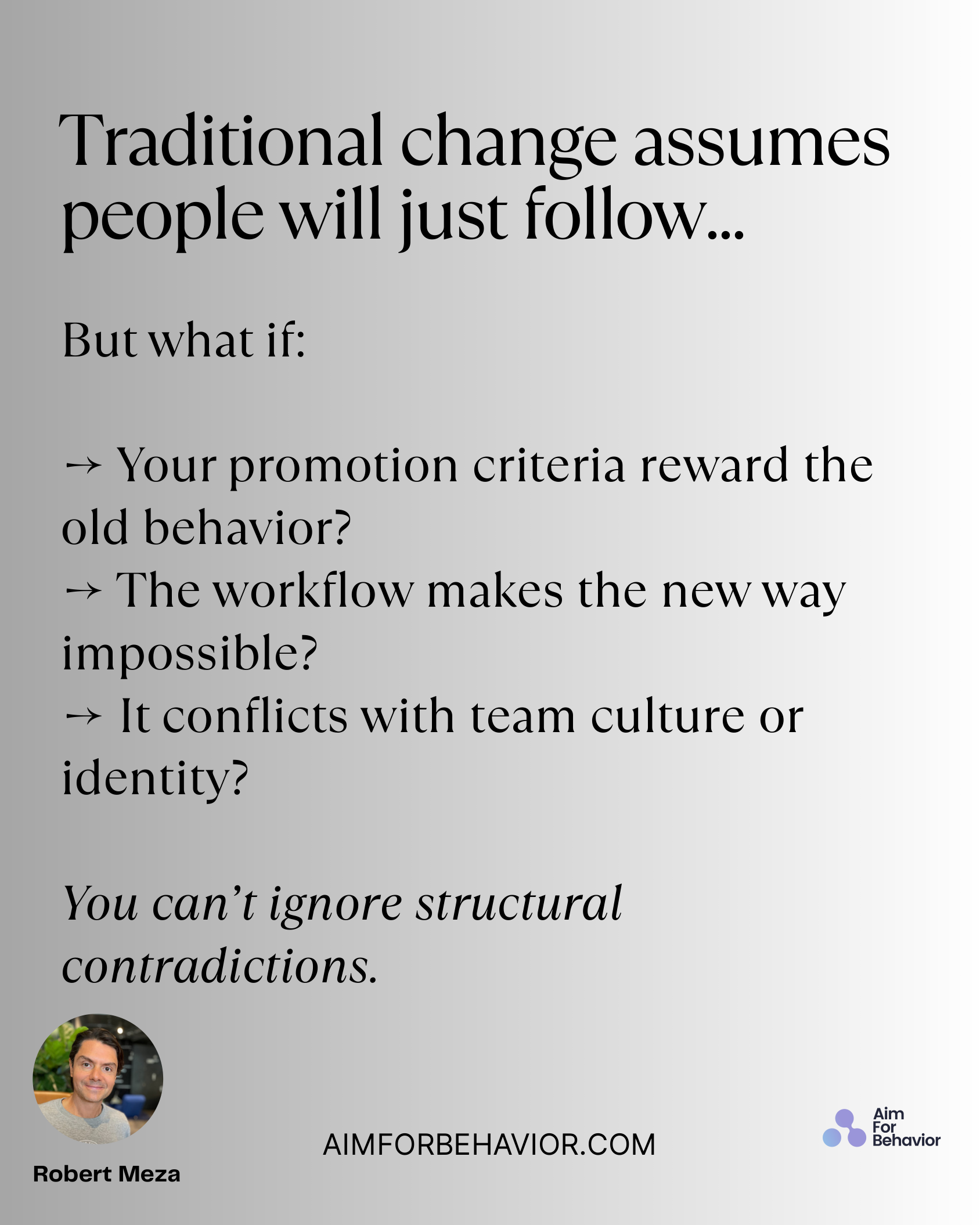
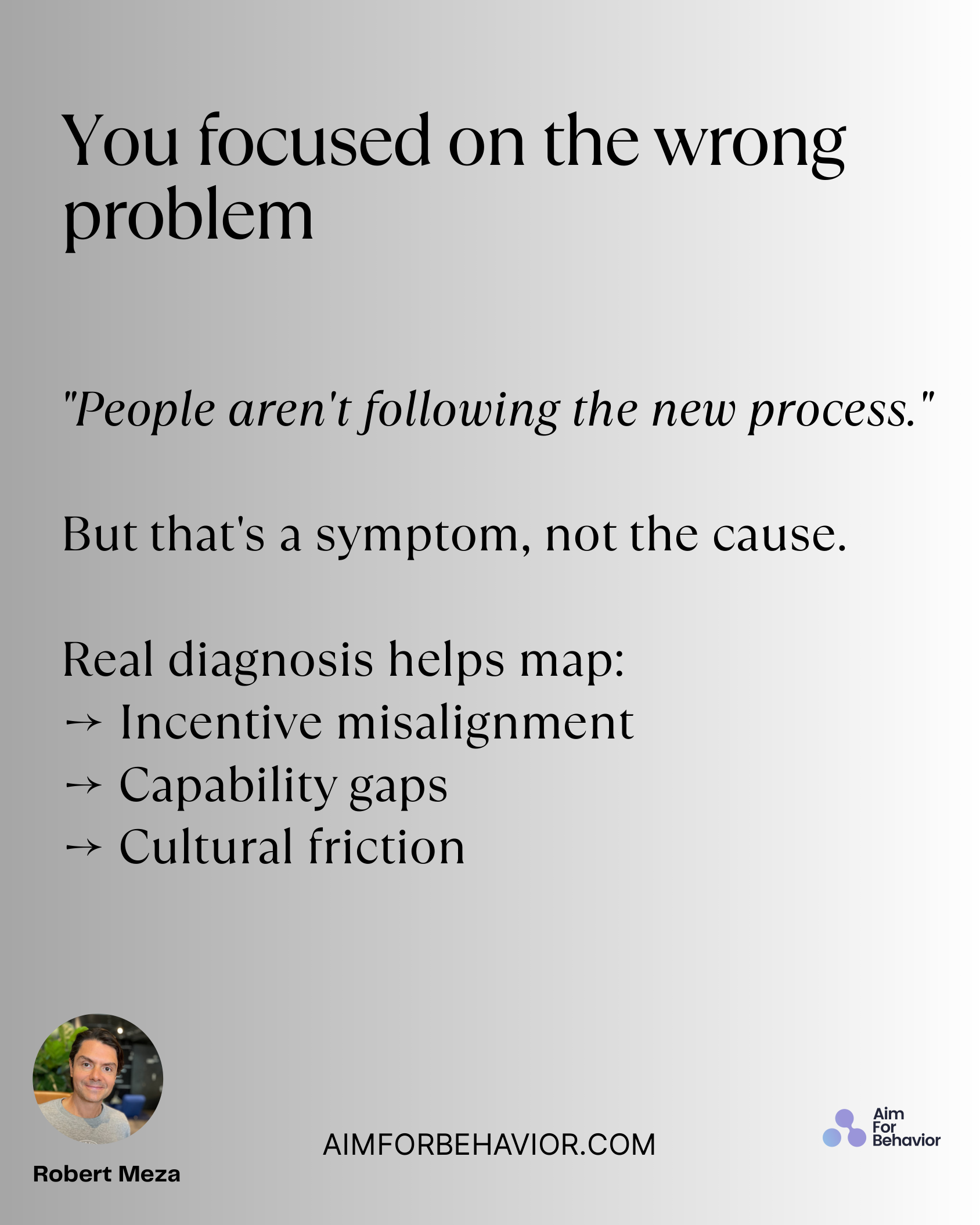
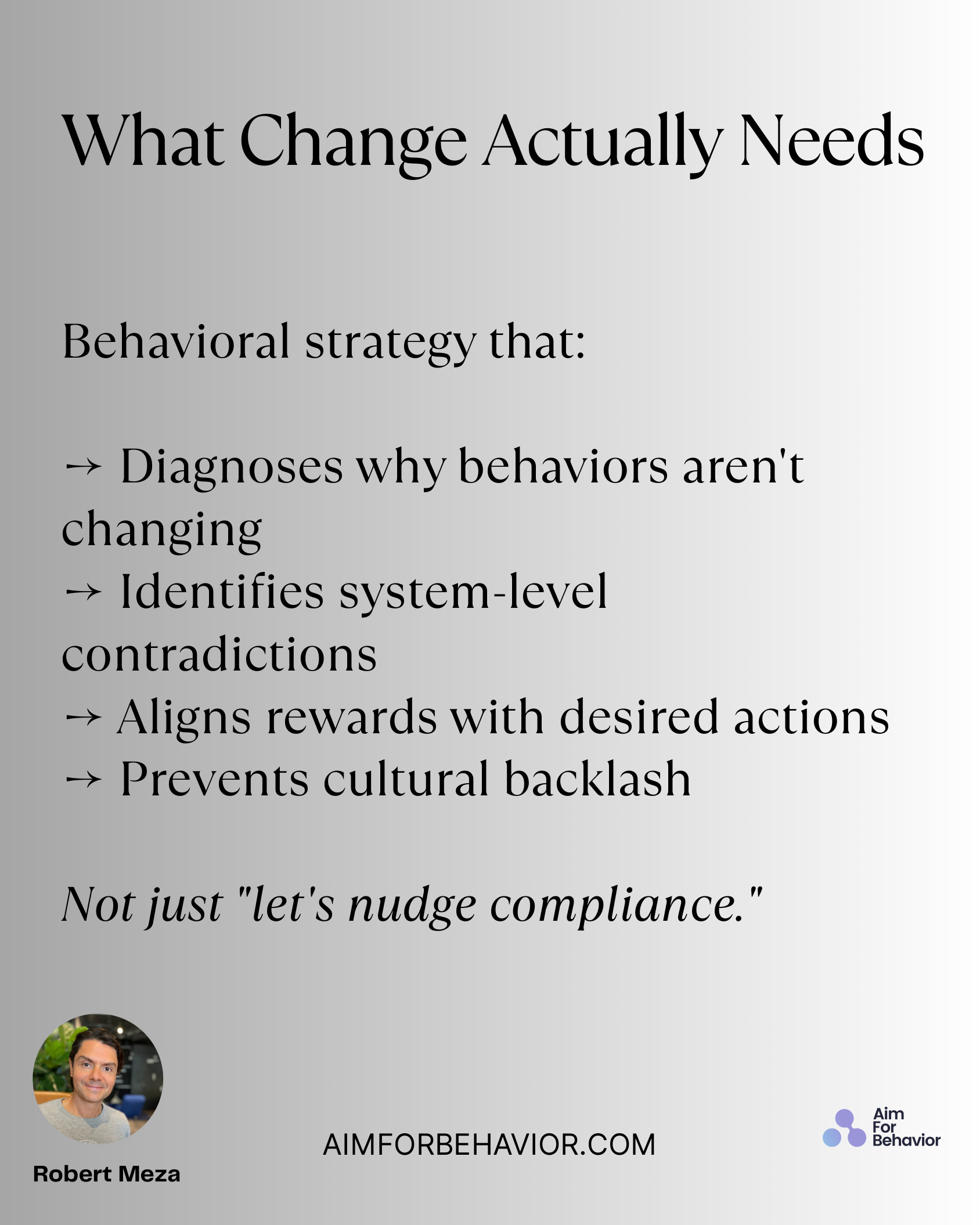
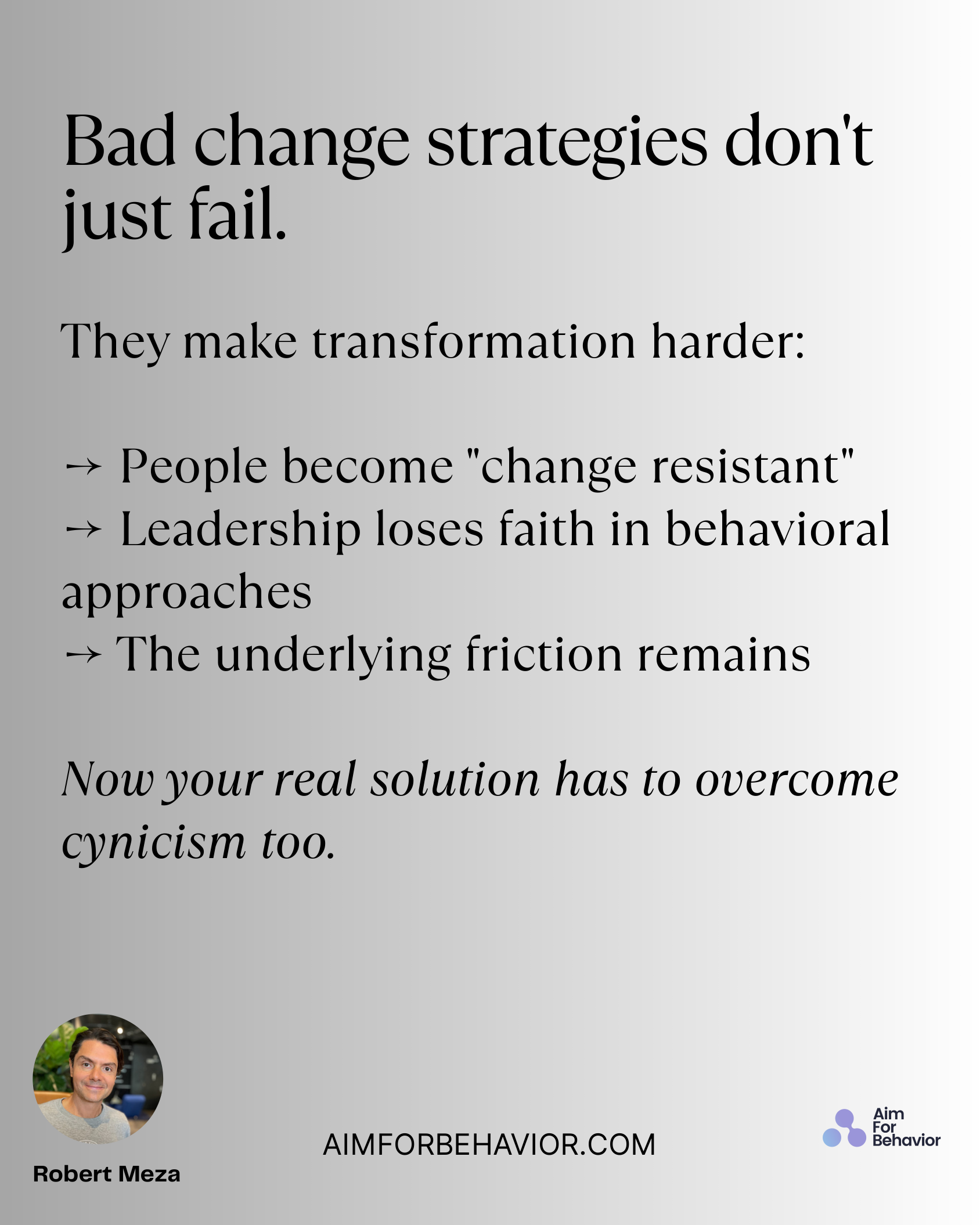
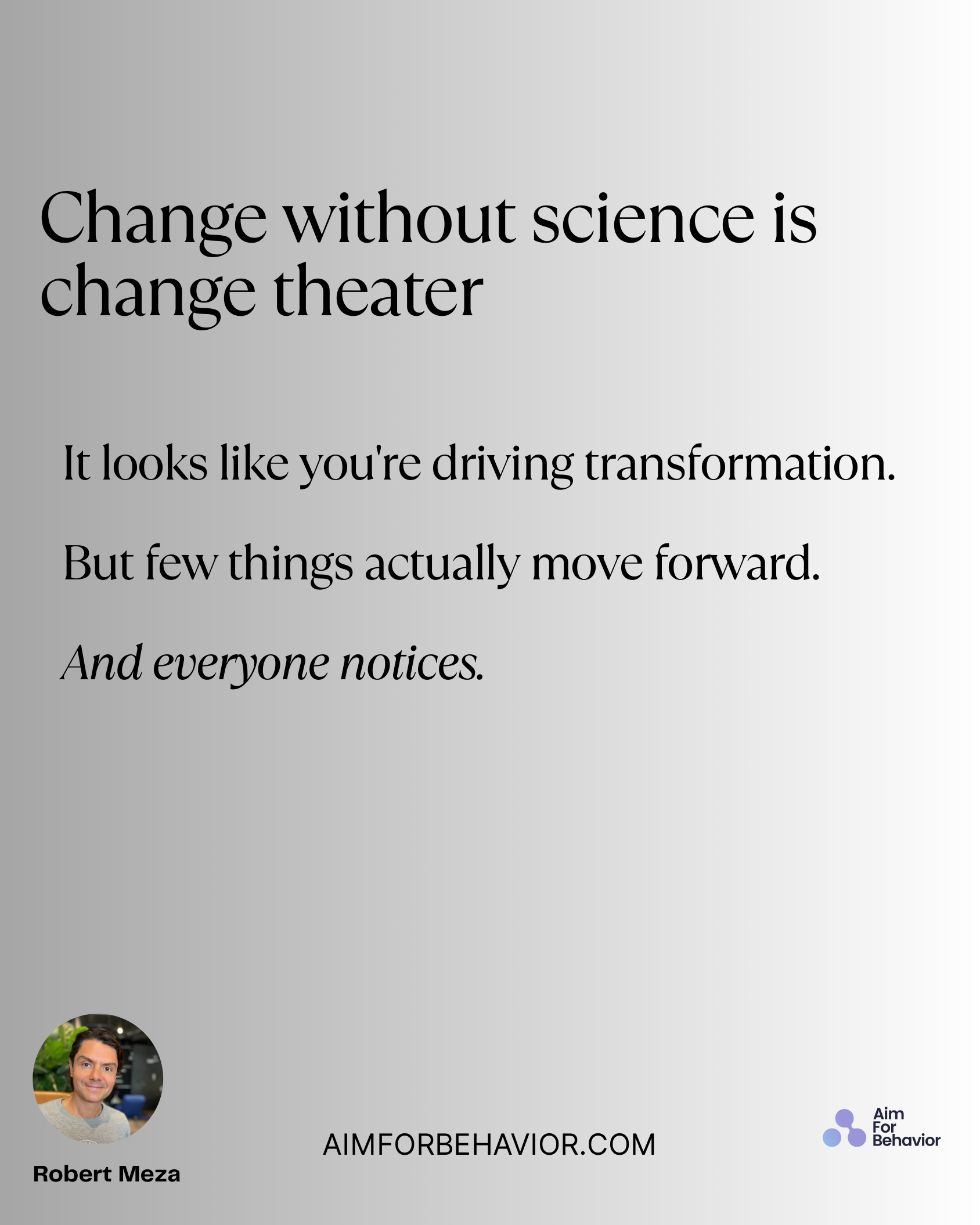
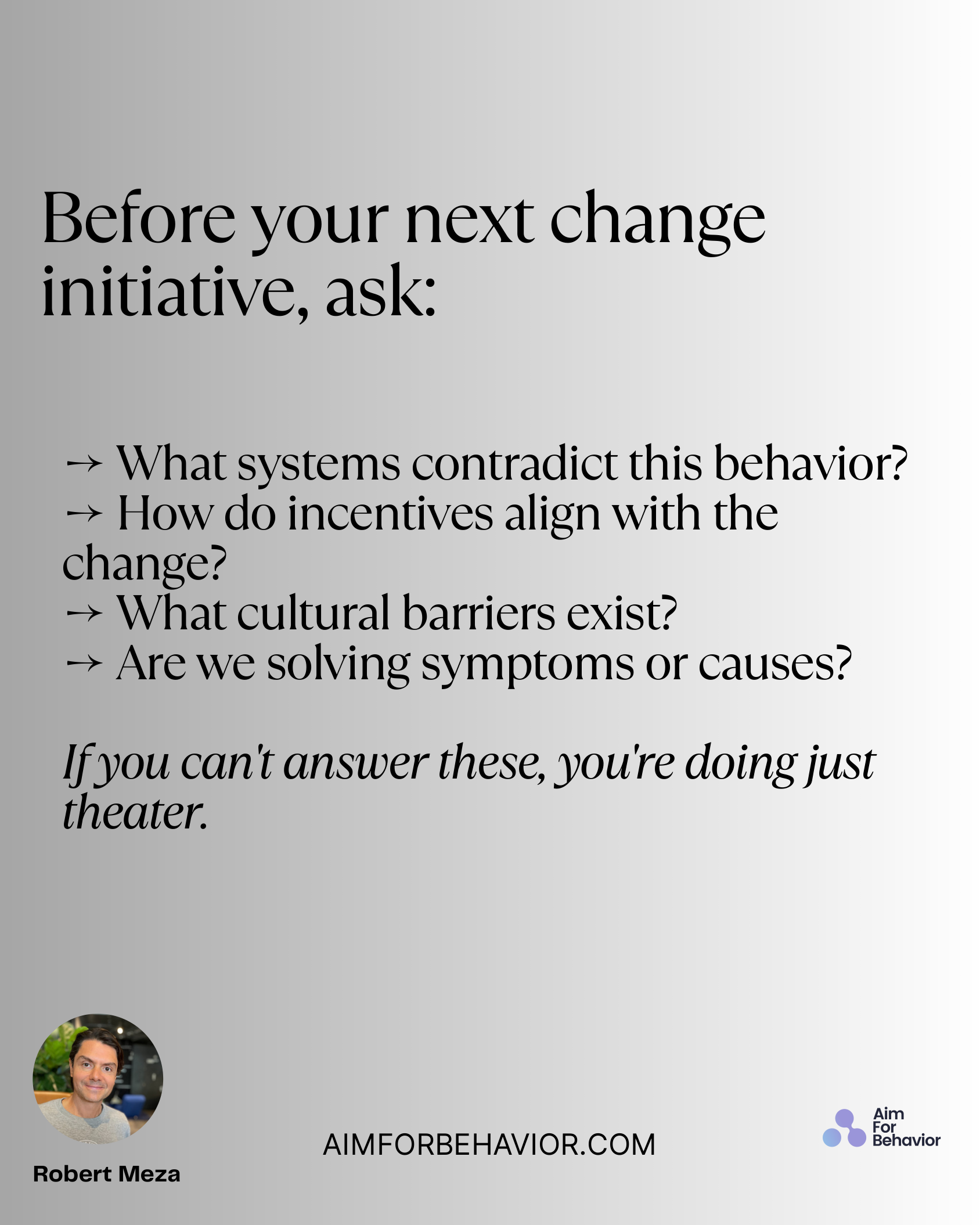
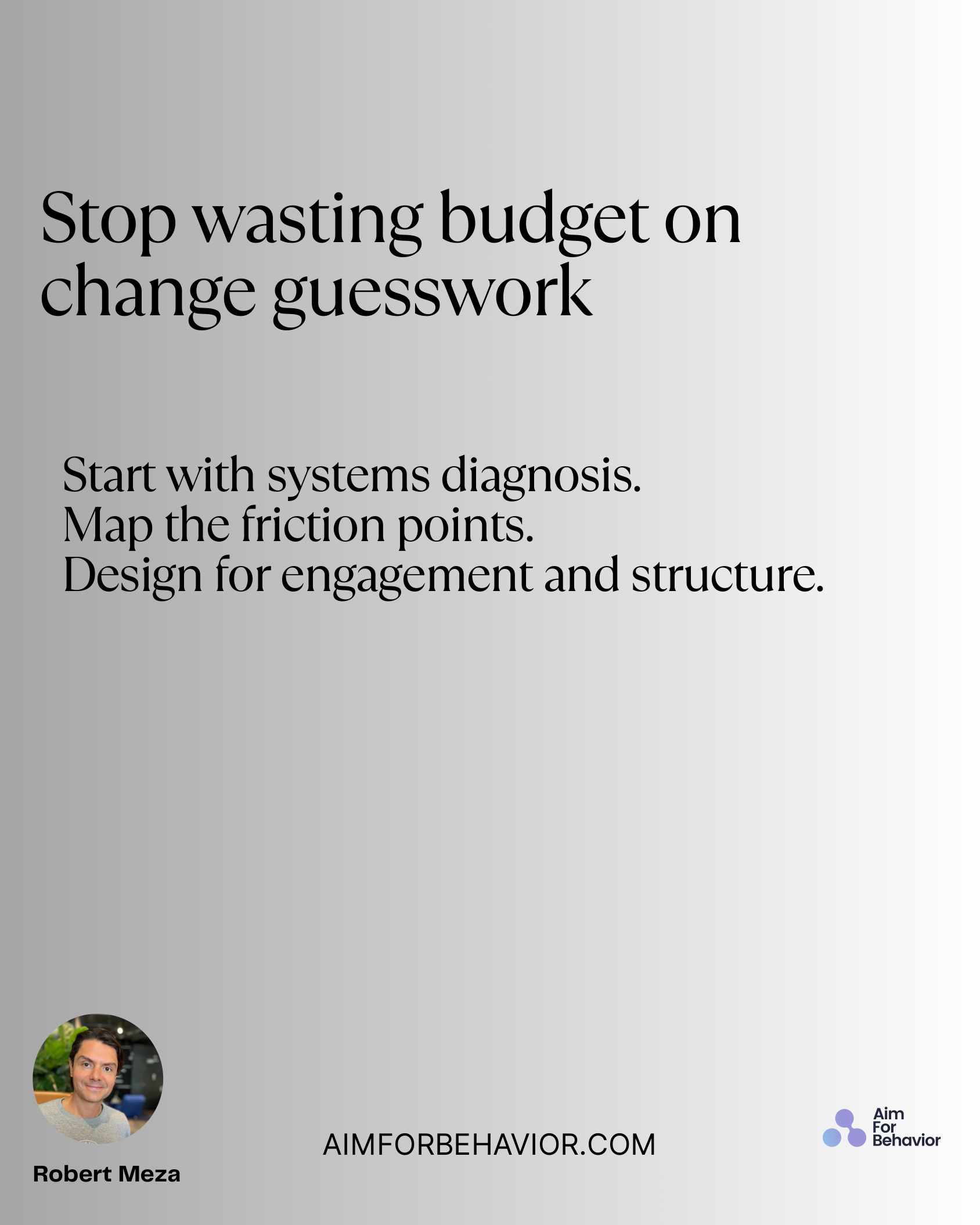
Maybe this is the year more companies stop playing change theater...
The Science of Behavior Change comes from working in a systematic, evidence-based way that helps deal with the new challenges of change for your organization.
Moving beyond “change theater” means focusing on the right problems, knowing which actual behaviors matter, knowing which levers you have, moving beyond individuals and knowing what enables or constrains those behaviors you want to enable.
Having a solid process and good tools for change will be an effective way approach this. This process should include things like understanding beliefs, fears, skills, policies, social norms and more....
I get that most organizations are great at finding say functional barriers, but the personal and emotional ones often remain invisible, but they don't have to be..
In the end, something I keep telling my clients is the importance of working from a good diagnosis.... because it will help de-risk decisions and saves resources compared to relying purely on instinct.
Behavioral science provides a way to do this diagnosis, which will be the foundation to the right strategies you apply for improving the experience of employees and customers.
My commitment to you this year is to share more from my consulting work learnings...and do more towards making change tangible and more real!