
The rush to go "AI-first" is revealing a
The rush to go "AI-first" is revealing a hard truth about transformation: technology alone doesn't solve human problems.

The rush to go "AI-first" is revealing a hard truth about transformation: technology alone doesn't solve human problems.
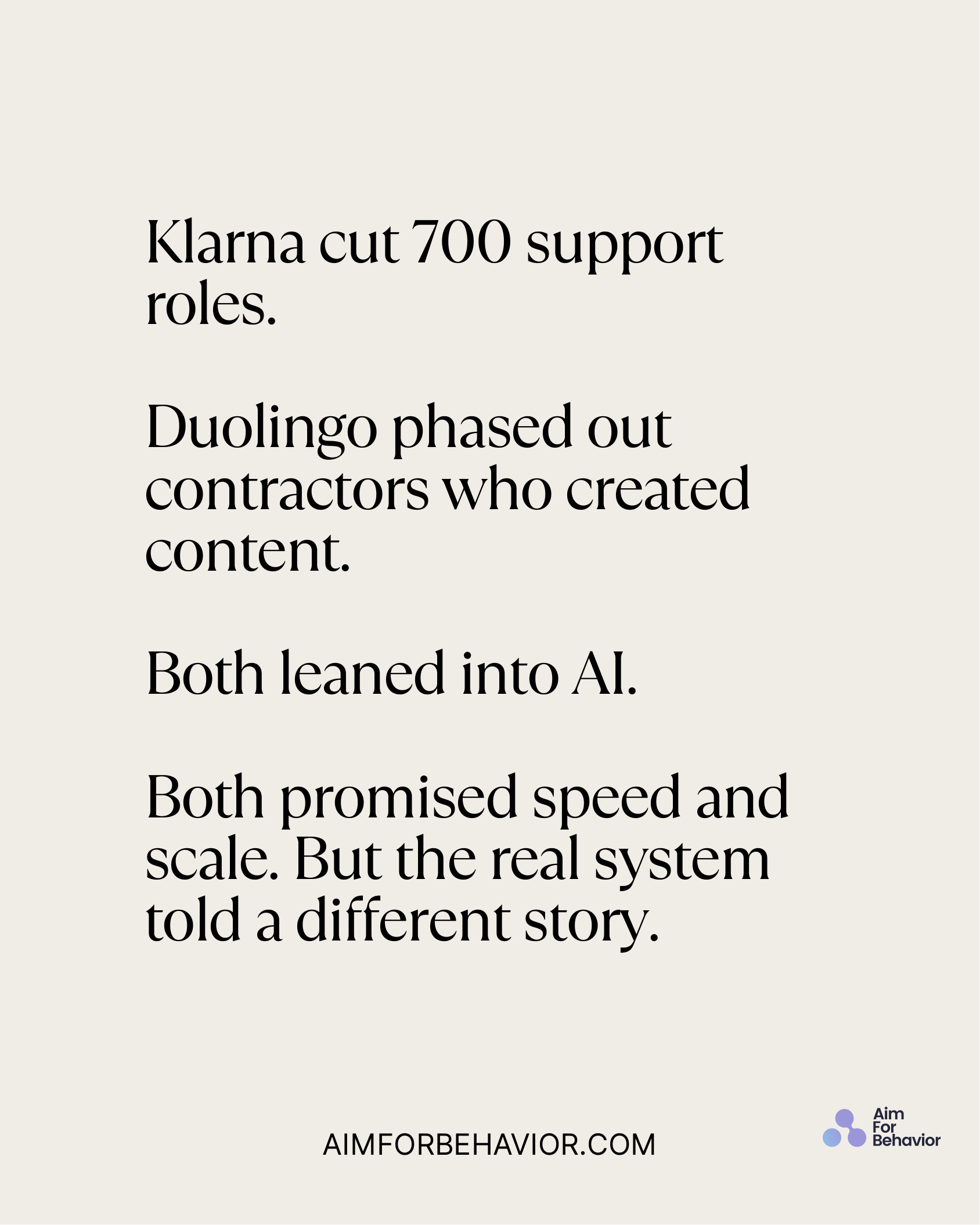
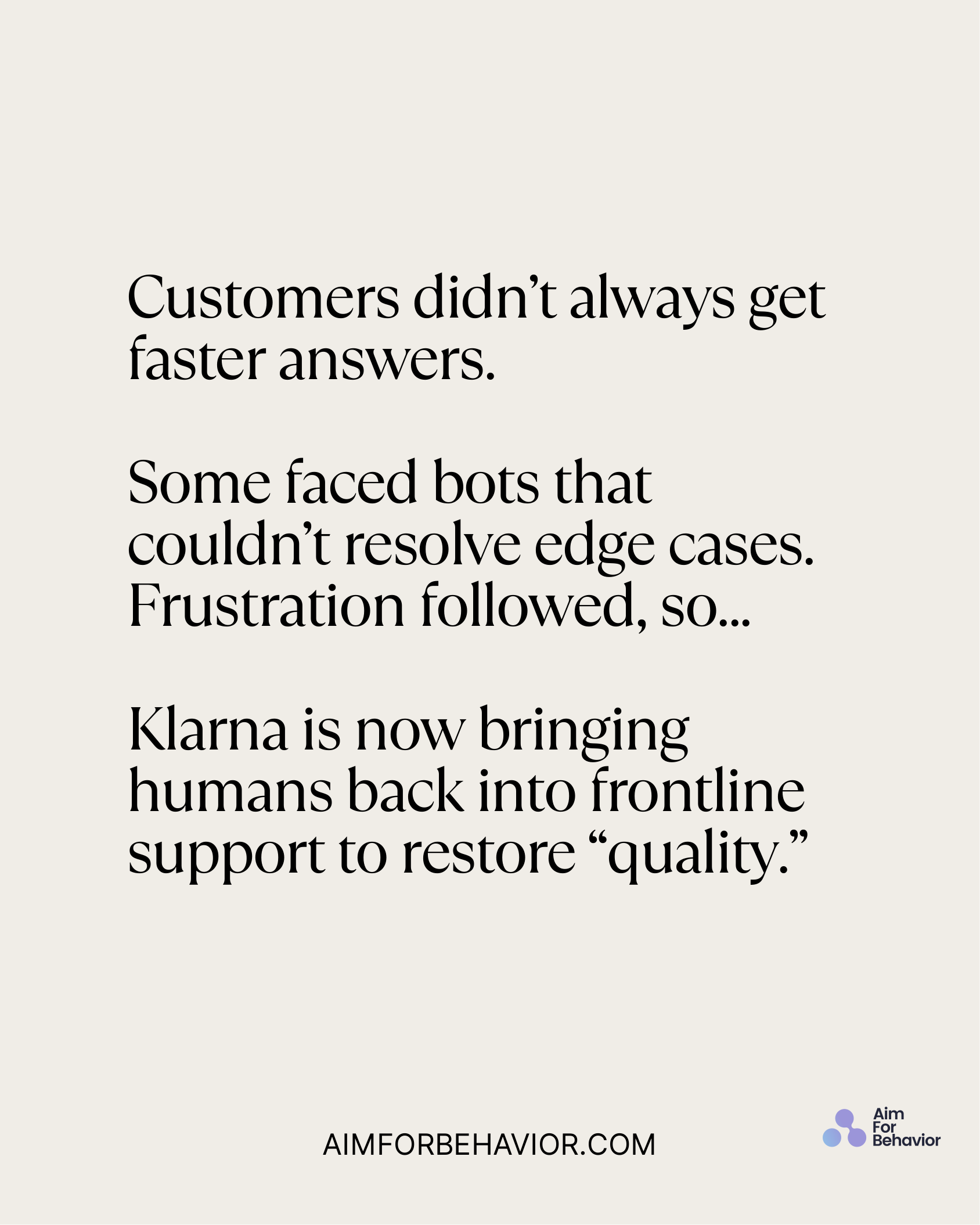
According to a Fast Company article, Klarna cut 700 support roles then recently reversed course, now rehiring humans for customer service.
Duolingo phased out content creators, only to face backlash as brand identity and content distinctiveness eroded.
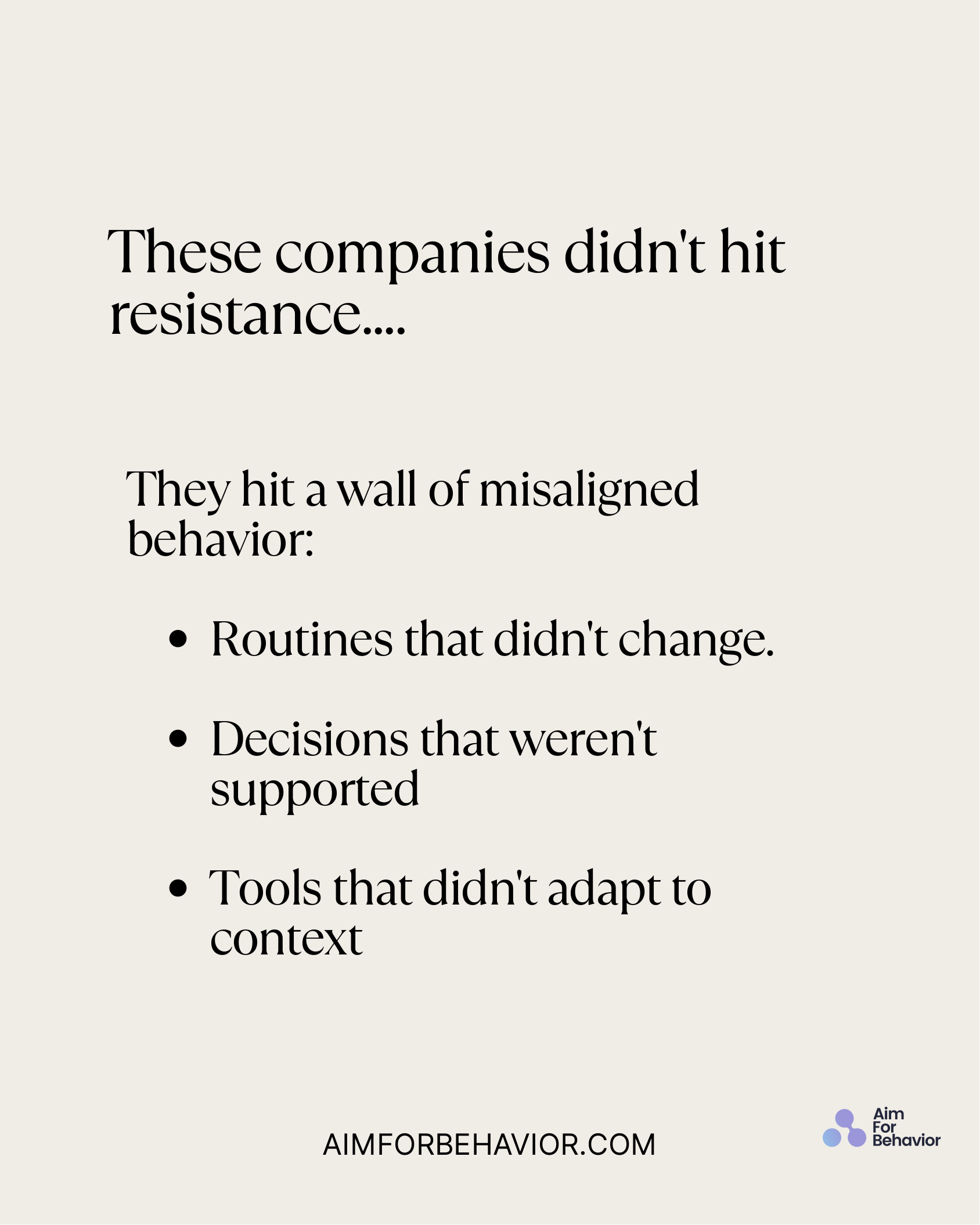
These aren't technology failures, they're behavioral architecture failures.
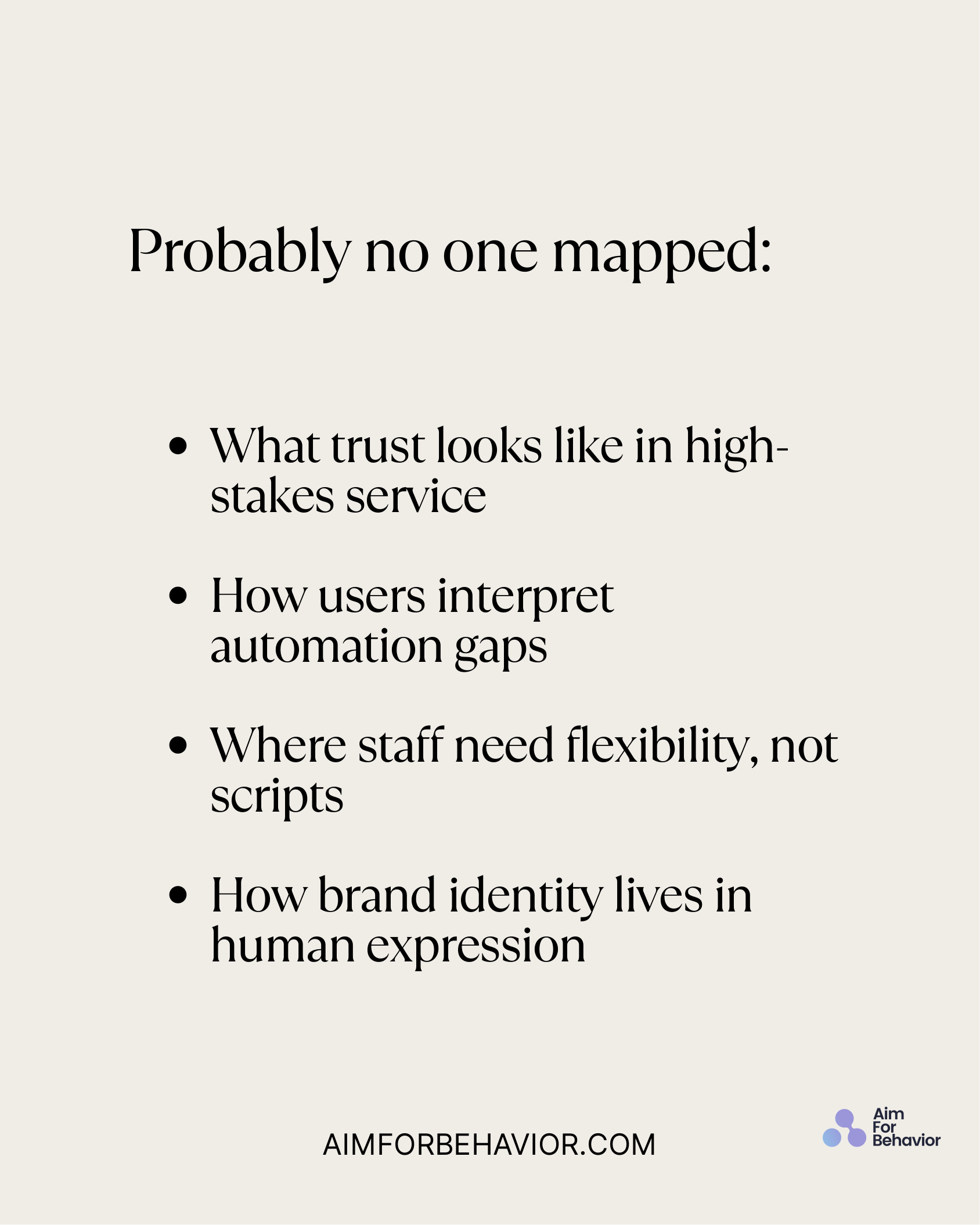
Companies optimized for AI capability without mapping what trust looks like, how users interpret automation gaps, or where staff need contextual flexibility.
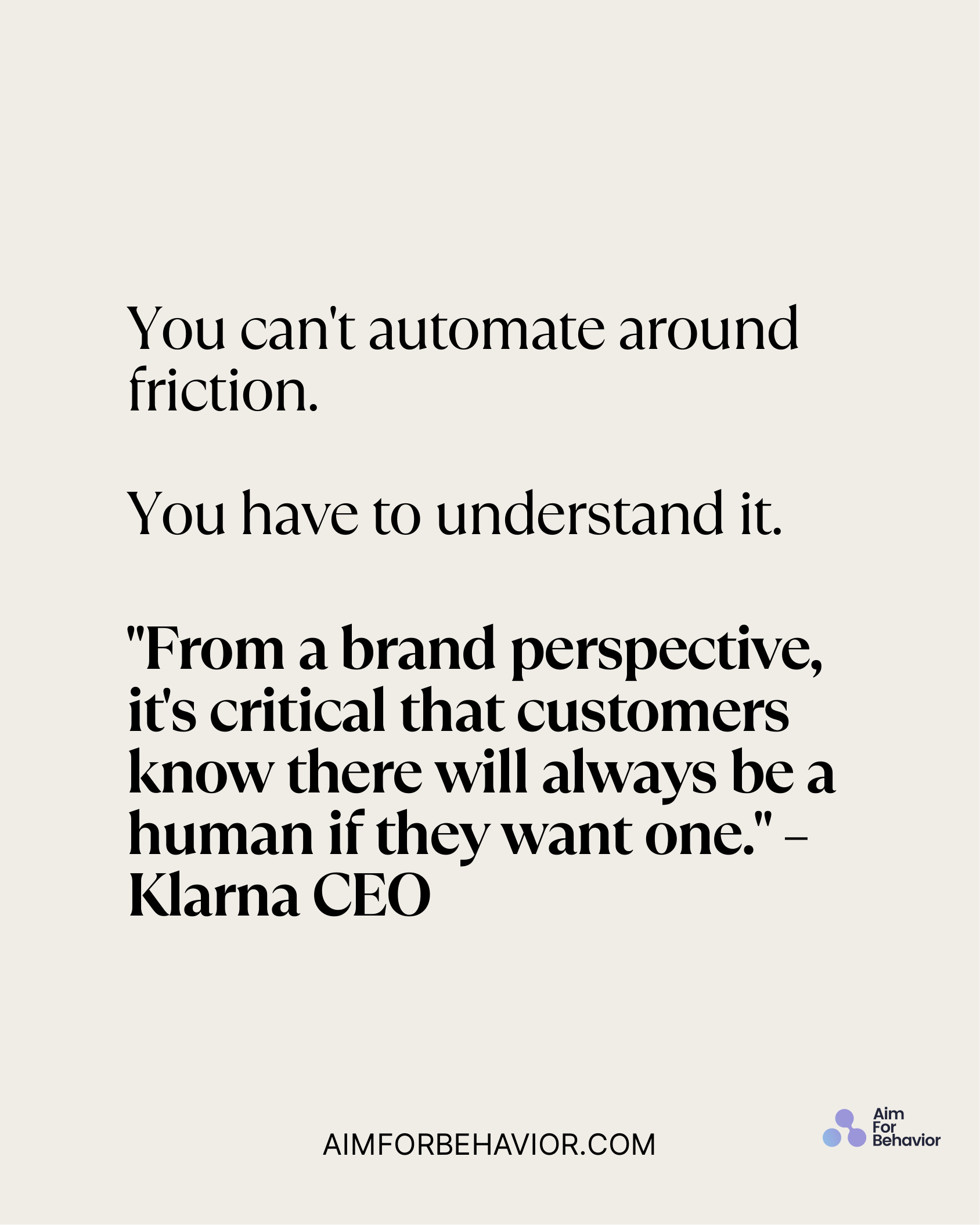
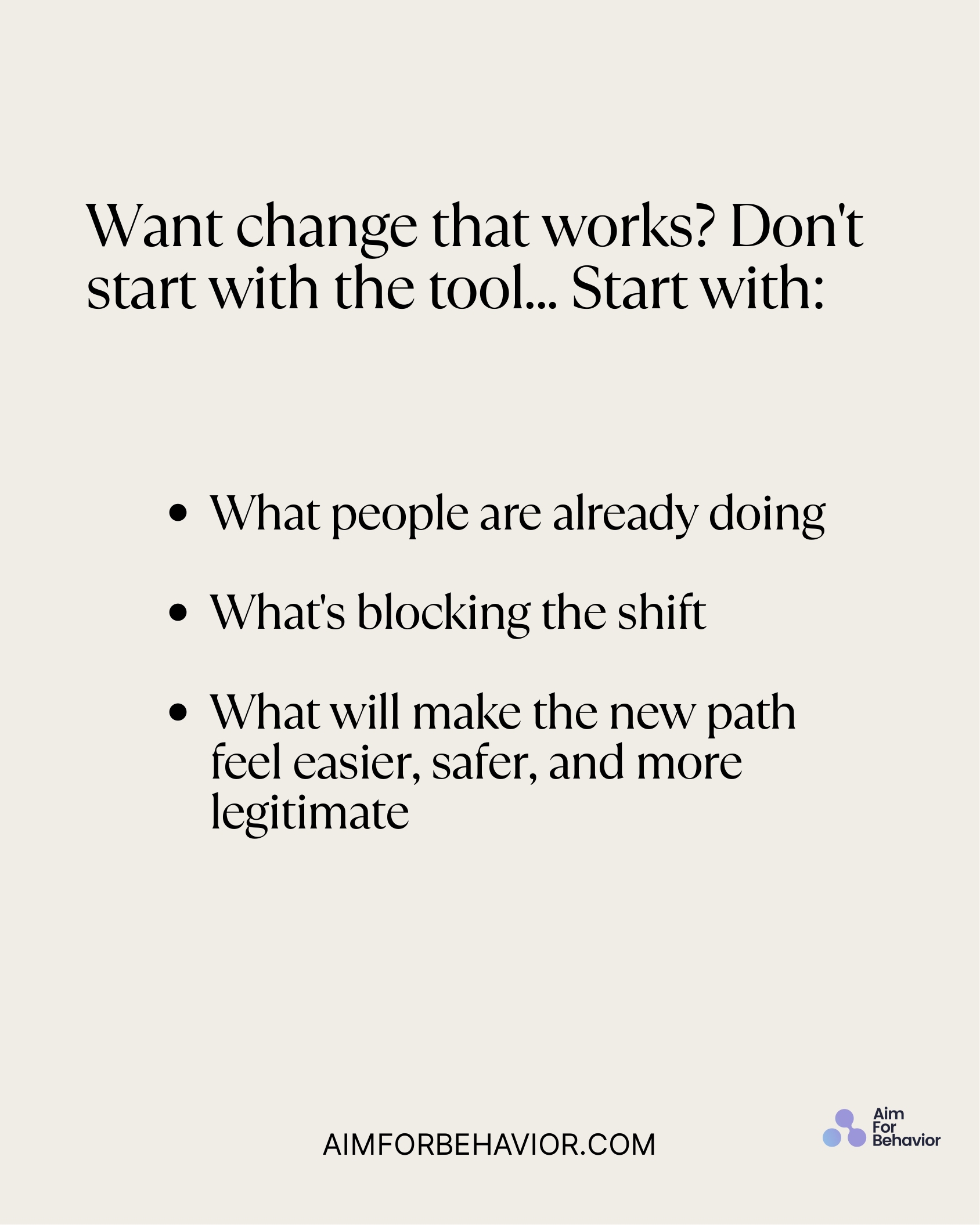
The lesson? Behavioral friction isn't an obstacle to design around, it's the system you're actually working with.
The rush to go "AI-first" is revealing a hard truth about transformation: technology alone doesn't solve human problems.
Sources named in this post
- SHIFT Barrier Codes..Aim For Behavior
- Susan Michie at UCL, COM-B (2011)
- Jill Cane and colleagues, Theoretical Domains Framework (TDF) (2012)
- Deci, SDT at Work (Self-Determination Theory) (2000)